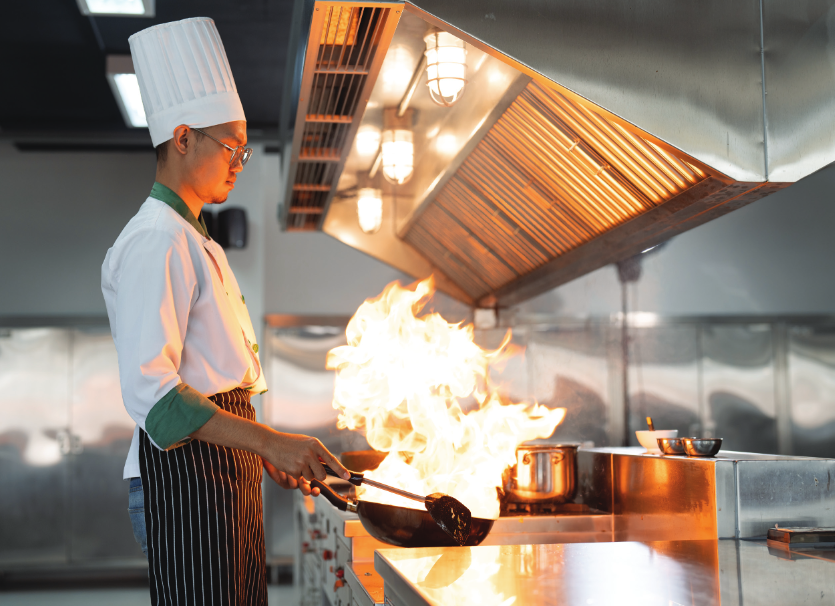
In today’s food service environment, kitchen space is becoming one of an operator’s most valuable resources. As restaurants manage rising real estate costs, evolving service models and growing ingredient requirements, the challenge is not simply finding more space, it is making better use of the space they already have.
Every square foot must support the operation, from ingredient storage and preparation to cooking and service. For refrigeration, that creates an opportunity to do more than hold food safely. The right equipment can help operators increase capacity, improve organization and support more efficient workflows without expanding the kitchen footprint.
“As operators look for ways to get more from their existing kitchen space, maximizing the value of every square foot has become increasingly important,” said Traulsen Refrigeration Director of Marketing Kamila Guerra. “This is driving demand for refrigeration solutions that add storage capacity, improve organization and support more efficient kitchen workflows, all within the existing footprint.”
From bottleneck to flow: The role of refrigeration in kitchen efficiency
Refrigeration plays an important role in how efficiently a kitchen operates. When frequently used ingredients are stored too far from the point of use, employees spend valuable time walking to restock products during service. Those extra steps can add friction to an already demanding workflow.

“When refrigeration capacity becomes constrained, kitchen efficiency suffers,” Guerra explained. “Employees spend more time moving between stations, grabbing ingredients or refilling products throughout service.”
For operators, the challenge is not only how much refrigerated storage is available, but also how effectively that storage supports the way a kitchen works. Equipment location, accessibility and capacity can all influence how efficiently teams move through daily operations.
To address these needs, Traulsen surveyed independent foodservice operators and used their feedback to inform the development of its C-Series portfolio. The portfolio includes solutions designed to help operators make better use of available kitchen space while supporting the demands of commercial foodservice.
“The C-Series was developed around the idea that every square foot of kitchen space should provide maximum value. Instead of choosing between equipment and storage, operators gain both,” Guerra said.
Making every square foot work harder
One way operators can make better use of limited kitchen space is by choosing equipment that serves more than one purpose. Combining preparation or cooking functions with refrigerated storage can help create additional capacity without requiring additional floor space.
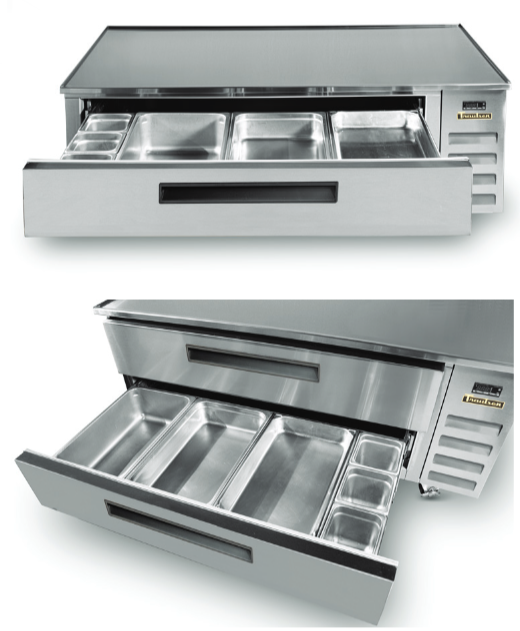
Traulsen’s C-Series Refrigerated Equipment Stand was developed in response to operator feedback seeking more storage without adding another reach-in. The design combines support for countertop cooking or preparation equipment with refrigerated storage below, allowing operators to make use of space that might otherwise serve only one function.
“Rather than asking operators to dedicate additional floor space to refrigeration, we focused on helping them unlock underutilized space already present in the kitchen,” Guerra said.
The C-Series Equipment Stand reflects a broader opportunity in kitchen design: finding ways for individual pieces of equipment to contribute more to the overall operation. By combining functions within one solution, operators can address storage needs while preserving valuable floor space for other kitchen activities.
Innovation through simplification
Maximizing kitchen performance is not only about adding capacity. It is also about making equipment easier to use, clean and maintain.
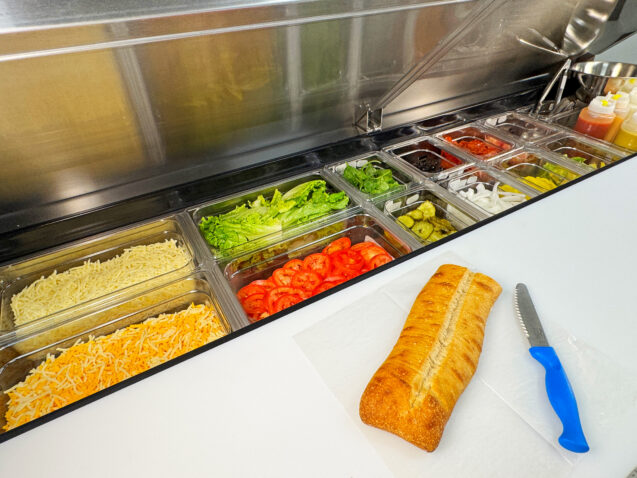
That was the driving insight behind Traulsen’s C-Series Flat Lid Prep Table. Operator feedback pointed to a need for a simpler lid design that reduced cleaning and maintenance challenges without compromising refrigeration performance or functionality.
“Operators were looking for a simpler lid design that was easier to clean, easier to maintain and less complex to operate,” Guerra explained. “The flat lift-up lid addresses those needs while maintaining the same refrigeration performance and functionality. Its lower profile also makes it an ideal solution for kitchens with overhead space constraints.”
The C-Series Flat Lid Prep Table demonstrates how innovation can take different forms. While some solutions focus on increasing capacity, others address the day-to-day experience of using and maintaining equipment. For operators, both can contribute to a more efficient kitchen.
For Jimmy’s Famous Seafood in Baltimore, the value of the C-Series Refrigerated Equipment Stand extends beyond its storage capacity. The equipment’s configuration also supports the demands of a busy kitchen environment.
“Our chef team has nothing but great things to say about the size upgrade from our previous unit,” said Matt Hegarty, Operations Manager at Jimmy’s Famous Seafood. “The compressor is also on the right side, away from our deep fryers, so it’s not getting a tremendous amount of heat surrounding it, so we have had better temperature control than our previous unit.”
The example highlights how equipment selection can involve more than storage volume alone. Configuration, placement and performance can all influence how refrigeration fits into the demands of a commercial kitchen.
Capacity only matters when performance can be trusted
Making better use of kitchen space is only part of the equation. Operators also need confidence that their refrigeration equipment can maintain reliable performance throughout demanding daily service.
Consistent temperature holding supports food safety and product quality, while durable construction helps equipment withstand the demands of commercial kitchens. For operators, the value of a refrigeration solution is measured not only by how much it can hold, but also by how reliably it performs over time.
Traulsen’s C-Series combines a high-performance forced-air refrigeration system with precise electronic controls to support consistent temperature performance. The units are also tested to applicable industry standards for commercial refrigeration.
“Our equipment undergoes rigorous laboratory and field testing to validate performance in both controlled and real-world operating environments,” Guerra said. “We evaluate temperature recovery, consistency, durability and overall performance under conditions that reflect how operators use the equipment every day. That testing process helps ensure the products leaving our facility are prepared to meet the demands and expectations of busy commercial kitchens.”
Beyond the refrigeration system itself, all high-grade stainless-steel construction is designed to withstand years of heavy commercial use.
“In busy kitchens, doors are opened hundreds of times a day, equipment is subjected to constant cleaning, and units operate alongside heat-producing cooking equipment,” Guerra said. “A durable stainless-steel cabinet helps maintain structural integrity, door alignment and gasket performance over time, all of which contribute to reliable temperature retention and long-term performance.”
Looking beyond the footprint
As kitchen footprints continue to evolve, refrigeration will play an important role in helping operators make the most of the space they have. The opportunity is not simply to add more equipment, but to select solutions that support capacity, workflow and reliable performance together.
For operators, making every square foot count starts with understanding how equipment choices can contribute to the way a kitchen works today and how it needs to perform tomorrow.
“The operators who perform best are often the ones who can keep the most frequently used ingredients exactly where they are needed, while maintaining safe temperatures and organized storage,” Guerra said.
——————————————————————————————————————-
Related stories:
- Want not, waste not: AI is helping foodservice operators cut waste, sharpen forecasting and protect margins
- AI grows up at the 2026 National Restaurant Association Show
- Meet the newest diner: Generation Alpha’s early influence on the future of foodservice
If you liked this article, sign up to receive one of our SmartBrief Food & Beverage newsletters and connect with us on our SmartBrief on Food & Beverage LinkedIn page.

Traulsen has long been known as the premier name in refrigeration for the foodservice industry. Traulsen provides professional expertise and high-quality equipment for savvy food service customers who know how important temperature control is – and want peace of mind that their equipment will keep doing its job. Our customers value high performance, reliability and longevity. They put their trust in Traulsen to deliver on all counts – and we appreciate that.