
Leadership is about driving positive change.
Leaders create change in different ways. Some influence our minds. Others move our hearts. Some earn our respect through courageous action, while others build trust by helping people succeed.
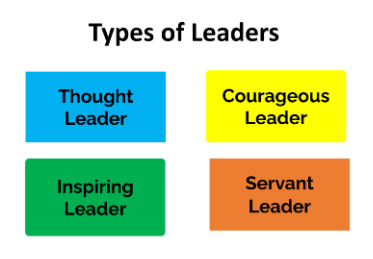
Here are four leadership approaches that consistently drive positive change.
1. Thought leaders
They influence and inspire us with their ideas.
Thought leaders challenge conventional thinking and help people see new possibilities. A professor introduces a new approach to solving a problem. A manager develops a more efficient process. An entrepreneur creates a product that transforms an industry.
Every improvement begins with an idea. Some ideas lead to dramatic breakthroughs, while others yield incremental improvements. Regardless of their size, new ideas are often the starting point for positive change.
As Denise Brosseau, CEO of Thought Leadership Lab, observed, their influence stems not from authority but from the value of their thinking.
As Oliver Wendell Holmes famously said, “The human mind, once stretched to a new idea, never goes back to its original dimension.”
Give it a try: At your next staff meeting, ask, “What new ideas should we consider to be more effective and efficient?”
2. Courageous leaders
They influence and inspire us through their actions.
Courageous leaders speak up when others stay silent. They make difficult decisions when others hesitate. They are willing to take risks to pursue what they believe is right.
An employee raises concerns about unethical conduct. A manager provides candid feedback to improve performance. An entrepreneur leaves a secure job to pursue a vision.
These leaders gain credibility because they often do what others wish they had the courage to do.
In 2002, whistleblowers Sherron Watkins (Enron Corporation), Coleen Rowley (FBI) and Cynthia Cooper (WorldCom) exposed serious organizational problems despite significant personal and professional risks. Their actions demonstrated that leadership is not always about holding a title; sometimes it is about having the courage to act.
Give it a try: Identify one difficult conversation or decision you have been avoiding, then address it this week.
3. Inspirational leaders
They influence and inspire us with their passion.
Inspirational leaders help people envision a better future and motivate them to pursue it. Their enthusiasm is contagious. They connect everyday work to a larger purpose and help people believe that meaningful change is possible.
A coach motivates a team after a tough loss. A principal rallies teachers around a new vision for student success. A CEO articulates a compelling vision for the future that energizes employees.
Inspirational leaders understand that facts alone rarely move people. People are motivated when they believe their efforts matter and when they feel connected to something larger than themselves.
Steve Jobs captured this idea when he said, “You have to be burning with an idea or a problem or a wrong that you want to right.”
When paired with a clear vision, passion can become a powerful force for change.
Give it a try: When discussing a goal, spend less time explaining what needs to be done and more time explaining why it matters.
4. Servant leaders
They influence and inspire us with the help they provide.
Rather than focusing on their own success, servant leaders focus on helping others succeed. They remove obstacles, provide resources and foster an environment where people can do their best work.
A supervisor removes barriers that frustrate employees. A mentor invests time in developing others. A leader asks, “What do you need from me to succeed?”
Servant leaders understand that leadership is not about accumulating power; it is about creating conditions in which others can thrive.
Former Herman Miller CEO Max De Pree captured this philosophy well: “The first responsibility of a leader is to define reality. The last is to say thank you. In between, the leader is a servant.”
By helping others realize their potential, servant leaders create lasting value for individuals and organizations alike.
Give it a try: Ask a team member, “What’s one obstacle I can remove to help you be more successful?”
What type of leader are you?
Which of these approaches comes most naturally to you?
Do you introduce new ideas? Take courageous action? Inspire others with your passion? Or serve others by helping them succeed?
Most leaders have a preferred approach. Exceptional leaders, however, develop all four approaches. They understand that different situations call for different forms of influence.
The ultimate leadership challenge is not choosing one approach over another. It is developing the versatility to use the right approach at the right time.
The more ways you can create positive change, the greater your impact as a leader. Use all four approaches.
Opinions expressed by SmartBrief contributors are their own.
____________________________________
Take advantage of SmartBrief’s FREE email newsletters on leadership and business transformation, among the company’s more than 250 industry-focused newsletters.