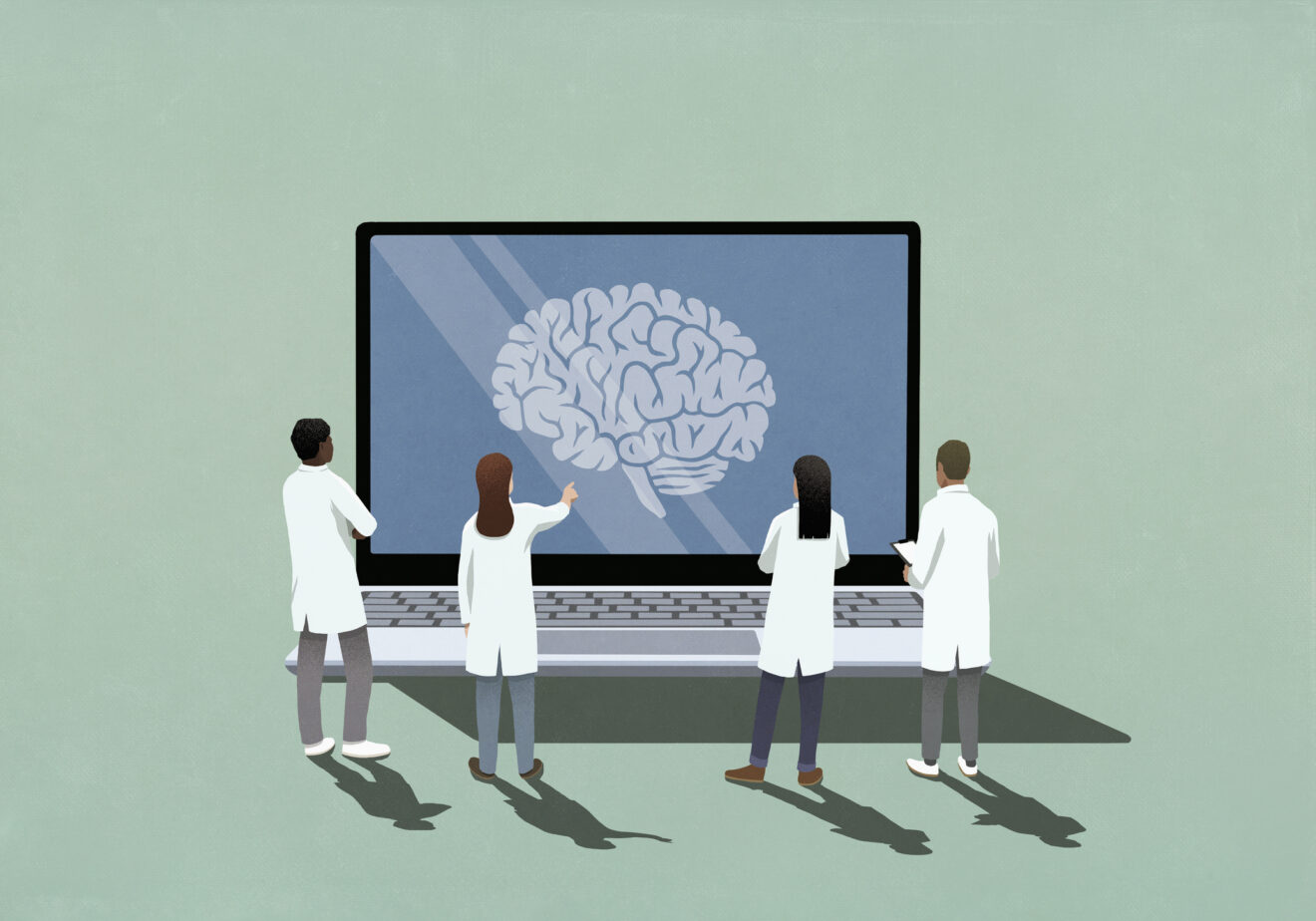
Now that we’re a few years into the proliferation of large language models, one thing has become clear: Physicians are embracing AI quickly, but that does not mean it is replacing the way they learn from one another. If anything, AI makes peer-to-peer learning and real-world experience more important. AI systems can help doctors answer routine clinical questions quickly, and may eventually perform certain tasks better than physicians, but sound clinical judgment is still built through peer-to-peer learning and real-world experience.
Consider one of the biggest breakthroughs at the American Society of Clinical Oncology’s annual meeting this year: the Phase 3 RASolute 302 trial in pancreatic cancer, which nearly doubled survival time. An IQVIA analysis found the median time for oncologists to adopt a new therapy is 3.5 years, with only 20% consistently prescribing it within the first two years of launch. Some patients can wait years for a treatment that improves survival because awareness does not create confidence.
AI can summarize the video with the trial readout in seconds, but that does not mean most doctors know how to implement it the next morning. What we heard from many oncologists coming out of ASCO is that they did not yet know what questions to ask. That is the problem: the space between knowing new evidence exists and having the confidence to change care. That is the gap AI alone does not close.
What closes it is combining faster access to information with the experience of trusted peers. Watching or listening to a trusted colleague reason through the same case can help answer lingering questions and turn awareness into confidence. I see this in the data at Vumedi, the peer-to-peer learning community, but it is not limited to our platform. For example, The Curbsiders reaches about 300,000 health professionals a month in primary care, and in oncology, Oncology Brothers has built a following around real treatment discussions for community physicians.
Both are the kind of peer programming physicians seek out on Vumedi and elsewhere. The average active physician on our platform has gone from 20 minutes a month to 52 minutes over the last four years, and physicians who use our AI tools are the most active learners. Physicians need real-life experiences that help them make sense of the data and a complete education that helps them work through the barriers and objections that determine whether practice actually changes.
The importance of peer learning
Evidence-based medicine continues to require clinical expertise, expert opinion and patient preferences. When a chatbot is only pulling from published evidence, it can summarize the data and guidelines. But many of the questions we see on AskMedi, our AI assistant on Vumedi, ask for experience: how physicians communicate risk, manage patient preferences, interpret new evidence and make decisions in the real world.
As AI use becomes even more prevalent among physicians, the foundation of peer learning becomes even more important. There is widespread concern that physicians are overusing AI tools before fully understanding their limitations. Peer-to-peer learning is part of what builds the background knowledge required to question AI. Without it, physicians may have information from AI but lack the context needed to verify it and integrate it into care.
That is where these tools come together. AI can retrieve information quickly, and peer learning helps physicians know what to do with it. We can see the two reinforcing each other in our own data. The physicians who use our AI tools the most also spend the most time learning from other physicians, while those who never touch AI spend the least time.
Facilitating the learning journey
AI can help physicians find the information and educational content they need faster. But it does not eliminate the process of learning. The learning journey is still the learning journey; it is just a lot more efficient now.
That is the value of experience relative to chatbots and AI synthesis. AI can retrieve, summarize and synthesize, but for those who want the best possible care, it cannot replace the judgment a physician has built over 15 years of treating patients and learning from others who have done the same.
Opinions expressed by SmartBrief contributors are their own.
_______________
Subscribe to AI Impact: Healthcare powered by SmartBrief and SmartBrief for Healthcare Leaders, two of our more than 30 healthcare publications.