
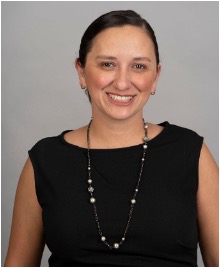
As school wellness coordinator for Long Beach Unified School District in California, Dr. Esther Deth oversees wellness curriculum for students from transitional kindergarten through 12th grade, where she helped lead the district’s rollout of Sanford Harmony’s life skills curriculum to every elementary school. SmartBrief asked her how district leaders can make relationship building a systemwide strategy for attendance and engagement.
Chronic absenteeism is at the top of many district agendas. Why should leaders treat relationships as an attendance strategy?
I recently saw compelling research showing that student connectedness was one of the strongest predictors of lower rates of chronic absenteeism. The difference in that bar graph was striking. And for leaders, here’s the key point: student connectedness is in our locus of control. We can’t control everything that happens outside our schools, but we can be intentional, at scale, about whether students feel they belong when they walk in the door.
Long Beach brought the Harmony curriculum to all of its elementary schools. What helped it take hold across so many buildings?
In Fall of 2023, we used Elementary and Secondary School Emergency Relief funds to designate a wellness facilitator in each school to support implementation of the Harmony curriculum. We held monthly meetings where we used a Train-the-Trainer model to share best practices, review student belonging data, and plan through implementation. Since these funds expired, we’ve maintained the momentum through our school counselors, who sustain the curriculum at their school. We like to think about every adult in the building and what tools we could give them. Relationship building can’t live with teachers alone. We’ve seen everyone from principals to recreation aides to custodial staff using quick connection cards. Students waiting in the lunch line get a question of the day and turn to the person in front of them. Pretty soon, they’re making up a handshake. That beats wiggling around waiting for pizza. When every adult has a simple, shared tool, connection no longer depends on which classroom a student happens to be in.
How can superintendents and school boards support principals and staff in this work?
One of the strongest moves I’ve seen is setting a goal for student sense of belonging in the strategic plan, right alongside growth in reading and algebra. That speaks volumes. It tells everyone in the system that this matters, and it gives principals permission to protect time for it.
From there, it’s about equipping people. Every adult in the building needs simple, shared tools they can use right away.
Principals often worry that time spent on connection takes away from instruction. How do you respond?
I see a lot of teachers who are nervous to turn the reins over to students. The fear is, if I let them start talking, I’m never going to get them back. But when students are used to connecting throughout the day, partner work in a math lesson goes more smoothly. They’ve already caught up on the weekend. They know and trust each other. So they can break down the math problem and get to work.
When it’s working, what does it look like at the classroom level?
I visited a 3rd grade classroom in the spring, long past the getting-to-know-you stage. The kids came in from recess, and the teacher brought them together for Meetup, a daily Harmony structure. A girl stood up to give an accolade to the classmate she’d been paired with through Buddy Up. She’d watched him have a moment at recess, and she said, “Back in September, that would have been a fight. Today I saw that he made a better choice.”
This was a student who faced many barriers and, in another setting, might have carried a label. Instead, his classmates were celebrating his growth. That’s what we’re building toward in every school.
Dr. Esther Deth coordinates programs and curriculum in the Long Beach Unified School District to support student well-being and college preparation. She’s supported the implementation of Sanford Harmony across 50+ elementary schools in her district.