For decades, diabetes monitoring relied on intermittent blood glucose measurements and glucose curves. The process itself induced stress that altered results, while day-to-day biological variability meant a single hospital or home curve often failed to represent the animal’s true glycemic behavior.
“There would be a good chance of missing hypoglycemia,” Chen Gilor, Professor of Small Animal Internal Medicine at the University of Florida, explained during a presentation at the 2026 ACVIM Forum. The limited sampling window of glucose curves provides little information about responses to meals, differences between day and night patterns or the effects of ordinary daily activities.
Continuous glucose monitoring has changed the landscape, moving beyond isolated numbers toward continuous, dynamic insight into interstitial glucose trends. It has fundamentally changed how clinicians interpret glycemic patterns, make treatment decisions and set therapeutic goals, delivering higher-quality data with far less stress to the patient.
Interpretation of CGM data differs markedly from traditional blood glucose thinking. Measuring a pet’s blood glucose at a specific moment is rarely the real clinical need. “We try to predict what the glucose is going to be the rest of the day, tomorrow, next week,” Gilor said. For that kind of long-term trend prediction, interstitial glucose is the better signal because there is less noise and it provides more information.
That shift in data quality has driven a change in treatment approach. Historically, clinicians treated conservatively, keeping the glucose nadir relatively high while avoiding hypoglycemia and overt clinical signs. The tradeoff was a high rate of cataract formation in dogs and low remission rates in cats with diabetes. With CGM’s round-the-clock visibility, clinicians are now pursuing relatively rapid, aggressive but safe normalization of blood glucose. They can aim for true euglycemia rather than symptom control.
Veterinarians should ensure clients understand the differences between interstitial and blood glucose readings and manage patients retrospectively on longer-term trends rather than a single glucose value. They should also rely on owners to track clinical signs while the veterinary team manages the glucose data.
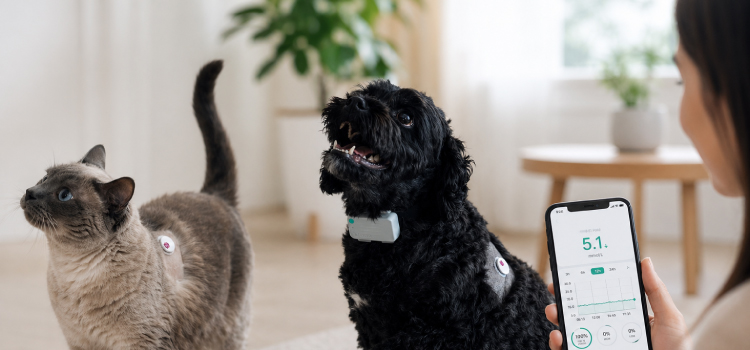
Human CGMs (e.g., FreeStyle Libre and Dexcom) are widely used off-label in dogs and cats, but sensors designed specifically for pets are emerging. These may offer pet-specific adaptations and wider reported glucose ranges. Pet-specific systems from Adapet, such as the Adapet CGM V Plus and AdaPod (a wearable device that collects and relays sensor data without requiring the owner’s phone to remain in constant Bluetooth range), promise further improvements in reliability, ease of use and manufacturer support that is often unavailable for human devices used off-label.
Cost-effectiveness and sensor longevity remain common owner concerns. Jose Estrada of the University of Florida’s Feline and Canine Diabetes ACVIM Fellowship noted that one earlier feline study found a median sensor wear time of 5.5 days. Although wear time may be shorter in pets than in humans, several days of high-quality data still represent a major advance.
“Maybe one, two or three sensors is enough to get glucose control in our patients,” Estrada said, provided the practice has a team ready to review the data daily and act on it. Gilor echoed this, urging veterinarians to set expectations early: even 24 hours of data is valuable, and clients who understand this will not be overly concerned when a sensor falls off after five days. With CGMs, “we get a lot of information, a lot of data, and if we know how to use that data, we can get patients under control pretty fast,” Estrada explained.
The bottom line for practicing veterinarians is that continuous glucose monitoring has moved veterinary diabetes care from intermittent, stressful and often unrepresentative snapshots to continuous, physiologically informative trends. When clinicians understand the physiological lag, interpret data in context and educate owners appropriately, CGMs enable safer, more rapid achievement of euglycemia, reduce the burden of clinical signs and improve long-term outcomes for both dogs and cats.