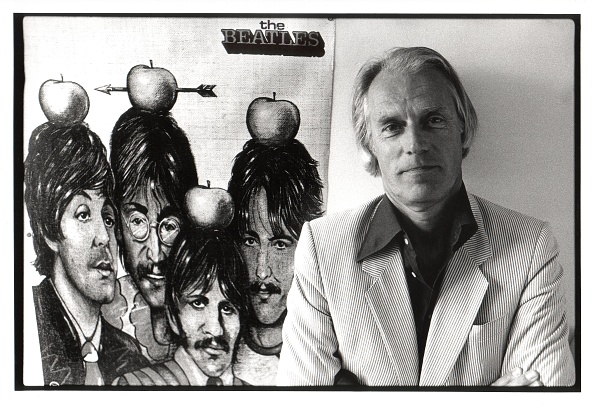
When George Martin was young, he dreamed of becoming a pianist-composer in the style of his idol, Rachmaninoff. After being discharged from the Royal Navy, he enrolled at Guildhall School of Music and Drama to study composition. After three years, he saw an advertisement for a position at EMI’s Abbey Road Studios, a place he had never heard of, but in years to come, he and the artists he produced would make it hallowed ground.
I watched “Produced by George Martin,” a documentary about his producing style and how he worked with artists, beginning with comedians Spike Milligan and Peter Sellers and later Cilla Black, Jeff Beck and, most famously, The Beatles. Three elements of Martin’s approach resonated with me because of their application to management. Let’s take them one at a time.
How Martin worked
The first is interpretation. In the documentary, Martin is seen leafing through a book of impressionist paintings. He notes that, until then, the goal of painting was verisimilitude. The painters of the impressionist school interpreted what they saw via light, color and shade. Martin applied the same technique to producing.
As he explains, in the early days of recording, the production team’s job was to produce a faithful record of the performance. Martin saw another route, and he explored it with great success in “The Goon Show” recordings, which featured comedy built on sketches and “animated” with multiple voices, sound effects and music.
The second attribute is acumen. Martin was a trained musician, and he knew how to make the musicians in his studio sound their best. While he was classically trained and recorded orchestral music, he dealt expertly with rock musicians. His deep understanding of music put them at ease so they could do their best work. Singer Cilla Black, herself from working-class Liverpool, was especially appreciative of Martin’s gentle and supportive style.
The third is presence. While his family roots were Cockney, he eventually acquired the bearing of an English gentleman. And he looked the part: tall, fit and handsome. His accent was BBC English, something he practiced not to put on airs but to complement his management style.
Martin looked the part of a producer, but he did not dominate. He was a collaborator who saw his role as letting artists express themselves in their own way, not his way. The Beatles’ “Sgt. Pepper’s Lonely Hearts Club Band” took more than six months to produce in the studio, and it was where Martin’s mastery of innovative sound mixing came to the fore. Yet he always pointed out that the work belonged to The Beatles’ artistry, not his own.
The Martin legacy
What we can take from Martin’s approach to work is that it is a craft. Apply your skills and, along the way, bring in others to collaborate. Use your whole self to lead. Be present and available to others. Find ways to help others do their best work. And lastly, as shown in the documentary, make time for friends and family.
First impressions
In a well-told story about Martin’s introduction to The Beatles, he didn’t like them, or rather, he did not like a recording he received from their manager, Brian Epstein. Martin did like Epstein and, as he said, extended a lifeline by inviting him to bring The Beatles for a one-hour session at Abbey Road Studios. Again, Martin wasn’t enthralled with their music, but he thought he could work with them, so he offered them a recording session. The rest is history, and it shows that first impressions can be wrong, but if you pay attention, you may find something worth exploring.
Opinions expressed by SmartBrief contributors are their own.
Subscribe to SmartBrief’s FREE email newsletter on leadership. It’s among SmartBrief’s more than 250 industry-focused newsletters.