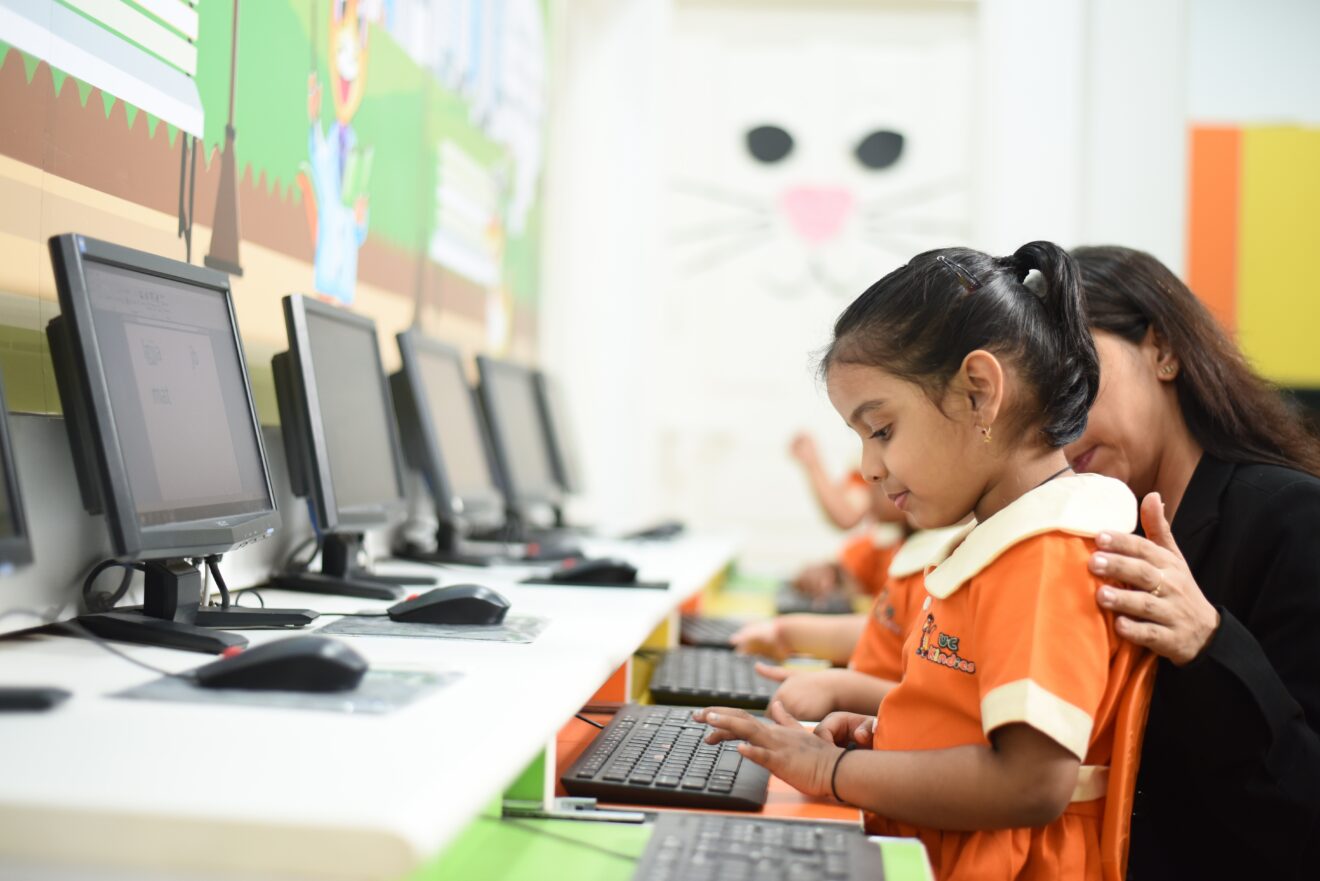
If we were teaching one child at a time, everything would look different. We would begin by getting to know that child as a person, not just as a set of data points. We would learn what captures their attention, what they care about, what frustrates them, and what helps them feel successful. Learning would not start with a fixed set of expectations. It would start with the learner.
From there, we would build the classroom experience around them. We would move at their pace, not the pace of the calendar. If they understood something quickly, we would not slow them down simply because a schedule says to wait. If they needed more time, we would not move on just because it is time to start the next unit. Mastery, not coverage, would drive our decisions.
We would also rethink how we give feedback. Instead of waiting weeks to communicate progress through a grade, we would provide feedback continuously through conversation. The child would know what they are doing well, what they are working toward, and what to try next. They would be part of that conversation, developing the ability to reflect on their own learning.
We would make learning matter. We would connect it to real questions, real work, and real audiences. The child would create, solve problems, and share their thinking in ways that feel purposeful. School would not feel separate from life. It would feel like preparation for it.
Most importantly, that child would feel known. Their ideas would shape the learning experience. They would not be trying to fit into school. School would feel like it fits them. And if that could happen, something powerful might follow. Engagement would no longer be something we have to manage. It would become a natural response to meaningful work.
If we were teaching one child at a time, we know what we would do. The challenge is not a lack of knowledge. The challenge is that we have built systems that make it difficult to do those things for each child.
Instead, we often design for “all.” It sounds right. It feels inclusive. But in practice, designing for all often means designing for the average. And as Todd Rose argues in The End of Average, the average student does not actually exist. When we design for an imaginary middle, we inevitably underserve the students who fall on either side of it, which is to say, we underserve each.
This tension shows up in the way we organize time, instruction, and assessment. Traditional school structures prioritize efficiency and predictability. Students move through content at the same pace. Time is fixed, while learning varies. Yet research going back decades suggests we have this backward. Benjamin Bloom’s work on mastery learning demonstrated that when time is allowed to vary and students receive targeted support, most students can reach high levels of understanding. In fact, Bloom found that students in 1-to-1 tutoring environments performed at levels two standard deviations above those in traditional classrooms, a finding often referred to as the “2 sigma problem.” We know what works when we design for the individual. We simply have not built systems that make it the norm.
More recent research reinforces this idea. John Hattie’s synthesis of over 800 meta-analyses related to achievement highlights the impact of feedback, teacher clarity, and strong relationships as some of the most powerful influences on student learning. These are precisely the elements that become more natural when we are able to respond to learners as individuals. Similarly, studies on student engagement, including work from Gallup, show that engagement declines as students move through school, often because learning feels less relevant and less connected to their lives.
None of this suggests that we need a separate teacher for every child. It does suggest that we need to rethink the design of school. When we shift from designing for all to designing for each, different structures begin to make sense. Smaller learning communities allow students to be known. Flexible pacing allows time to adjust to learning instead of the other way around. Performance-based assessments create opportunities for students to demonstrate understanding in meaningful ways. Real-world connections make learning feel relevant.
We are already seeing examples of this in practice. Schools and systems that prioritize relationships, relevance, and responsiveness are showing that it is possible to move closer to what we would do if we were teaching one child at a time. Microschools within public school districts permit students to advance when they display ability, rather than limit them by grade level. Competency-based education is replacing seat time in traditional classrooms across the country, led by innovators bold enough to pilot something different.
The barrier is not whether it can be done. The barrier is whether we are willing to redesign the system to support it.
Designing for all will always feel safer because it allows us to maintain familiar structures. Designing for each asks more of us. It asks us to pay closer attention, to be more responsive, and to build systems that can adapt to learners rather than forcing learners to adapt to the system.
But it is also more honest. Because when we picture a single child in front of us, we know what they need and what they deserve. The question is whether we are willing to build schools that make that same experience possible for each child who walks through our doors.