
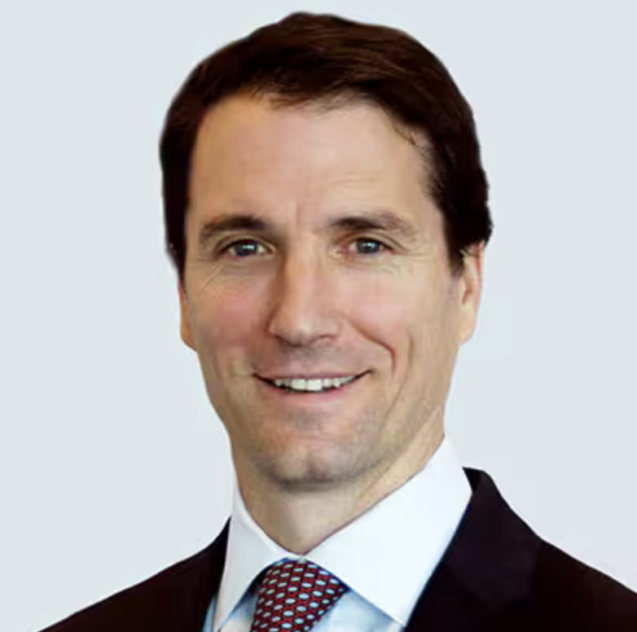
With yields higher but markets more complex, resilient fixed-income portfolios require more than chasing income. SmartBrief spoke with State Street Investment Management’s Matt Nest, Global Head of Active Fixed Income and Liquidity Solutions, and Matt Bartolini, Global Head of Research Strategists, about navigating today’s bond markets.
SmartBrief: How have investors’ priorities around income and fixed income portfolio construction changed over the last year?
Matt Nest: Income is back, but the more important change is that investors can once again begin with the outcome they want rather than the yield they can find. Higher starting yields can support meaningful income without automatically requiring investors to move down in quality, extend duration, or sacrifice liquidity. The opportunity is to use that improved starting point to build portfolios more deliberately around client needs.
That matters as more clients move from asset accumulation to using portfolios to fund spending needs. The conversation is shifting from “How much yield can I generate?” to “What cash flows does the client need, how dependable must they be, and which risks are appropriate to support them?”
Investors also have a broader toolkit. Advisors can combine exposures around the outcomes that matter, such as reliable cash flow, capital preservation, liability matching, downside mitigation, or implementation flexibility, rather than relying on broad bond categories alone. The practical implication is an objectives-based process: define what fixed income must accomplish, identify the risks the client can bear, and then select the sectors, maturities, and vehicles best suited to that mandate.
SmartBrief: How can fixed income help investors build more resilient portfolios across changing market environments?
Matt Nest: Fixed income spans diverse collateral, from governments and corporations to housing, transportation, and consumer credit. Those exposures are linked to different parts of the economy and respond differently to growth, inflation, monetary policy, and liquidity. That breadth allows advisors to assemble multiple sources of income and return rather than making the portfolio dependent on a single market forecast.
For example, government bonds may provide liquidity and interest-rate sensitivity, while corporate and securitized credit can add income supported by different underlying cash flows. Floating-rate instruments may behave differently from longer-duration bonds as policy changes. Combining these exposures intentionally can diversify the portfolio’s economic sensitivities and reduce reliance on any single return driver.
Resilience does not mean eliminating risk. It means understanding which risks are being taken, ensuring each serves a defined purpose, and avoiding a portfolio whose success depends on only one outcome, such as falling rates, continued economic strength, or further credit-spread compression.
SmartBrief: What are three portfolio construction principles advisors should consider when building income-oriented portfolios today?
Matt Nest: Three principles that advisors may consider when translating today’s improved income opportunities into portfolios aligned with client needs and long-term investment objectives.
- Start with the outcome, not the highest yield. Determine whether the client needs current income, capital preservation, predictable cash flows, liquidity, or long-term total return. That objective should dictate the balance among duration, credit, liquidity, and income potential and help advisors distinguish compensated risk from risk unrelated to the client’s goal.
- Diversify the sources of income. Similar yields can come from very different economic exposures. Government debt, corporate credit, securitized assets, and floating-rate instruments may behave differently as growth, inflation, policy, and liquidity change. Diversifying those drivers can make the income stream less dependent on one sector or market regime.
- Use a core-satellite approach. A broad, liquid core can provide stability, diversification, and a reference point for the total allocation. Targeted satellites can then address specific client needs or pursue opportunities where an advisor has greater conviction. The structure creates discipline without sacrificing flexibility.
SmartBrief: Why is it important to think about income generation through a total-return lens rather than focusing solely on yield?
Matt Bartolini: The reset in interest rates has created a stronger starting point for fixed income returns. Investors no longer need to stretch as far for income as they did during the post-global-financial-crisis period. But yield is only one component of the outcome they experience. Total return also reflects changes in rates, credit spreads, defaults, and the reinvestment of income.
That distinction is particularly important in the current environment. With inflation and policy uncertainty still elevated, longer maturities total return profile are exposed to fiscal and term-premium pressures that may lead to duration induced total return losses despite the high starting level of yield.
Similarly, with credit spreads relatively tight, there is an asymmetric profile where spread changes are unlikely to be a driver of positive total returns – as there less room for further spread compression to provide gains versus spread widening to inflict price losses.
A total-return framework asks not only how much income a portfolio generates, but whether investors are being adequately compensated for the risks required to produce it.

SmartBrief: As fixed income markets have become more complex, where can active management add the most value for advisors and their clients?
Matt Bartolini: The core of a bond portfolio is crucial area where active can enhance income and risk management. And the outcome for a core is not simply to own the entire bond market. It is to determine where duration, credit, and security-selection views are most likely to enhance income and returns – all the while managing the volatility of both of those outcomes.
That has become more important as inflation uncertainty, changing Federal Reserve expectations, rising government debt, and greater issuer dispersion pull different parts of the market in different directions.
Yield-curve positioning is one example where active can add value and help construct more resilient total return – and income – streams.
The front end remains closely linked to monetary policy and short-term inflation expectations driven by energy supply shocks, while longer maturities increasingly reflect fiscal dynamics, Treasury supply, term-premium pressures, and more structural inflation dynamics that has raised the mid-to-longer term floor that the Fed is trying to bend lower.
Active managers can evaluate if any of those risks are adequately compensated for and reposition key rate durations as those conditions evolve.
Security selection is another. Tight aggregate spreads can obscure meaningful differences across issuers, industries, and structures. Active managers can evaluate fundamentals, avoid weaker credits, and allocate selectively where compensation appears more attractive. Specialized areas such as securitized credit and floating-rate assets may also introduce return drivers that are less represented in traditional core bond benchmarks.
Active ETFs can help investors access core solutions, among other bond strategies, without sacrificing the liquidity, transparency, and implementation efficiency they expect from the traditional indexed-based ETFs.
SmartBrief: Income today can come from many different sources. How should advisors balance yield, diversification, liquidity, and portfolio resilience?
Matt Bartolini: The improved yield environment lets advisors build from a foundation of high-quality income, and add risk only where the compensation supports a defined objective. The goal is not simply to maximize portfolio yield, but to improve risk-adjusted income outcomes, while balancing duration, credit, concentration, and liquidity.
Diversification can improve that trade-off. Rather than cataloguing every available sector, advisors can focus on exposures with distinct economic drivers. Corporate credit, securitized assets, and floating-rate instruments may complement one another by broadening sources of carry and reducing dependence on any single market and economic segment. And this is because, for those three segments, the way their cash flows are generated are from different fundamental sources with different economic drivers and relationships.
SmartBrief: Advisors have access to active ETFs, bond ladders, traditional active strategies, and multi-sector solutions. How should they combine these approaches?
Matt Bartolini: These approaches are complementary tools, not competing solutions. Bond ladders can provide greater visibility into expected cash flows and distribute reinvestment risk over time, particularly for investors with defined future spending needs. They do not eliminate credit, inflation, or liquidity risk, but they can provide a useful foundation when cash-flow precision is a priority.
Active strategies can add adaptability around that foundation by adjusting duration, repositioning across sectors, evaluating individual securities, and pursuing opportunities created by dislocations. Multi-sector strategies can broaden the opportunity set beyond traditional investment-grade bonds and introduce return drivers that respond differently to changing economic conditions.
The ETF structure can enhance implementation efficiency through liquidity, transparency, and trading flexibility. Used together, ladders can provide cash-flow visibility, active management can provide adaptability, and multi-sector solutions can provide broader diversification. The appropriate mix should begin with the client outcome and assign each tool a clear role within the portfolio.
Disclosures
The views expressed are the views of the authors through the period ended September 25, 2026, and are subject to change based on market and other conditions. This document contains certain statements that may be deemed forward-looking statements. Please note that any such statements are not guarantees of future performance, and actual results or developments may differ materially from those projected.
The information provided does not constitute investment advice and should not be relied upon as such. It should not be considered a solicitation to buy or an offer to sell any security. It does not take into account any investor’s particular investment objectives, strategies, tax status, or investment horizon. Investors should consult their tax and financial advisor.
All information is from sources believed to be reliable, but its accuracy is not guaranteed. There is no representation or warranty as to the current accuracy, reliability, or completeness of, nor liability for, decisions based on such information, and it should not be relied on as such.
Investing involves risk, including the risk of loss of principal.
Fixed income securities are subject to credit risk, interest-rate risk, inflation risk, and liquidity risk. Bond prices generally fall when interest rates rise. Investments in below-investment-grade debt securities may involve greater credit and liquidity risk than higher-rated securities. Diversification does not ensure a profit or guarantee against loss.
Exchange traded funds trade like stocks, are subject to investment risk, fluctuate in market value, and may trade at prices above or below the ETFs’ net asset value. Brokerage commissions and ETF expenses will reduce returns.
AdTrax Code: 9153019.1.1.AM.RTL
Expiration Date: 9/30/2027