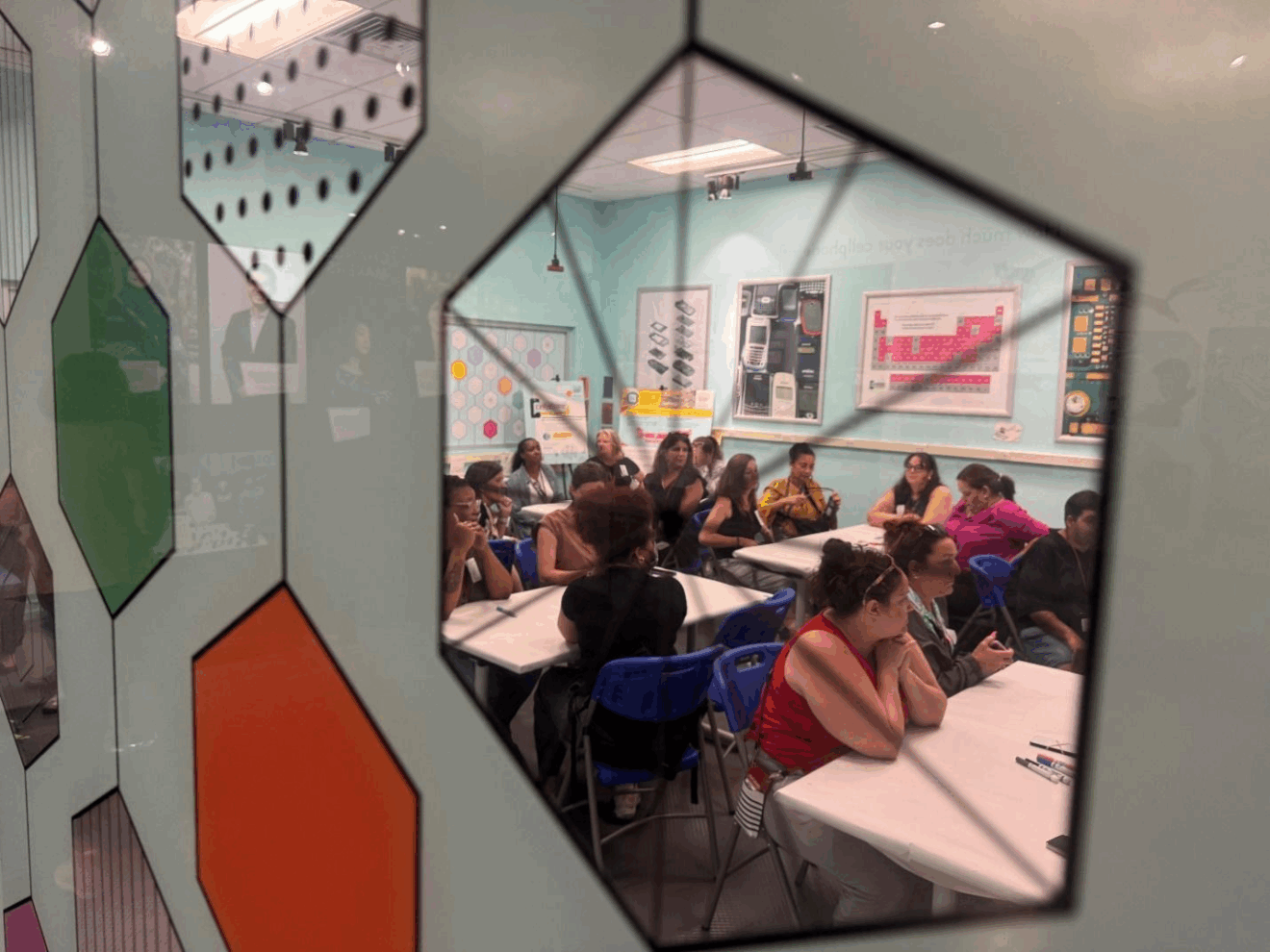
The Smithsonian offers a variety of educational programs for teachers and students across the country. Across science, history, culture, arts and design, educators at the Smithsonian have designed authentic learning opportunities leveraging technology tools, connecting communities and challenging students to imagine the future.

Stargazing for discovery
How many stars can you see in the night sky from your backyard? Any planets? At the Whipple Observatory on Mt. Hopkins in rural southern Arizona, the combination of a dark sky and dry, clear conditions creates a perfect environment for stargazing. Scientists at the Center for Astrophysics | Harvard & Smithsonian research facility use many kinds of telescopes at this desert location to study exoplanets (planets outside of our own Solar System), supernovae, and the most violent activity in the Universe.
Plus, beginning Fall 2025, the Smithsonian Astrophysical Observatory is launching the Smithsonian STARS (Scientists Taking Astronomy to Rural Schools) program. The program will roll out to rural schools across Arizona, but this is just the beginning.
The program aims to equip every rural school in America with a telescope and astronomy lesson plans. It will gradually expand to other states, eventually reaching every state and every rural school in the nation.
Not in Arizona? No problem. You can control a telescope from your laptop, no matter where you live, with the MicroObservatory Robotic Telescope Network. Educators and learners of all ages can try it and then share their images and observations. See what it’s like to be a professional astronomer! Read more about these free technology tools from Smithsonian Astrophysical Observatory educators Mary Dussault and Erika Wright in a previous SmartBrief article.
Exchanging ideas across miles
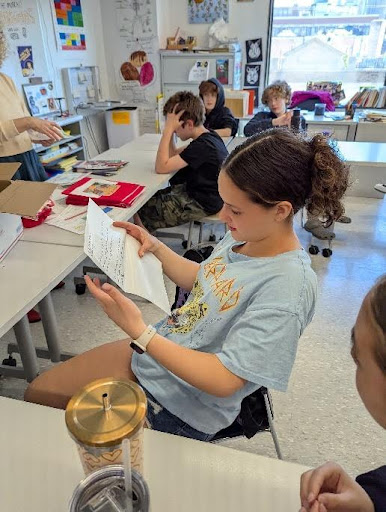
As America approaches its 250th birthday in 2026, it’s clear that communities of all sizes have drawn inspiration from democracy’s core qualities in shaping their American experience. Helping young people grasp their community’s unique contributions, and those of others, helps to ensure a robust civic dialogue. Through the Democracy in Dialogue Virtual Exchange program, students explore issues virtually with their peers nationwide. When two classrooms in different states come together to discuss their hometown history and stories, students can appreciate commonalities and differences. Take Santa Fe, N.M., and New York City. Meeting virtually over four months, 8th-grade students from both communities tackled the question: What role does genuine interest from others play in enhancing our sense of belonging? Students explored maps, letters, photographs and objects together, discovering how their curiosity about each other builds bridges across cultural divides. All involved expressed the transformative power of feeling seen and heard, reminding them of their interconnectedness across thousands of miles. The Santa Fe students composed an original poem for their new friends, declaring, “Borders divided us, but we crossed them. Destiny found us, and now together, we celebrate 250 years of tradition on this land we call home.”
As Smithsonian Education Specialist Ali McKersie put it, “All involved expressed the transformative power of feeling seen and heard, reminding them of their interconnectedness across thousands of miles.” McKersie and fellow Democracy in Dialogue Virtual Exchange Program education specialist Jared Morris shared insights into the program activities and impact in a previous SmartBrief article. The program is now accepting applications for the Spring 2026 cohort until Oct. 5.
Designing solutions with youth
What solutions would you design to help your community thrive? Every year, Cooper Hewitt, Smithsonian Design Museum in New York City, asks high school students around the country to respond to a design challenge for a national competition. Museum staff and professional designers judge entries based on innovation, impact, relevance and communication. In 2025, finalists traveled to Cooper Hewitt to develop their ideas with the help of designer mentors.
Mark your calendars! The 2026 National High School Design Competition will launch in January 2026. In the meantime, explore previous design competition key questions and the work and experiences of some previous finalists. You and your students might find motivation and inspiration from past projects.
In 2023, Cooper Hewitt educator Vassiliki Giannopoulous and Bella Jacobs co-presented at the annual Smithsonian National Education Summit conference. Jacobs was a student finalist in the 2019 National High School Design Competition and presented her project RainScales, a project she originally designed for the competition and recently implemented. Addressing the climate crisis and global peace, RainScales is a water collection device for informal “shack” homes. It creates a water supply independent of inequitable water distribution where there is severe water scarcity. The session is available for replay here.
Whether you support K-12 classrooms, teens, or families, the Cooper Hewitt’s Learning Hub offers engaging activities, comprehensive lesson plans, and expert career advice demonstrating how design can change the world.
Co-creating community learning materials
Have you ever eaten a meal and been transported to a memory? The taste or smell reminded you of a family member, or a place close to your heart. Food connects recipes to the stories of their makers and our heritage, as these dishes travel across time and place. ”From Plate to Place” is a community resource created through a collaborative partnership between the Smithsonian Asian Pacific American Center, Mallory Matson, a Houston-based educator, Culture of Health Advancing Together, a Houston-based nonprofit, and Mid-America Arts Alliance. The resource invites audiences to explore how food has been a vital part of the Asian migrant community in Houston, Texas.
As the Asian migrant community made Houston their new home, they adapted their culinary traditions to local ingredients and began farming locally to preserve their food heritage sustainably. In doing so, they planted cultural roots that continue to shape and enrich Houston’s diverse landscape.
Through this collaborative project, the Houston-based team and the Smithsonian share recipes from local migrant communities and the stories accompanying them, preserving and honoring the rich memories, stories and flavors they carry. Sharing these recipes ensures that the traditions of these communities are celebrated, not forgotten — fostering inclusivity and appreciation through every dish.
You and your students can learn more about the Smithsonian Asian Pacific American Center’s Co-Create Initiative, including a story map of past 2023-24 educators, community organizations, and museum collaborators alongside their projects. These wide-ranging, creative resources — from cookbooks and zines to posters and maps — will introduce local, regional and national audiences to the rich, diverse and ongoing histories of Asian American, Native Hawaiian and Pacific Islander peoples and communities across the US. A second cohort is underway this year, and additional resources are being developed.
Additional resources for a successful school year ahead
There’s something for everyone through the Smithsonian’s online learning hub. Educators can search through free curated resources across Early Learning, Art and Design, Science and Nature, Social Studies and Civics, and STEAM Learning, find tips for hosting impactful field trips at our museums, as well as professional learning opportunities. Students can explore engaging activities and games and identify internship opportunities with experts and mentors from across our museums and research centers. Teachers can also direct interested parents and caregivers to videos, resources and recommendations for visiting museums. Here’s to starting the school year strong!
Opinions expressed by SmartBrief contributors are their own.
Subscribe to SmartBrief’s FREE email newsletter to see the latest hot topics on edtech. It’s among SmartBrief’s more than 250 industry-focused newsletters.