K-12 educators report that civics can often feel abstract and disconnected from students’ lived experiences, making it hard to engage them in the subject. As the nation prepares for the 250th anniversary of the adoption (July 4, 1776) and signing (Aug. 2, 1776) of the Declaration of Independence, the Smithsonian education team has plans to make the historic occasion far from boring, highlighting educational opportunities and ideas during the sixth Smithsonian National Education Summit. Educators can attend the free, three-day summit in Washington, D.C., July 14-16, or take advantage of online and hybrid opportunities, a toolkit of actionable strategies to spark curiosity and help students thrive, such as a curated set of resources for “Teaching the 250th” and ready-made lessons.
Even online attendees find usable takeaways
Educators who rely on online participation come away more than satisfied with the experience. After joining some of last summer’s sessions online, Erika Sponsler, a high school US history educator in Michigan, posted praise on Facebook:
- Thank you so much for all the time and energy that goes into organizing this and making it available to educators — especially those of us at home who couldn’t be there in person! I’m already reorganizing my history classes around the 250th [anniversary of the Declaration of Independence] and thinking of how to use the themes of this summit to frame this year’s guiding focus for my year in class. It’s conferences and summits like these that help me keep going into year 28 of teaching!
Educators like Erika across the country are dedicated to marking a once‑in‑a‑generation opportunity for reflection on the nation’s founding ideals, not just as a historical milestone but as an invitation to examine how those ideals have evolved and the roles young people will play in shaping the next 250 years of our nation.
But we know that educators often face limited planning time and value professional development sessions that provide curated supplemental resources they can use right away in their classrooms, libraries and learning spaces. We’re here to help.
The presenters at the Smithsonian’s summer Summit often ground civics learning in local stories, current issues and authentic dialogue approaches, which can powerfully address the disconnect students often feel. Summit presenters are also encouraged to lean into practical application: What can educators gain that they can immediately take back to their students, and how can they apply it?
To ensure the Summit’s goal reflects and acknowledges realities of a wide range of learning environments, the planning team meets regularly with a Teacher Advisory Panel representing varied teaching experiences, contexts and geographies. This collaboration ensures that the sessions offered meet current needs and deliver transferable takeaways for the classroom and beyond.
What to expect from the 2026 Summer Summit

This year’s Summit finds educators at a pivotal moment as our nation approaches the 250th anniversary of the signing of the Declaration of Independence. The Summit focuses on the theme “Together We Thrive: Towards a More Perfect Union” and invites us to reflect on our shared story and imagine the future we want to build. Summit session strands connect civics to the arts, history and STEM and offer engaging ideas for educators of early learners to young adults. Plus, a specialized strand offers insights into the Smithsonian’s Democracy in Dialogue Virtual Exchange program, with educators and students sharing how object-based, place-based and project-based inquiry can create the conditions for meaningful civic dialogue.
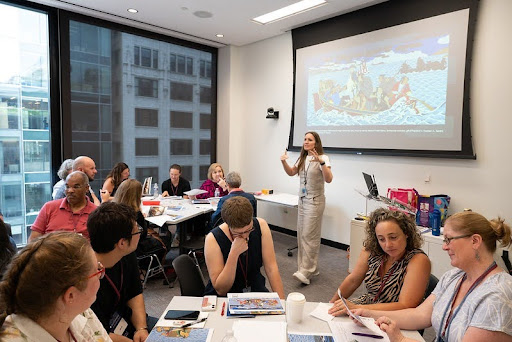
In-person participants at the Smithsonian National Education Summit can join our interactive breakout sessions, moving from theory to practice and leaving with a toolkit of actionable strategies to spark curiosity and help your students thrive. Photo by Norwood Photography.
Here are just four stand-out sessions with supporting resources across subject areas and grade levels that we’re featuring at the 2026 Smithsonian National Education Summit:
Why Local Stories Matter in a 250-Year Journey
Tuesday, July 14, 12-12:50 pm, ET
Cultivating the Power of Dialogue session strand
Online session; free registration here
As the nation marks 250 years of the American experience, democracy is shaped not only by historic moments but by everyday people and communities. This session explores how young people can deepen civic understanding by investigating the stories, objects, and places that define their hometowns. Drawing on values from the Preamble — diversity, innovation and perseverance — participants will consider how these show up in their own communities. Through snapshots from the Democracy in Dialogue Virtual Exchange Program, we highlight how place-based inquiry helps youth examine their identities, connect with peers across regions, and recognize every voice in a healthy democracy.
Beyond the Visit: Smithsonian Digital Tools
Tuesday, July 14, 1-1:50 pm, ET
Placing History in Context session strand
Online session; free registration here
Smithsonian staff from the Asian Pacific American Center, National Portrait Gallery and the Reckoning with Our Racial Past Initiative will showcase three cutting-edge digital resources for the innovative classroom. Discover digital objects for real-world 3D exploration, online exhibits that surface local community stories, and thinking routines that expand historical narratives and foster dialogue — all making Smithsonian collections accessible beyond an in-person visit. Walk away with practical implementation strategies and insights from educators who have already brought these tools to life.
Inventor Stories to Inspire the Next Generation
Tuesday, July 14, 2-2:50 pm, ET
Designing STEAM Solutions for Civic Challenges session strand
Online session; free registration here
The Lemelson Center’s Inspiring STEM Pathways is a multimedia initiative that helps middle school students see themselves as inventors through the stories of athletes who invented solutions to challenges they saw in their own communities. Invention education, which lives at the intersection of civics and STEAM disciplines, offers educators opportunities to weave hands-on activities and student-led inquiry into their instruction. In this session, we’ll demonstrate practical strategies that help teachers bring inventive habits of mind and innovative thinking into the classroom through compelling video interviews and ready-to-use educational resources.
More Colors Than the Eye Can See: The Art of Jeffrey Gibson
Tuesday, July 14, 3-3:50 pm, ET
Leveraging the Arts as Civic Voice session strand
Online session; free registration here
The Smithsonian’s National Museum of the American Indian, Native Knowledge 360°, has released a new resource spotlighting artist Jeffrey Gibson — the first solo Indigenous artist to represent America at the Venice Biennale in 2024 — making contemporary Indigenous art accessible and easy to bring into your classroom. This classroom-ready resource includes video interviews, a virtual gallery, lesson plans for K-12 educators, and a Curator’s Corner designed to excite students about careers in the arts. Get inspired by Gibson’s work and leave confident, bringing hands-on art making into your classroom.

What else can you learn?
That’s just from day one of the Summit! Those able to attend the Summit in person also can see Smithsonian educators at exhibitor tables sharing their latest education resources and programs, plus the Summit’s keynote speakers will bring fresh perspectives and insights about how students engage, create, imagine and participate in civic life, including:
- Mac Barnett, 2025-26 National Ambassador for Young People’s Literature and best-selling author whose playful and innovative storytelling inspires curiosity, joy and civic imagination in young readers.
- Hahrie Han, 2025 MacArthur Fellow and director of the SNF Agora Institute at Johns Hopkins University, whose research as a leading political scientist on civic engagement and democracy offers powerful insights for educators and connected community partners.
- Top educators from across the country, including teacher leaders from the Council of Chief State School Officers’ National Teachers of the Year Program and Smithsonian museum experts, are sharing their most innovative practices.
Thanks to the presenting sponsor, Horace Mann, the Summit will also honor the first recipient of the Smithsonian Educator Excellence Award, celebrating an educator who exemplifies creativity, leadership and community impact. Pre-registration is required and free for all educators. Learn more on the 2026 Smithsonian National Education Summit website.
Opinions expressed by SmartBrief contributors are their own.
Subscribe to SmartBrief’s FREE email newsletter to see the latest hot topics on edtech. It’s among SmartBrief’s more than 250 industry-focused newsletters.