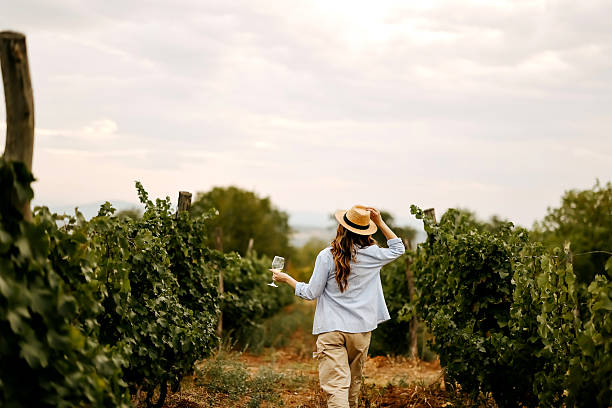
For solo travelers, the “singles tax” can make trips significantly more expensive. Elyse Koenig, a Kindred member, shares how the members-only home-swapping network has helped her travel more often while maintaining comfort and flexibility — and what her experience says about the opportunity for travel brands to better serve independent women travelers.
Solo travelers often face a “singles tax” that can make trips significantly more expensive. How have home swapping and travel rewards strategies helped you travel more often without sacrificing the experiences you value?
Points and miles are a fun game for me. I love figuring out how to maximize them, particularly for international business class travel, where the value can be incredible. But domestic travel in the U.S. can still be very expensive, especially when you are not splitting accommodations with someone else.
Kindred allows me to travel more often without compromising on comfort, space, or location. I recently booked a home on the North Shore of Oahu, Hawaii, one of my favorite places, where there are very few hotels and comparable accommodations can be extremely expensive. Because I have a Kindred Passport, which gives me $0 service fees for a year, I am paying only a $300 cleaning fee in total for the trip. I also host almost every time I leave Los Angeles, so I have accumulated significant credits that make me excited about the longer trips I can take in the future.
Trust and safety are top priorities for many solo travelers. How does being part of Kindred’s Women Travelers Circle influence the way you choose destinations and accommodations?
As a woman traveling alone, I always research the neighborhood, transportation and whether I will feel comfortable coming and going by myself. For my upcoming stay in Hawaii, I saw that the host is also a solo woman living there. I did not choose the home specifically because of that but knowing another woman lives there independently gave me an added sense of reassurance about the home and surrounding community. It is not a substitute for doing your own research, but it is another helpful trust signal.
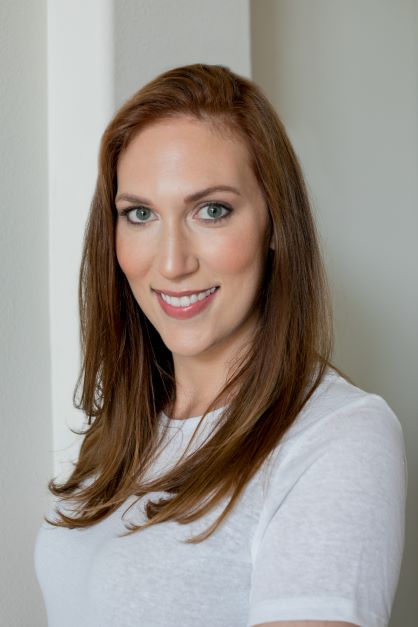
You’ve said the best trips are built around curiosity, connection and local experiences. Can you share a memorable home-swapping experience that changed the way you think about travel?
Kindred has effectively allowed me to become bicoastal. I own a communications consultancy and travel to New York frequently, but extended stays there can be cost-prohibitive. Having access to a real home allows me to stay longer, work normally and treat New York as part of my life rather than as a short business trip.
It was especially meaningful when my sister had a baby. I was able to stay for three weeks within walking distance of her home. Kindred made it possible for me to be fully present for an important family moment without thinking twice about the financial aspect of the trip.
The Women Travelers Circle emphasizes connections with like-minded travelers, not just accommodations. How important is community in today’s solo travel landscape, and what value does it add beyond saving money?
Community makes solo travel feel less anonymous. I love traveling by myself, but that does not mean I want to move through every destination without connecting with anyone. I have attended dinners and local meetups while traveling, and I always look for ways to experience a place through the people who actually live there. During a two-month slow travel trip in Spain and Portugal, where I partly stayed in Kindreds, I attended a Timeleft dinner and sought out events with expats and locals. Those experiences helped me meet people and feel more connected to the cities, rather than simply moving through a list of tourist attractions.
That sense of connection has also come naturally through Kindred. I was staying at an incredible house in Palm Springs and there was a baby hummingbird nest on the patio. The hosts and I kept texting about the hummingbirds throughout my stay. It was such a sweet, funny little connection and they were happy someone was at home to watch these little birds start their journey while they were gone.
I have experienced it as a host, too. While I was away, a woman staying in my home helped me retrieve a product that one of my clients urgently needed. As a thank you, I let her shop my beauty closet (perk of the job) and we bonded over LA celebrity sightings. Those unexpected interactions are what make the experience feel personal rather than transactional.
As someone who frequently travels solo, what advice would you give travel brands and destinations looking to better serve the growing market of independent women travelers?
The biggest thing is to stop making solo travelers pay such a premium simply because they are traveling alone. So much of travel is still priced or designed around couples, whether that means double-occupancy rates, single supplements, two-person packages, or experiences that feel awkward to book for one.
Women traveling alone are a significant and valuable market. It would be great to have more accommodations, dining experiences, tours and packages that are genuinely designed and priced for one person. We simply want the same quality, access and value without being penalized because we did not bring a partner.
Why is travel important to you personally, and what do you believe it can teach people, especially women who may be considering their first solo trip?
Travel reminds me that there are countless ways to build a life. It gets me outside my normal routines, exposes me to different perspectives, and gives me the freedom to decide exactly how I want to spend my time.
Solo travel, in particular, teaches you to trust yourself. You learn that you can navigate an unfamiliar place, solve problems, change plans, eat dinner alone and have an incredible experience without waiting for someone else to be available. For a woman considering her first solo trip, I would suggest choosing somewhere that feels exciting but manageable. You do not have to prove anything. The most empowering part is simply realizing that you can go.