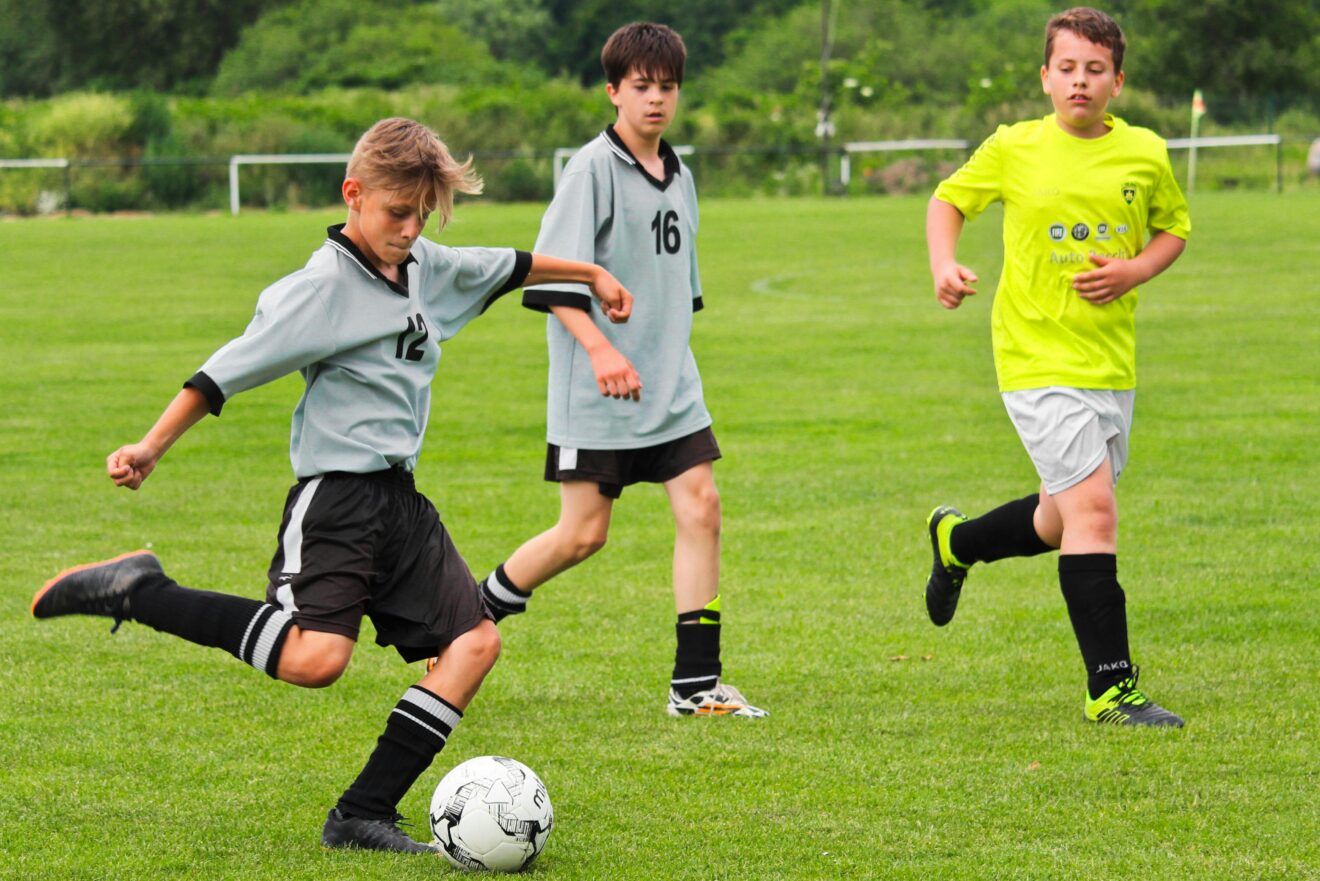
At South Douglas Elementary School, we host four to five after-school kickball tournaments each year. The tournaments are open to 3rd-, 4th- and 5th-graders and are designed to be inclusive and easy for all students to participate in. Students pay a small entry fee of $5, and families are encouraged to attend, turning each event into a school-wide community gathering. We use the funds we raise from the tournaments to purchase books for a student reading club and basic sports equipment that support the program. Over the past couple of years, our Reading and Sports Club events have helped us build a library of 300 to 400 books while creating moments that bring our entire community together.
Designing inclusive community events
The key to successful community fundraisers is choosing activities that require minimal skill so students of all abilities can participate. Kickball works particularly well because it’s straightforward and familiar. We intentionally mix students across grades to build school-wide relationships and ensure balanced teams, helping younger students feel included and giving older students leadership opportunities.
Involving teachers and administrators directly signals that the event is about community, not competition. I explain to families that the tournament is a large community gathering, and that all parents attend. The principal and assistant principal pitch, and other teachers are coaches. When students see their school leaders actively participating, the event becomes something special.
We add low-lift extras like snow cones or community partners to increase attendance and excitement. In the past, we’ve invited the public library’s bookmobile to attend so that students can sign up for library cards on-site. These small touches reinforce that the event is a shared experience for students, families and staff, not just a fundraiser with a participation fee.
Connecting fundraising to literacy outcomes
Students and families are more likely to support fundraising efforts when they can see exactly where their money goes. We use tournament proceeds to build book collections aligned with student interests, particularly sports-related picture books and athlete biographies. This isn’t accidental, it’s strategic.
Often, the students who like sports are the ones who are struggling with reading, and many of our students who love books have little experience with sports. The kickball tournament helps bring those two groups together. Interest-based books serve as gateways for reluctant readers, offering entry points into reading that feel relevant to their lives. When a student who loves basketball discovers a biography of LeBron James in our collection, reading suddenly becomes more appealing.
We integrate reading directly into the structure, dedicating the first half of each Wednesday meeting to reading before moving to sports activities. This pairing ensures that literacy and play reinforce each other rather than compete for students’ attention. By using shared reading spaces and making books feel accessible and communal rather than academic, we’ve seen genuine upticks in student engagement with reading.
Focus on students, not the administration
Fundraising events already require significant planning time from educators. Tournament logistics like organizing teams, coordinating volunteers, and managing the day-of-event schedule consume hours of work. The post-event purchasing process shouldn’t add to that burden.
Consolidating orders for books, sports equipment, and supplies through a single system eliminates redundant paperwork and approval processes. When I started the tournament, I would order from Amazon, fill out forms, then order from Scholastic and fill out more forms. Now, using a collaborative purchasing app, I can compile everything into a single shared location and send it directly to our office manager for processing. This approach saves at least a couple of hours every time I place an order. With four or five tournaments a year, that’s a significant chunk of time I can redirect toward students rather than administrative tasks.
The key is to find ways to coordinate purchases across multiple vendors without creating separate workflows for each vendor. When our office manager receives a consolidated list of what’s needed, regardless of which retailer carries each item, she can process everything efficiently without either of us duplicating effort or navigating multiple approval processes.
Working with school office staff through shared systems rather than duplicating work also builds stronger internal relationships. Because my purchasing process is transparent and efficient, it’s easier for my colleagues to support the kickball tournaments year after year. Streamlining these logistics isn’t just practical; it helps avoid educator burnout and makes these programs sustainable.
Community-based fundraisers are most effective when they are inclusive, visible and clearly tied to student impact. When the logistics are streamlined, educators can focus on creating experiences that students and staff want to return to. Pairing joyful engagement with practical systems makes our literacy-focused fundraising both scalable and sustainable, and I hope our Reading and Sports Club kickball tournaments will continue to benefit students for years to come.
Thomas Bruno is a fourth-grade teacher at South Douglas Elementary School in Douglasville, Ga., where he uses Share-A-Cart as a collaborative shopping app. He can be reached at [email protected].
Opinions expressed by SmartBrief contributors are their own.