Since generative AI went mainstream in late 2022, there have been plenty of important and sometimes difficult discussions about it, especially in education. Questions are coming from all sides—educators, policymakers, parents. How should AI be used in schools? When can it support learning? And when is it simply unnecessary?
Meanwhile, students are being pulled in two different directions. Some are wary of using it altogether. A 2025 Project Tomorrow survey found that 63% of students in grades six-12 worry about being wrongly accused of cheating with AI. At the same time, industry leaders are urging them to roll up their sleeves and get comfortable experimenting with it.
In the last year alone, more than 400 CEOs from various industries have signed an open letter advocating for mandatory computer science and AI education in schools. The leaders, including those from Adobe, IBM and Microsoft, see AI education as a way to maintain the US’ competitive edge.
But what do students think about AI’s role in education? In Utah, students aren’t merely waiting for adults to figure it out. They’re getting involved, sharing their ideas and helping shape what comes next.
Utah’s Artificial Intelligence Student Taskforce
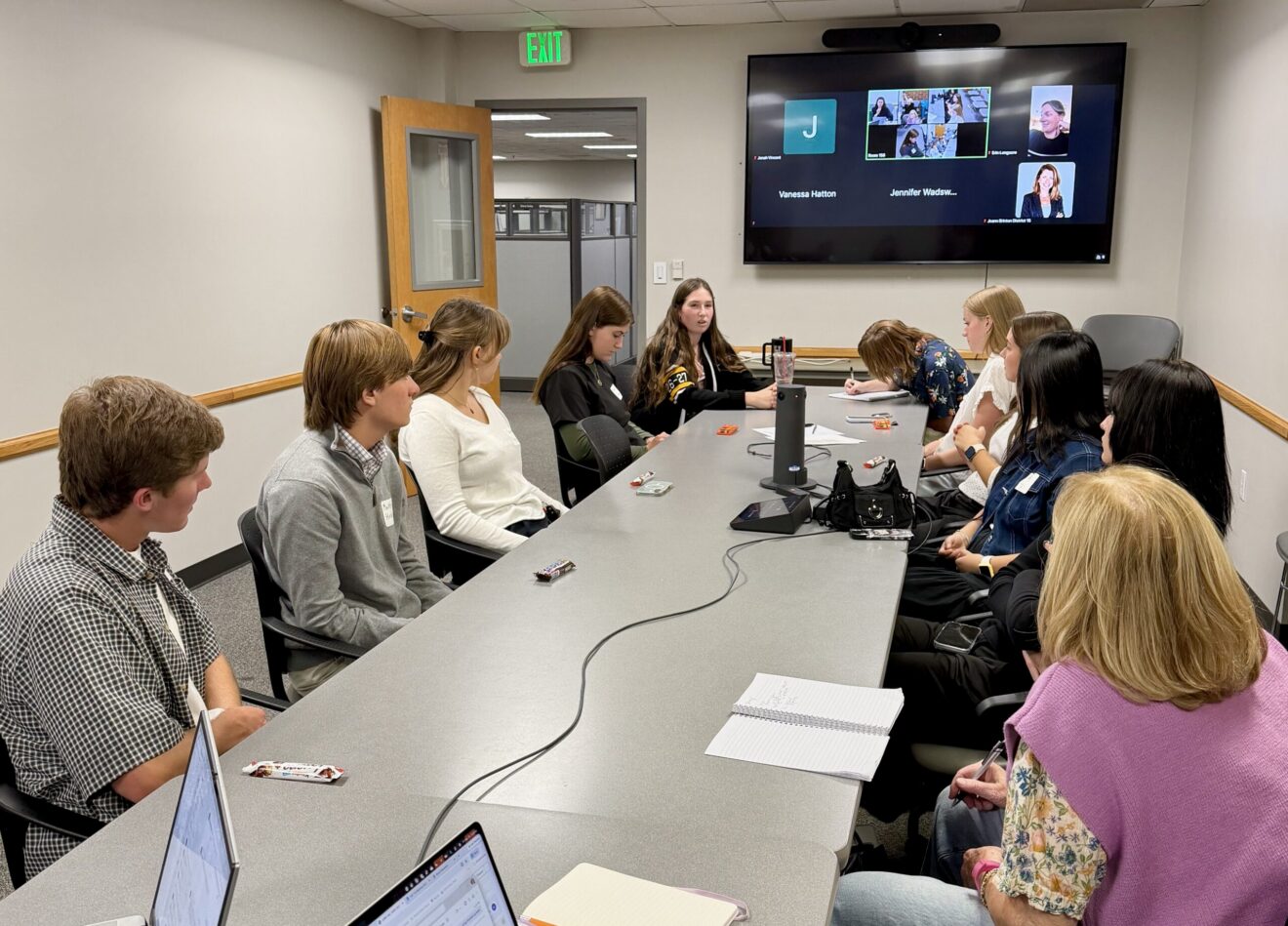
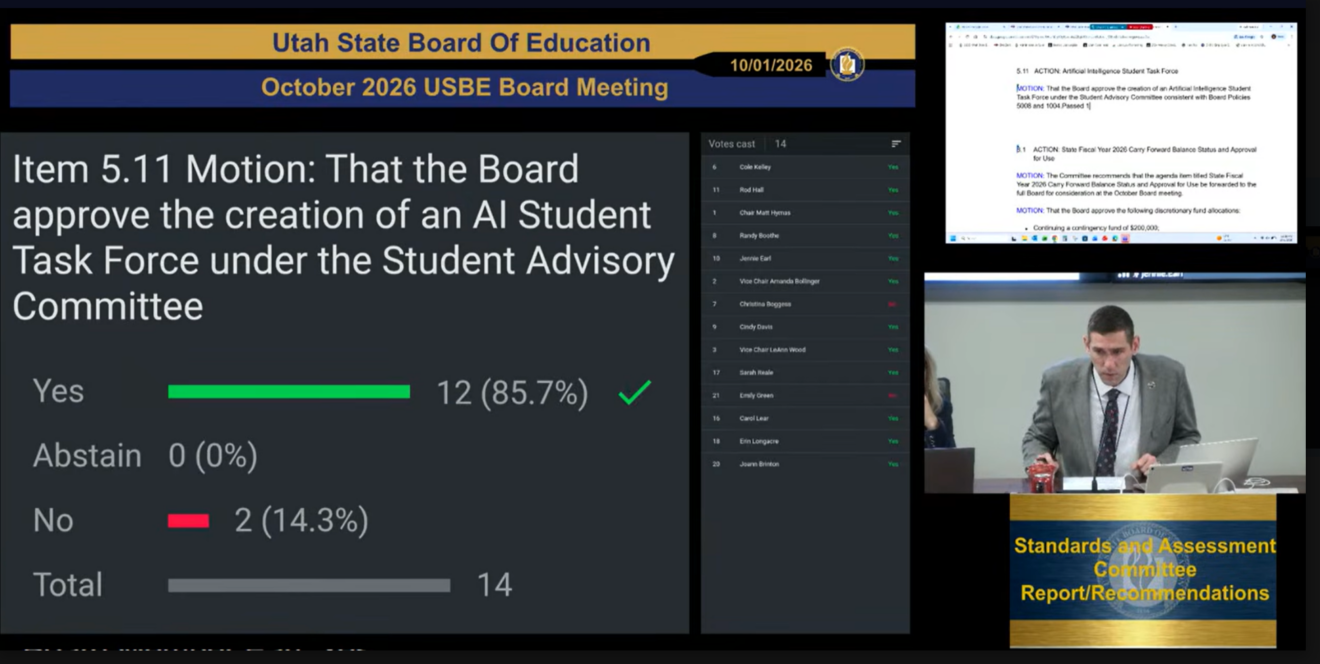
Formally established just a few weeks ago, the Utah State Board of Education’s Artificial Intelligence Student Taskforce now exists under the current Student Advisory Council. The group meets roughly four times during the school year to advise the Utah State Board of Education, alternating between in-person and virtual meetings.
For Matt Winters, Utah’s State Board of Education’s former AI Specialist, the task force will help bring a missing voice into the AI conversations typically held at the state level. The board regularly hears from parents, superintendents and advocacy groups, he explained, but it doesn’t hear from students and teachers as consistently.
LeAnn Wood, vice chair of the Utah State Board of Education, hopes the task force will help guide the use of AI in teaching and learning.
“I hope that we get some real kind of boots-on-the-ground perspective of how students feel like AI is impacting their education, for better or for worse, because they’re the ones that actually have to see it in action,” Wood said.
How are students seeing AI used in their classrooms? Is it helping them learn, or creating new challenges? How is AI changing the way students complete assignments?
These are the kinds of questions that get to the heart of the task force’s purpose: giving students a chance to do more than talk about the decisions adults make for them.
That’s also what makes this task force an opportunity for meaningful civic engagement in a way rarely seen before. By sharing their opinions and ideas on AI with state leaders, the students can see how decisions are made and learn how their voice can help influence what comes next.
The students showing up
Winters is quick to credit students for driving the work forward.
“This story is 100% about the kids. They figured out how to do this. The work is flowing through me, not because of me,” he explained. Although students have not yet been assigned to the task force, several have helped set the effort in motion and are looking for ways to get involved.
One student was the catalyst for the entire initiative. From one of Utah’s largest districts, he contacted the technology director about a year ago, explained that he wanted to form a task force and asked how to get started.
Another student, a high school senior, recently interned at an AI law office to learn more about the technology and the legal questions surrounding it. Winters described her as “whip-smart.” She hopes to continue learning about AI policy.
A student from a charter school also wants to join the task force, bringing his own experience with learning disabilities to the conversation about AI in education. Meanwhile, another student is running projects with the STEM Action Center and continues to reach out to find ways to support his generation.
These students have diverse backgrounds and have varied interests, but they share a willingness to speak out and help shape AI policy.
What success will look like
Winters hopes the Artificial Intelligence Student Taskforce will become more than a group that meets periodically to share feedback. He envisions a leadership opportunity that connects students with policymakers. He also sees the potential for students to guide the long-term direction of AI in Utah.
“If I were NVIDIA, if I were OpenAI, if I were Anthropic, I’d be paying attention to this because this is a group of students who are savvy and could really help influence the long-term vision here in the state of Utah,” Winters explained.
Wood said one challenge might be getting more students beyond the 15 who currently serve on the council. While some of these students may want careers in governance, law or public policy, others who aren’t involved may have entirely different goals and interests. Finding ways to engage students with a range of interests could help broaden the conversation and equip each student to navigate a world shaped by AI.
Winters has already prompted students on how they can bring in more of their peers. Some ideas are already taking shape, such as a hackathon or another collaborative, judged experience.
The adults have a role to play here, too. If students make recommendations or raise concerns and the board disregards them, the experiment will have failed, Wood said. She hopes that experience will have lasting effects beyond AI and education policy.
“Our SAC committee and this task force are giving kids an opportunity to be hands-on in doing the research, finding the evidence and then seeing how it impacts their own lives and then sharing that. Hopefully, that will, in the future, lead them to engage civically as adults,” she said.
The debate about AI in education will undoubtedly continue. But in Utah, students are stepping up, and the adults are willing to listen. Together, they could help chart a course for how AI is used, understood and governed in the years ahead.