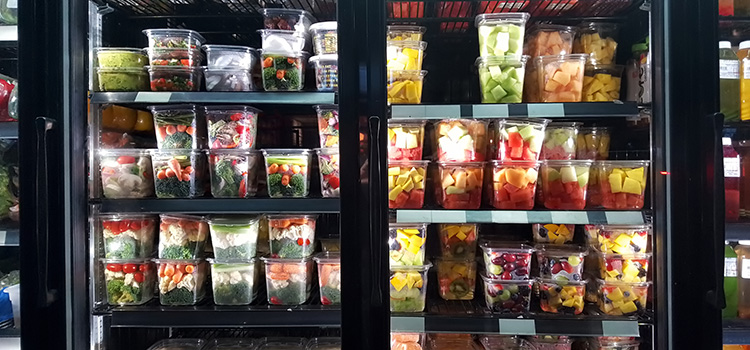
The perimeter of the supermarket is experiencing more traffic as shoppers increasingly gravitate towards whole foods and convenience. In fact, 42% of food retail dollars were generated by fresh departments in 2024, according to The Food Retailing Industry Speaks 2025 report from FMI – The Food Industry Association. Fresh produce, meat, seafood, dairy and prepared foods are critical traffic drivers and brand differentiators.
From evolving shopper behavior to the Environmental Protection Agency’s upcoming refrigerant regulations, grocery retailers are navigating a complex transition. Staying ahead of these shifts means rethinking both performance and sustainability. At the center of it: Refrigeration systems that can support modern store formats, enable flexibility and future-proof operations.
Here are three trends driving perimeter refrigeration innovation — and how retailers are preparing for what’s next.
1. Shoppers want fresh, and they want it convenient
Shoppers now expect ready-to-eat meals, grab-and-go beverages, and fresh-cut produce to be abundant, visually appealing, and always available. FMI’s report indicates that about 68% of food retailers are planning to increase the space they allocate to foodservice aspects such as fresh-prepared grab-and-go options. This means:
- More refrigerated display space. From expanded grab-and-go cases to sushi counters, stores are looking at adding more linear footage of refrigeration at the perimeter.
- Merchandising flexibility to support changing formats.
- Reliability is mission-critical. The customer experience relies on the ability to deliver fresh options.
“When a perimeter case goes down, it’s not just product loss; it’s a hit to the customer experience,” said Kali Kalinger, product manager, Case Division with Zero Zone. “For refrigeration managers and engineers, this translates into pressure to ensure uptime, consistent temperature control and equipment that can adapt.”
It is important to note that “one size does not fit all” for remodel and new store refrigeration design; factors like climate and traffic patterns are key considerations. Forward-thinking stores are considering the benefits of HFO refrigeration systems that perform well, especially in hot and humid climates, without sacrificing reliability or planogram changes.
“Grocery stores can make the switch to a low global warming potential refrigerant without a change to their floor plan or merchandising, maximizing pack-out and delivering fresh food without the risk of downtime. Low-GWP HFO refrigerants like R-454C provide efficiency and compliance without sacrificing reliability,” according to Elvan Sari, global senior offering manager with Honeywell Solstice Refrigerants.
2. Remodels and retrofits call for seamless solutions
As retailers expand fresh offerings, many are investing in perimeter remodels, redesigns and projects that put extra demand on store engineers and design managers. At the same time, many stores are already preparing for the EPA’s Technology Transition Rule, which calls for scaling back on high-GWP refrigerants starting in January 2027.
HFO refrigerants provide a seamless transition from previous equipment to compatible equipment, Sari said.
“Unlike CO2 systems, the similarities between HFO and HFC refrigerants make it easy to upgrade your store with like-for-like merchandisers, requiring only minimal training and the addition of refrigeration detection systems and leak mitigation kits,” Sari explained, citing three ways such refrigerants can meet retailer and merchandiser goals.
- Low GWP HFO refrigerants, like R-454C and R-455A, provide a seamless path forward. Refrigerants, like Solstice® HFO A2Ls, combine familiar operating characteristics with a fraction of the GWP of legacy refrigerants and comply with the new regulations, making them ideal for both new store designs and remodeling.
- Equipment is designed for flexibility. As the industry continues to navigate the transition to low-GWP refrigerants, Zero Zone is among the first to bring a complete, install-ready A2L solution to the US supermarket space.
- Sustainability remains a top priority. Low-GWP refrigerants, paired with efficient refrigeration cases, help retailers expand fresh offerings while meeting regulatory requirements and corporate responsibility goals.
“For supermarkets, that means remodeling with confidence, knowing that refrigeration upgrades won’t slow down store innovation at the perimeter,” Kalinger said.
3. Store formats are changing, and so are refrigeration loads
Traditional 60,000-square-foot supermarkets are no longer the only model. Today, smaller urban footprints, hybrid grocery-restaurant concepts and even micro-fulfillment centers inside stores are on the rise, and each comes with its own refrigeration profile, Kalinger explained.
- Smaller stores need flexible refrigeration. Compact designs with easy installation and low maintenance are critical.
- Omnichannel fulfillment requires redundancy. Stores acting as mini-warehouses need refrigeration that can handle additional load while ensuring product quality for delivery.
“Grocery operations teams are tasked with keeping systems adaptable, scalable and efficient in these evolving formats,” Sari said. “The Zero Zone case and system designs, combined with Solstice refrigerant technology, help retailers adapt without compromising performance.”
Why refrigeration strategy matters more than ever
Success today depends on the refrigeration systems that keep food fresh, appealing and safe, while also supporting energy efficiency and sustainability goals. Retailers that adapt now can stay ahead of the curve – and regulations – while keeping up with shopper trends.
“Store engineering and design are central to that success,” Sari said. “Choosing refrigeration equipment designed for reliability, efficiency and sustainability, paired with next-generation refrigerants like Solstice, can help supermarkets meet shopper expectations while protecting the bottom line.”
Want to explore how low-GWP HFO solutions can work for your stores? Meet us at the FMI Energy + Store Development Conference and at the Retailer Exchange, where our teams will be on hand to share insights, answer questions and discuss strategies tailored to your store.
Related stories:
———————————————————————————————————-
If you liked this article, sign up to receive one of SmartBrief’s Food & Beverage newsletters. They are among SmartBrief’s more than 250 industry-focused newsletters.