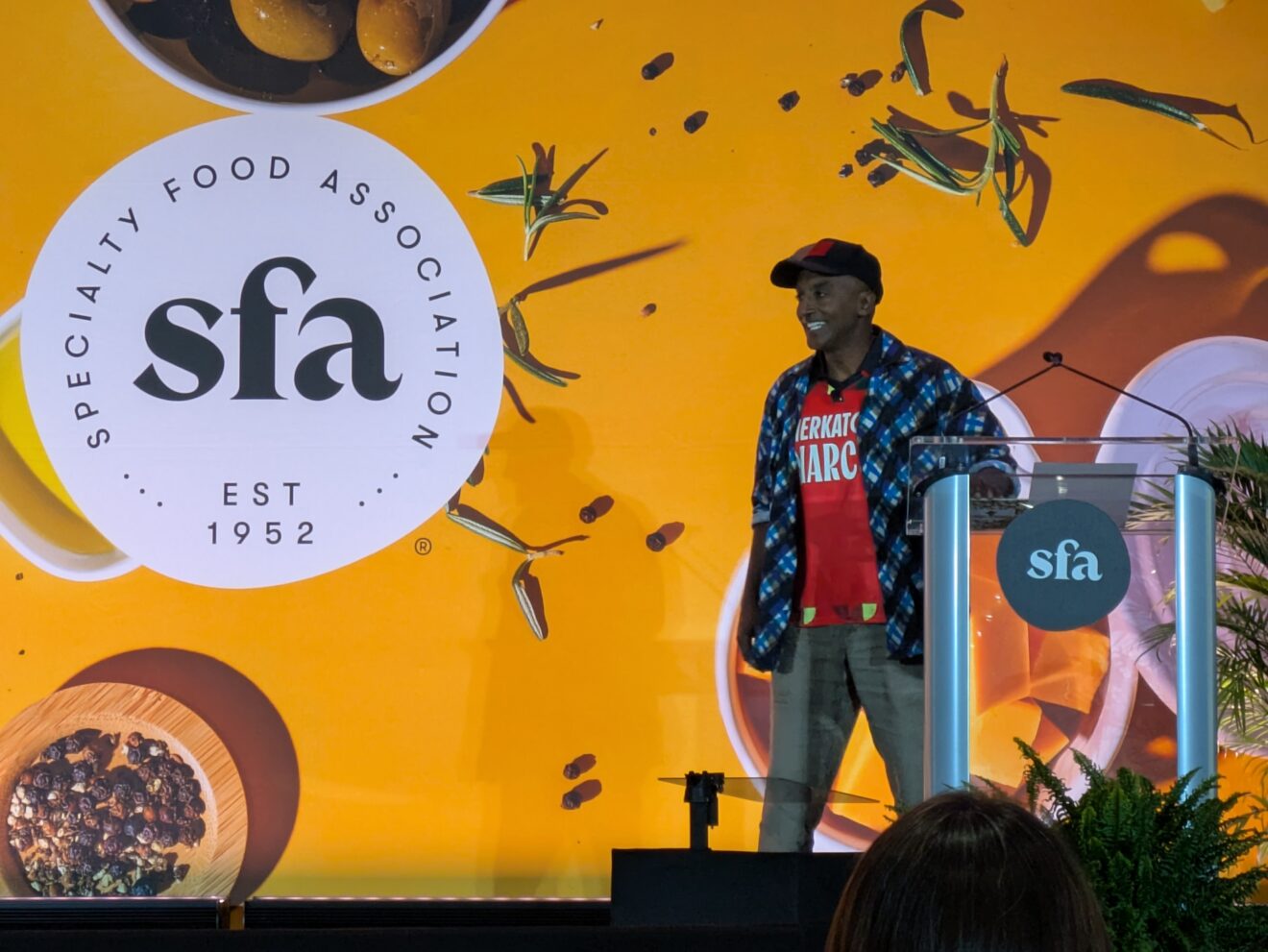
Marcus Samuelsson has built a culinary career on making the most of the global flavors that have shaped his life from his earliest memories, staying curious and reveling in discovering all the new ways chefs and passionate foodies find to combine ingredients and improve on what’s already delicious.
The joy and delight he takes in talking about food shone through in the chef and restaurateur’s keynote at the 2026 Summer Fancy Food Show in New York City last week. Samuelsson’s story, and those of the millions of other immigrants, are the stories of people who have shaped and continue to redefine the American food scene.
Samuelsson’s early life was shaped in both Ethiopia, where he was born, and Sweden, where he was raised by his adoptive family, and the contrasting climates and culinary traditions are a theme that has carried through the chef’s career and flavored his outlook on food innovation.
“There’s no limit to what food and flavor can do [when it comes to] bringing people together,” he said.
Growing up in Sweden, Samuelsson learned early about the importance of quality ingredients. Fishermen like his uncles split their catch between feeding family and friends and selling or trading at the market.
“In the marketplace, who has the best mackerel matters,” he said.
The American culinary scene is a true melting pot of global flavors, brought here by immigrants from around the world and combined in new ways to satisfy cravings for innovative dishes. In recent decades, Americans traveling abroad have tasted new and exciting dishes they later sought out or replicated here, further adding to the versatility of dining in America.
“The more we travel, the more we come back with new ideas,” he said.
Chefs who learned their art in fine-dining restaurants on the East and West coasts have moved back home and started or joined eateries to share the culinary innovations they learned. At the same time, the rise of the internet, social media and ecommerce made discovering new flavors and sourcing new foods and ingredients from across the globe easier than ever.
Samuelsson’s newest venture, a CPG company called Merkato by Marcus, was inspired by the Merkato in Addis Ababa, the largest open-air market in Africa, which seems chaotic to visitors but “for the people in it, it makes total sense,” said Samuelsson, who likened the chaos to the high-energy activity found in restaurant kitchens.
Throughout his keynote, Samuelsson radiated that energy and stressed that finding joy in the kitchen is a key goal of his new CPG brand, which launched with three simmer sauces and will expand with future products focused on flavor.
“Cooking should be a joy, it should be happy,” he said. “I’ve worked with so many angry chefs. At the end of the day, I want people to bring [the products] into their homes and share them and be happy.”
How True North Granola is staying the founders’ course
Happiness and joy were abundant at this year’s show.
Business partners Parwaz Virk and Ankur Sharma acquired Vermont-based True North Granola last year with a commitment to carry on the legacy of founders Ingrid and Franklin Chrisco, who started making their artisan granola for friends and family and began selling it at the Brattleboro Farmers Market about two decades ago.
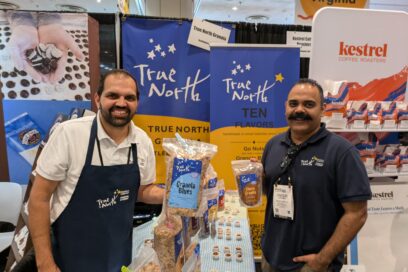
True North sells handmade granola made with only ingredients from the kitchen, according to recipes crafted by the founders. The new owners view their role as successors rather than buyers, and they have taken a collaborative approach to learning the business from its six employees, all of whom have decided to stay after the transition.
And while True North has brought in technology to digitize functions like payroll and order processing, making the granola is strictly a job for human hands.
“The employees are the company’s biggest strength,” Virk says. “They know the recipes, the process, the customers, and the standards better than anyone. We see our role as giving that team more support, better systems and a bigger platform.”
Since taking over the company, True North has added two new employees, and the new owners see keeping workers happy as a key part of their mission as they strive to grow a local brand into a national name without sacrificing quality or the handmade touch.
“We believe you have to be happy to make good food,” Sharma said.
The evolution of the Saucemaster
Maine Gravy founder Dick Chase had earned a reputation among friends as the “Saucemaster” before he ever turned his fermented hot sauce hobby into a business. Chase began by experimenting with different ingredients and fermentation methods, sharing the results with friends along the way.
This year, the brand’s Resurgam Spruced Up Hot Sauce was one of 242 Good Food Award winners, and it was the brand’s first time showing at Summer Fancy Food.
Maine Gravy’s sauces are made with only Maine-sourced ingredients, making the products somewhat seasonal. Currently, the company sells its growing lineup of sauces online and is looking to expand its retail presence.
Social media has been key in building the five-year-old brand.
“My greatest joy with this is still sharing the sauces with friends. I just have a lot of friends that I’ve never met now,” Chase says on the brand’s website.
Turning two sour flavors into a sweet beverage business
Another new brand at the show this year, Mr Pickles Dillicious Lemonade, actually goes back 20 years. Mr. Pickles Industries built a merchandise brand in Columbus, Ohio, with a pickle mascot boasting googly eyes and thick glasses.
The mascot, created by siblings Jack and Rita Volpi, has been turned into plush toys, stickers and T-shirts. Last summer, the brand expanded into beverages, capitalizing on the rising social media trend of pickle lemonade. The founders added a bit of carbonation to the basic recipe with a spritz of tonic water, and the brand’s lively website shares cocktail recipes that use the beverage as a mixer.
It is personal. It’s also business.
Like many entrepreneurial food startup stories, Plantaizin’s beginnings are rooted in the co-founder’s need to make healthy life changes. Kervens Fonrose had reached 322 pounds when he decided to adopt a plant-based diet and, with the help of his wife, Kellyne, shed 70 pounds in three months.
Along with Kellyne’s brother, Milton Dorceus, the couple set out to create a healthy snack that could support Fonrose’s weight-loss journey and appeal to others on a similar path. Today, Fonrose is down 150 pounds, and the brand’s sea salt and seasoned plantain chips are sold out online.
Another founder’s story also reflects a focus on family health. Todd Goldstein developed Whoa! Dough as a way to share his warm childhood memories of baking – and tasting – warm cookies in the kitchen of his family’s restaurant, without the stomach ache that often followed. Goldstein was diagnosed with a gluten intolerance as an adult, and all three of his sons have the same condition.
Whoa! Dough’s gluten-free, vegan ready-to-bake cookies can be eaten raw for a cookie-dough experience or baked and eaten warm, like the treats Goldstein remembers from his childhood. Direct-to-consumer sales have grown and the treats will soon be available in Aldi stores, Goldstein said.
Related stories:
- Specialty food makers will showcase their wares in NYC this month
- How retail buyers discover the next new fancy foods
- Telling specialty food stories in the digital age
_____________________________________
If you liked this article, sign up to receive the Specialty Food SmartBrief newsletter. Check out the rest of our SmartBrief Food & Beverage newsletters and connect with us on our SmartBrief on Food & Beverage LinkedIn page.