Ten years ago, Congress passed the Frank R. Lautenberg Chemical Safety for the 21st Century Act. The promise was a modern Toxic Substances Control Act that protected health and the environment while promoting American innovation and manufacturing.
A decade in, reviews of new chemicals are stalled, and development is moving overseas, often to places with weaker environmental rules. EPA’s authority to collect TSCA user fees expires in December. If the authority lapses, an already strained system gets worse.
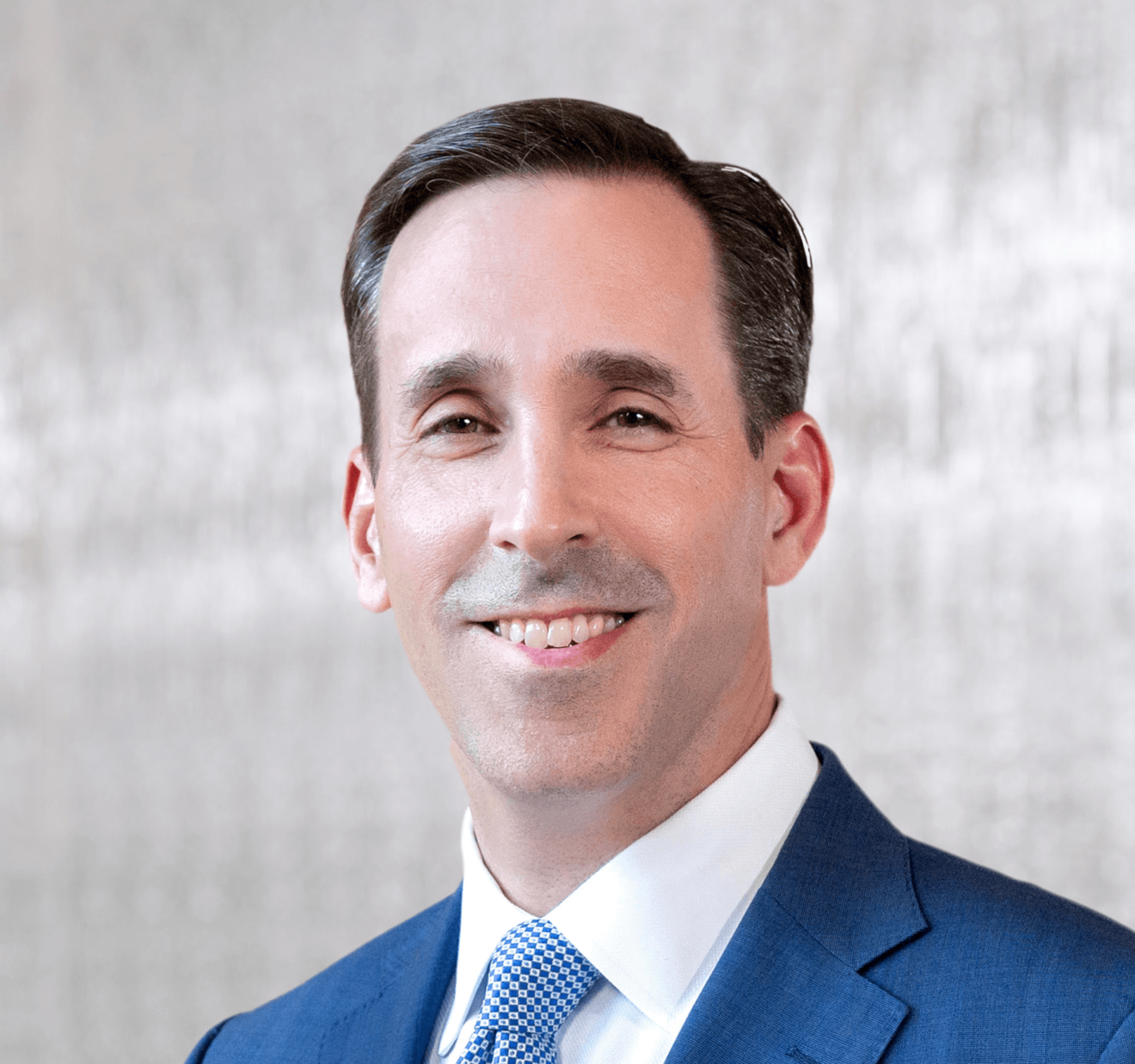
Chris Jahn, president and CEO of the American Chemistry Council (ACC), lays out what is at stake, what Congress should do and why a renewal alone will not fix the problem.
EPA’s TSCA fee authority expires in December. What happens to the chemical review program if Congress doesn’t reauthorize it in time?
Industry user fees – not taxpayers – fund roughly a quarter of the TSCA program. That money moves new chemicals through review and into the market. If the fee authority lapses, EPA loses a substantial share of the funding it needs to do the job Congress mandated when it reformed TSCA a decade ago.
The likely outcome is more backlog and longer waits. Right now, roughly 440 new and innovative chemistries are stuck in EPA’s review queue – with over 90% past their 90-day statutory deadline, and more than 300 waiting longer than a year. Cutting off a quarter of the program’s funding does not shrink that pile. It undercuts the very health protections Congress built into the law, because the program simply cannot keep up.
Reauthorizing TSCA fees is not optional. But simply renewing the TSCA fee program without addressing the underlying problems won’t fix the slow throughput of chemical reviews. This deadline is the moment to do it right – not just kick the can down the road, as Washington so often does.
ACC wants targeted improvements to TSCA alongside fees reauthorization, not just a renewal. What changes would do the most to fix TSCA?
Start with clear performance metrics. Reviews must be timely and predictable. Manufacturers innovate at the speed of competition, not the speed of an assessment backlog. That means reinforcing the 90-day deadline for new chemical reviews and discouraging the repeated suspensions and delays that quietly reset the clock.
Second, improve how EPA and submitters engage with each other. A lot of delays come from data questions raised late in the review process. When the agency flags what it needs early, review throughput improves.
Third, ground reviews in science and real-world conditions, not hypotheticals. Too many reviews bog down in worst-case assumptions that don’t reflect how a chemical is actually used or the workplace safety controls already in place. TSCA was designed to be risk-based and science-driven. Returning to that standard removes a major source of delays.
Fourth, link fee reauthorization to EPA’s performance and greater transparency. That delivers the certainty manufacturers need and helps drive long-term capital investment here at home.
There is real momentum behind this. Three bills are now before Congress, informed by hearings in both chambers: the House Energy & Commerce discussion draft from Chairman Brett Guthrie (R-Ky.) and Environment Subcommittee Chairman Gary Palmer (R-Ala.); the Senate fee reauthorization and improvement bill from Environment & Public Works Committee Chairman Shelley Moore Capito (R-W.Va.); and Senator Pete Ricketts’ (R-Neb.) Sound Science Act. Each tackles a different piece of the problem. Together, they are the most substantive foundation for strengthening TSCA since 2016.
Over 90% of new chemical reviews miss the 90-day deadline. Is that a funding problem, a science-standards problem, or both?
If EPA’s TSCA fee authority lapses, the agency would lose user-fee funding that supports roughly one-quarter of the program, while appropriations would continue to fund the balance.
There is also a coordination problem. When EPA’s assumptions conflict with requirements from other federal agencies, such as the Occupational Safety and Health Administration’s (OSHA) workplace safety standards, the result is duplication and second-guessing which slows everything down. Congress envisioned TSCA as a risk-based, science-driven system. What we have now is too often the speculative, opaque version of that.
We need to fix both issues. Fund the program through reauthorization, and pair it with improvements that put the science back on the footing the statute requires. If we do one without the other, the backlog remains.
What about EPA’s existing chemicals program, and what does it mean for U.S. competitiveness and domestic manufacturing?
EPA’s existing chemicals program deserves just as much attention as new chemicals. It governs the building-block chemistries already in commerce — the materials behind autos, aerospace, medical devices, semiconductors and energy technologies. Congress told EPA to review these chemicals, and it should.
The problem is how those reviews are done. Too often they lean on worst-case assumptions instead of the best available science and how a chemical is actually used. That does not make anyone safer, but it does create uncertainty that discourages long-term investment and can push essential production offshore.
For U.S. competitiveness and domestic manufacturing, the stakes are the same as with new chemicals. Without science-based, predictable reviews, products and technologies may be restricted or eliminated based on an inaccurate assessment of the chemistry, its uses and potential risks. This means some manufacturing may disappear, taking the jobs, investment and supply chains with them. Existing chemical reviews must be transparent, grounded in real exposure data and targeted to the uses that actually present risk. Done right, TSCA protects public health and the environment while keeping essential chemistry — and the manufacturing it supports — here in the United States.
How is the “Restoring Gold Standard Science” executive order changing how EPA reviews chemicals day to day?
The order says policymaking should reflect objectivity, transparency and rigorous scientific integrity, not politics and not ideology. That is not a new idea for TSCA. It is what the law already demands. The statute requires EPA to use the best available science and the weight-of-the-scientific evidence. Put plainly, industry’s position is that TSCA’s scientific standards already mandate the use of gold standard science.
Every day, TSCA pushes the agency toward real-world exposure data, genuine peer review and decisions companies can actually understand and plan around, rather than default assumptions. EPA Administrator Lee Zeldin and Assistant Administrator for Chemical Safety and Pollution Prevention Doug Troutman deserve credit for the steps they have taken to course-correct the program.
An executive order and administrative improvements can be reversed by the next administration. The case for legislation is the case for permanence.
What’s the real-world impact on innovators and manufacturers when TSCA reviews stall, in terms of cost, supply, or project delays?
When a manufacturer cannot count on a timely EPA review, it thinks twice about long-term capital investment here in the United States. Production moves to wherever the path is clearer – and the jobs and supply chains move with it, often overseas to regions with weaker environmental frameworks than ours. TSCA delays don’t make anyone safer. They simply shift production somewhere else, outside the United States.
The supply chain math makes it concrete. More than 500 new and innovative chemistries are required to produce a single semiconductor chip. A bottleneck on any one of those chemistries ripples downstream and throughout the supply chain. Manufacturers feel it in higher costs, tighter supply and stalled projects. Long-term capital investment in particular needs the kind of statutory certainty a functioning TSCA provides.
The public sees it too. Nearly 70% of Americans support updating TSCA, and nearly three-quarters agree that growing U.S. chemical production means more jobs, more capital spending and more investment here at home. People understand that getting this right is about strengthening American competitiveness. The tenth anniversary of the Lautenberg amendments is the moment to deliver, and we should take it. American success relies on American chemistry.
The takeaway: December is the deadline. Congress can reauthorize TSCA fees and lock in durable, science-based fixes – or let an already strained program fall further behind. Ten years after Lautenberg, the path forward is obvious. Congress needs to finish the job.