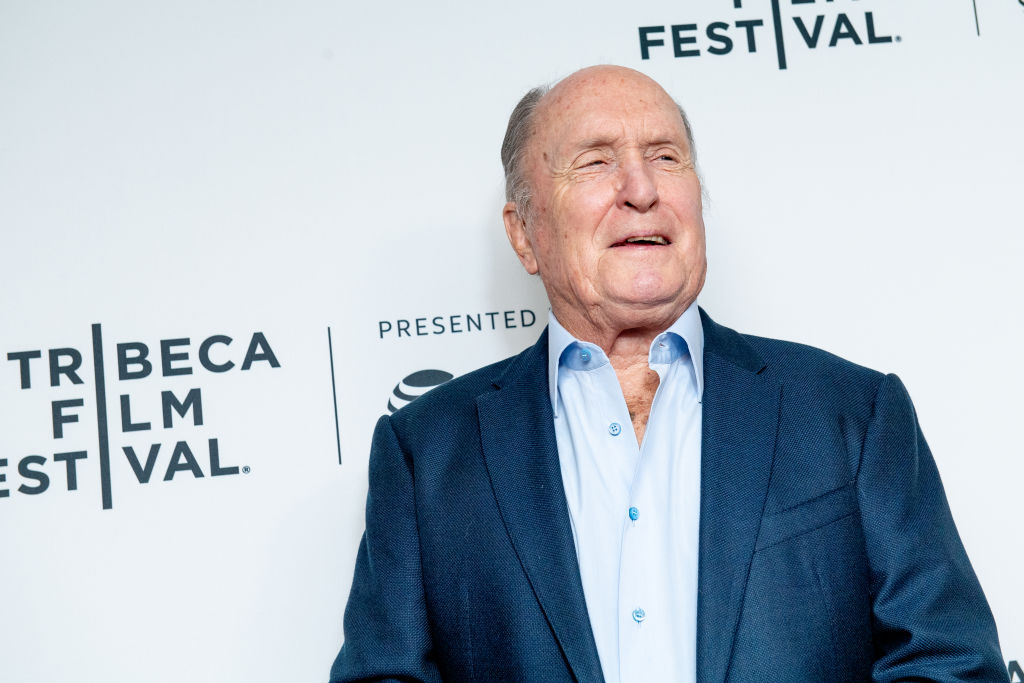
There are people who change your life not by what they say, but by how they live. My friend, the late Robert Duvall, was one of those people. The world knew him as an iconic actor. I knew him as Bobby — a man with deep passions about many things: great food, great barbecue and football chief among them. If there was a place to eat well, Bobby would find it. If a game was on, he knew every stat, every storyline, every player’s arc.
Yet beneath those everyday enthusiasms lived something rarer. Bobby was endlessly fascinated by people, our motivations, contradictions, longings and the quiet forces that shape who we become. He held a deep respect for the mystery of being human, a respect that guided his approach to his craft. And through his example, I learned something that has stayed with me as a leader, a coach and a human being:
Great work, in art and in leadership, begins with the willingness to stay with the question.
Don’t chase answers. Pursue understanding
When Bobby prepared for a role, he became a student of the character. Not just the lines. Not just the gestures, but the inner life as well. Who is this person when no one is watching? What wound do they carry? What contradictions shape their choices? He was endlessly fascinated by those questions, and only after living with them did he commit to an interpretation.
When he did, it was breathtaking.
His process taught me something simple and profound: depth comes before clarity. Clarity comes before conviction. Leadership, I’ve learned, works the same way. Decisions that look strong on the surface but are built on shallow exploration rarely hold. Decisions forged through disciplined inquiry tend to endure.
When truth requires tenacity
One day Bobby and I were talking about Robert E. Lee, a Confederate general who he portrayed in the movie, Gods and Generals. During our discussion, I shared some information about Lee that hadn’t surfaced in Bobby’s research — something passed down through my family’s lore for generations.
Bobby didn’t dismiss it, but he didn’t immediately accept it either. Instead, he paused, looked at me, and said, in essence: “What’s your evidence?”
He was surprised by what I shared. And from that day forward, he carried a question about Lee with him. More than a year later, Bobby came back to me and said, “I think you were right about Lee.”
That moment has never left me. Not because I was “right,” but because of what it revealed about Bobby. His curiosity didn’t fade with time. His desire to understand didn’t expire when the movie wrapped. His respect for truth outweighed any attachment to a prior interpretation.
He was willing to live with a question for a year. That is rare. It is also a profound lesson about how the best leaders approach truth.
The power of living with the question
Today’s leaders are rewarded for speed. They are praised for decisiveness.
They are celebrated for certainty. Yet the problems leaders face are increasingly complex, ambiguous and dynamic. Research on team learning and psychological safety consistently shows that the highest-performing teams are not those led by the most certain leaders, but by leaders who invite input, admit fallibility and encourage candid dialogue. When leaders model curiosity and humility, teams speak up more, share information earlier and learn faster.
Rushing to conclusions feels decisive, but it often blinds us to what matters most. The leaders who truly serve their teams do something quieter and far braver. They pause. They ask. They listen. They invite others into the thinking and choose understanding over ego. In doing so, they create environments where people can live in the questions long enough to arrive at better answers.
To create this dynamic with your team, begin by asking different questions. Things like:
- “What am I missing?”
- “What assumptions are we making?”
- “Help me see this differently.”
- “What would change our minds about the direction we’re considering?”
- “Tell me more.”
These small questions send a big message to your team. It tells them: your thinking matters, your voice is welcome, and we are in this together. People lean in.
When you respond to differing viewpoints with curiosity instead of defensiveness, trust will grow. You’ll shape a culture where people speak honestly, assumptions are surfaced instead of hidden, mistakes become teachers and learning is a way of life.
The paradox that great leaders live
Bobby understood something that many leaders struggle to accept. You don’t lose authority by questioning yourself. You gain credibility by doing so. He never confused certainty with mastery. He knew that the more time he spent exploring a character, the stronger and more believable his final portrayal would be. When preparing for The Apostle, for example, he spent months visiting rural churches to study preachers and perfect his character, ultimately delivering a performance that earned him an Academy Award nomination.
As a leader, you experience the same paradox. The more you honor uncertainty, the stronger your decisions become. The more you invite perspectives, the clearer your direction becomes. The more you explore, the more confident you can be in your choices.
Bobby taught me that when you stay with the question long enough, you don’t just find better answers. You find deeper truth.
And in doing so, you help others find their own.
Opinions expressed by SmartBrief contributors are their own.
____________________________________
Take advantage of SmartBrief’s FREE email newsletters on leadership and business transformation, among the company’s more than 250 industry-focused newsletters.