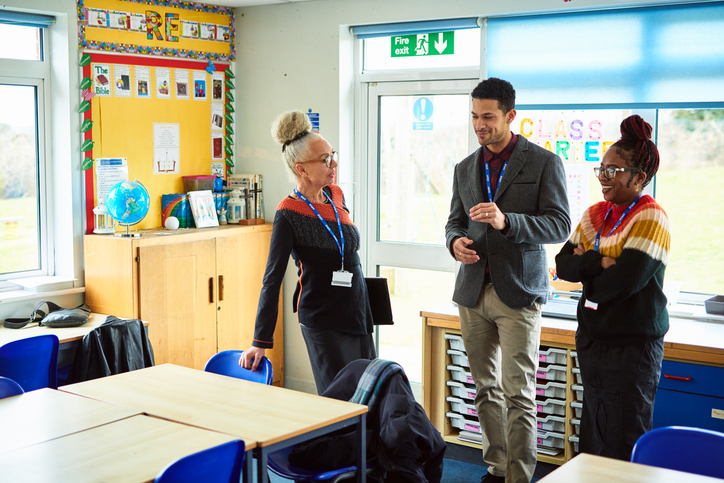
Teaching is often called a noble profession, but it can also be a lonely one. Unlike most workplaces where adults collaborate daily with colleagues, many teachers spend the majority of their time in classrooms with students, having little contact with other adults. That isolation contributes not only to feelings of loneliness but also to burnout and compassion fatigue, the emotional exhaustion that comes from carrying student challenges alone. But what if we stopped treating teaching as an individual pursuit and started treating it like what it truly is: a team sport?
From isolation to collaboration
When teachers work in teams, they gain more than just shared lesson plans. They gain a sense of belonging, a renewed sense of purpose and the joy of celebrating successes together. Research shows that collaboration enhances teacher satisfaction, efficacy and retention. We see it all the time in our school: When teachers come together with shared goals and a clear process, their work becomes lighter, their impact stronger and their students’ outcomes better.
The key is that teams need more than goodwill. They need a playbook.
Just as athletes don’t step onto the field without practicing plays, teachers shouldn’t approach collaboration without a framework, as we explain in our PLC+ playbook for professional learning communities that helps teams move from isolated practice to collective success.
To have the greatest possible impact on student learning, PLC teams need protocols, tools and structures that make collaboration purposeful and sustainable. For example, teams use protocols to analyze student work, observe one another through microteaching videos, and focus conversations on learning rather than on distractions. Like athletes running plays, teacher teams use these tools repeatedly until collaboration feels natural and productive.
The beauty of a playbook is that it adapts to the game you’re in. Some teams may need strategies for goal-setting, while others need routines for data analysis or approaches to build collective responsibility. A flexible playbook ensures that every team has a path forward.
Strengths before deficits
One of the most important mindsets we’ve seen in effective PLCs is starting from strengths. Focusing on deficits and what students can’t do lowers expectations and diminishes morale.
Instead, a good PLC encourages teachers to recognize what students can do and what colleagues already bring to the table. This strengths-based lens raises expectations and fuels professional growth. Just as athletes practice their sports, teachers strengthen their skills by building on what’s already working while identifying areas that can improve with targeted support.
When teams truly click, something remarkable happens: collective effervescence. Borrowing from sociologist Émile Durkheim, we use this phrase to describe the energy, joy and pride that emerges when a group achieves something together.
You can feel it in schools where teacher teams share ownership of all students’ success, not just the ones on their roster. When one teacher helps a struggling student make progress, the whole team celebrates, knowing that shared strategies and shared responsibility made it possible.
This collective joy is the antidote to isolation and burnout. It transforms teaching from an individual burden into a shared, fulfilling experience.
School leaders as coaches
School leaders play a crucial role in cultivating effective PLCs. Like great coaches, principals and instructional leaders must recognize where their teams are in their development — whether building collective responsibility, efficacy or effervescence — and provide the right support at each stage.
Leaders set norms, allocate time for collaboration and ensure that successes are celebrated as team wins. Their role is not to dictate every play but to create the conditions in which teams can thrive.
Finally, just as sports teams rely on assistant coaches and analysts, today’s PLCs can benefit from new tools such as AI. We think of AI as the team’s assistant: It can suggest ideas, generate resources or help analyze data, but it’s the teachers who decide which plays to run. With humans firmly in the loop, AI becomes a supportive team member, not a replacement.
Building a league, not just a team
It’s worth remembering that one PLC is not enough. A school itself is a professional learning community made up of many teams. Just as athletes need a league to compete in, teacher teams need opportunities to connect across grade levels and departments. The most effective schools are those where collaboration extends beyond silos and every educator feels part of something bigger.
Just as a tennis player must take a swing or a swimmer must dive in alone, teaching will always involve individual effort. But no athlete succeeds without the strength of a team behind them. The same is true for teachers.
When schools provide a playbook for collaboration, start from strengths and nurture collective effervescence, they transform teaching from an isolating endeavor into a shared pursuit of excellence. And when teachers thrive as a team, students win.
Opinions expressed by SmartBrief contributors are their own.
Subscribe to SmartBrief’s FREE email newsletters to see the latest hot topics on educational leadership in ASCD and ASCDLeaders. They’re among SmartBrief’s more than 200 industry-focused newsletters.