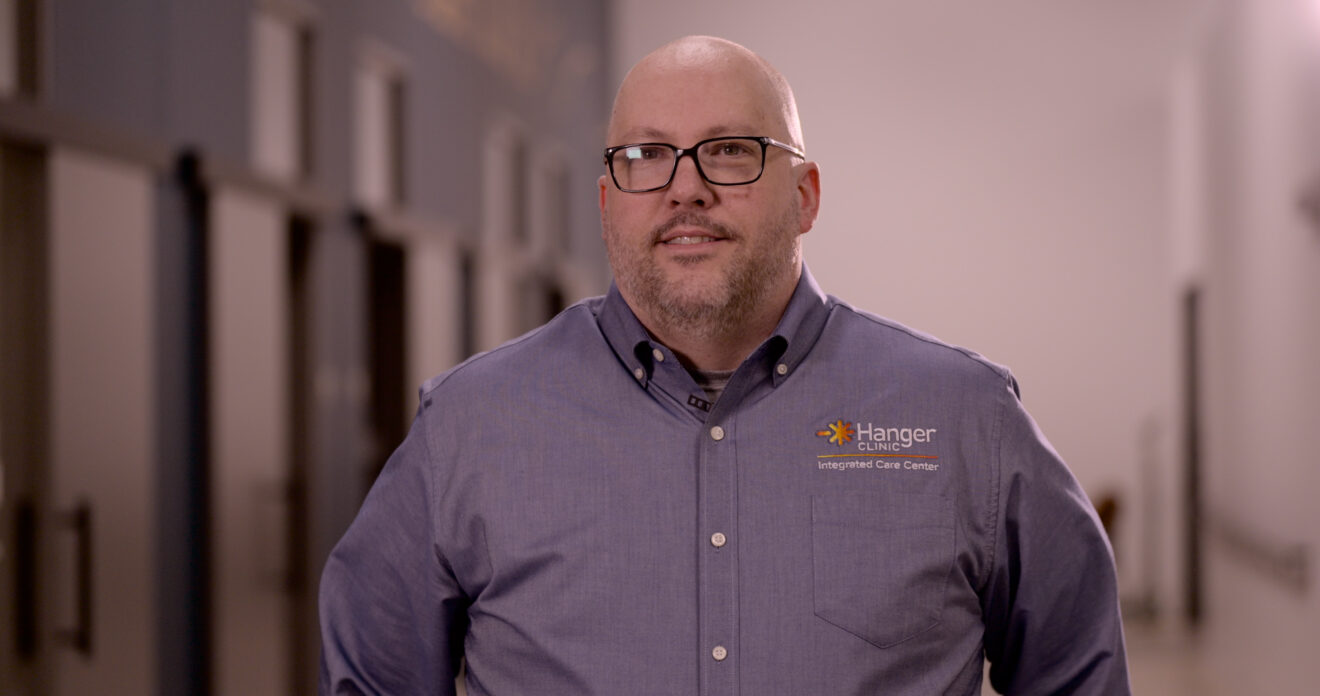
O&P professionals are passionate about their work, and that’s true for ABC-certified prosthetist Ryan Caldwell. He works in the Hanger Clinic’s Integrated Care Center in Schaumburg, Ill., where clinicians, fabricators, technicians and health care partners collaborate to support patients in an environment that reflects real-world experiences.
Caldwell is focused on advanced lower-limb prosthetic sockets and was key to the development of the NU FlexSIV socket. He is often a guest lecturer and has been a speaker at conferences, including the International Society of Prosthetics and Orthotics conference.
What brought you to work in the orthotics and prosthetics field?
I was fortunate to grow up in the field, gaining experience at a young age. I remember working summers and days off from school at my father’s lab and witnessing how hard work with your hands and your mind can help others that are really in need.
What are you passionate about in O&P?
As a single-discipline practitioner, I am really interested in prosthetic socket technology. I have been fortunate to have experimented with socket design, participated in research and education and worked with clinicians around the world centered on this topic. I strive to continue learning new techniques and improving patient outcomes through these studies.
Can you share an inspiring moment in your practice?
One of the first people that I started working with was a prosthesis user that suffered with chronic skin issues and sores on their residual limb. At the time I saw this patient, active vacuum technology was just coming out. I received my training and used this technology for the patient, their limb had healed and their life had changed. It was at this point that I had dedicated my clinical practice to this technology, which evolved into even greater things.
What are you most looking forward to as the O&P field evolves?
I am interested in the evolution of how we work with our patients and provide patient care where the incorporation of multidisciplinary teams are being used. Working for the Hanger Clinic, Integrated Care Center, we are developing different clinical/patient experiences that utilize these teams and performance-based measures to ensure we are meeting the growing patient demands. I’m excited to see what the future holds and the level of care that will be provided for these prosthesis users.
What is one piece of advice you would give to new O&P professionals?
I would encourage new O&P professionals to find an area that is interesting to them and try to specialize on that aspect. Becoming an expert on a topic that is important to your team can really help you grow as a clinician and your practice. This might also require you to find a mentor who can help you along the way. I wouldn’t be as successful without the help of my mentors Carl Caspers, CPO, and Stefania Fatone, PhD, BPO (Hons), who I owe much gratitude.