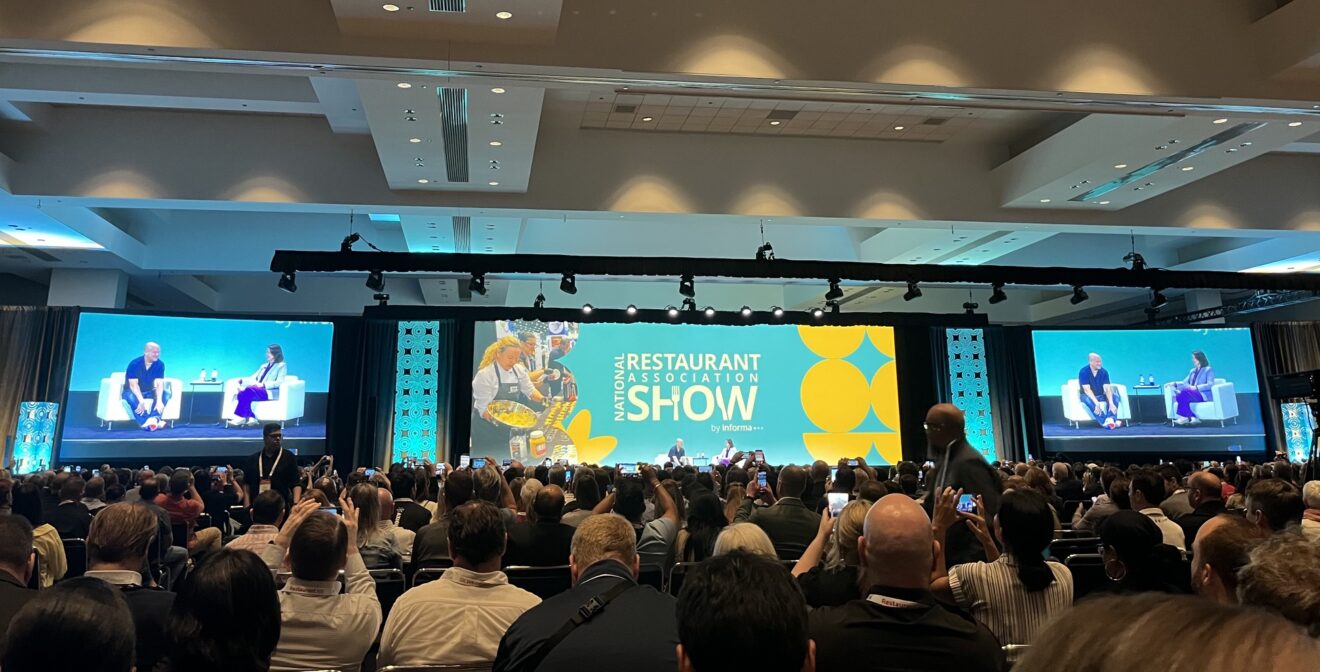
This year’s National Restaurant Association Show drew more than 55,000 foodservice professionals from 112 countries to Chicago’s McCormick Place for four days of innovation, conversation and a closer look at what technology actually means for the people running restaurants. If previous shows were defined by possibility, this year’s was defined by proof.
Artificial intelligence remained a dominant theme, but the conversations surrounding it have evolved. The focus has shifted toward implementation: how to deploy it across large restaurant networks, integrate it into day-to-day operations and generate measurable business results without compromising hospitality – all while confronting a difficult operating environment shaped by labor shortages, rising costs and increasingly selective consumers.
AI’s scaling problem
Rather than emphasizing futuristic concepts, the session “The rise of the agentic restaurant: From hype to reality” centered on a practical issue many operators are now facing: most restaurant and retail edge AI initiatives struggle to move beyond pilot programs.
According to Deborah Matteliano Simeoni, global head of restaurants and food tech at AWS, and Justin Swagler, global director of industries at Spectro Cloud, many brands continue treating each restaurant location as a separate environment instead of building standardized systems capable of supporting AI deployments across entire networks. The result is a fragmented infrastructure that becomes difficult to manage at scale.
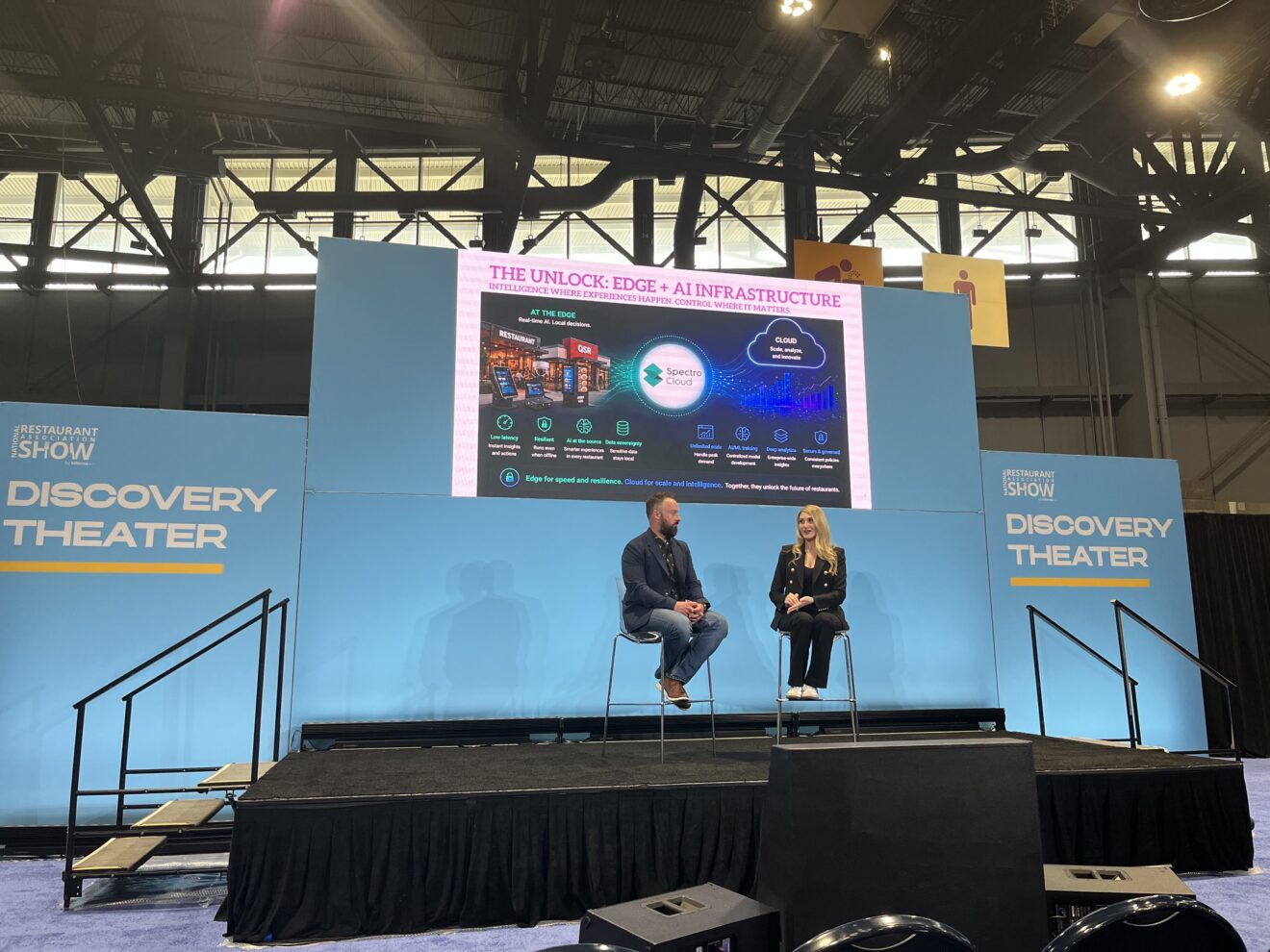
“Why not build this kind of infrastructure into your new locations from the very beginning, so that you can start deploying these AI use cases at scale?” Matteliano Simeoni said, encouraging operators to think about edge infrastructure earlier in their growth cycles rather than waiting until systems become difficult to standardize.
Yum Brands served as a case study during the discussion. Managing AI-enabled systems across more than 45,000 locations globally requires a centralized operational infrastructure that many restaurant companies are still struggling to build.
“If you don’t have a governance structure, you’re going to stumble on how you scale AI use cases across your entire network,” Swagler told attendees, adding that having that structure is critical to enable repeatable deployment processes.
The broader takeaway reflected a recurring theme throughout the show: Operators seeing the most traction with AI are typically those that already have strong operational foundations in place.
Making data actionable
While the agentic restaurant session focused on infrastructure, the session “Data that leads: Turning restaurant signals into daily decisions,” featuring Black Rock Coffee Bar and Restaurant365, focused on execution at the operator level.
Jaclyn Nesemann, business intelligence senior manager of the 190-unit coffee chain with headquarters in Scottsdale, Ariz., detailed the company’s transition away from reactive monthly financial reporting toward a weekly reporting cadence designed to help operators identify issues earlier.
Under the previous system, financial data often arrived weeks after operational problems had already developed, Nesemann said. By shifting toward weekly reporting and more consistent performance monitoring, the company was able to identify variances earlier and make adjustments faster.
The conversation focused less on the technology itself and more on how information is communicated and acted upon. Rather than just distributing reports, Nesemann emphasized simplifying the data and helping operators understand the operational drivers behind the numbers — why labor costs shifted, why food costs changed and what actions should follow.
“I’m not just telling them a number. I’m telling them a story,” Nesemann said. “There’s normally something, and there’s normally a reason, and if you’re on top of things, you can kind of pull that out of people and help them understand that context.”
Marc Cohen, solutions architect at Restaurant365, agreed.
For any of you who have done this, there’s sort of that order of operation,” he said. “I find, you start to distill the why, and then they start asking better questions, then you know it’s working, right? Then they start answering the questions for themselves, then you know it’s really working.”
Emphasis was also placed on involving the right partners and people from the start to ensure long-term success, whether you’re building the technology internally or bringing in a vendor.
“I think the important part here is that your team is part of this process, right?” Cohen said. “You’re not just managing from the top down, and I also think figuring out where to manage these levels of information is critical. Not everything can come from corporate. Some of it has to be managed at a store level, at a GM level, and they’re part of this weekly process, right? You’re getting feedback from them on what they feel is important and how they can move the needle – that feedback is super critical.”
AI as an operational support tool
Several sessions also highlighted how operators are using AI for smaller operational efficiencies rather than large-scale automation.

During the panel discussion “AI that works: Real operators, real wins,” restaurant operators described AI primarily as a support layer that helps surface issues more quickly inside existing workflows.
Khara Mangiduyos, co-founder and head of marketing and customer experience of Kalei’s Kitchenette in San Diego, described how a proactive AI alert flagging a questionable HR line item in her P&L saved her $2,000 within weeks – money she immediately reinvested in marketing.
Bruce Nelson, founder and CFO at Tempo Hospitality Group, described AI’s value as identifying small inconsistencies across multiple P&L statements that might otherwise go unnoticed during manual review.
However, operational utility still requires oversight, and the value of human judgment cannot be replaced, the panel agreed.
“AI doesn’t innovate, it just imitates,” Nelson said.
Leading with purpose
National Restaurant Association President and CEO Michelle Korsmo’s keynote returned to a theme that isn’t new, but carried more weight than a year ago: the restaurant industry’s greatest asset — and most pressing challenge — is its people.
With 15.7 million workers employed across the industry and the percentage of young workers in the US workforce projected to shrink further by 2034, according to Technomic, the labor pipeline is narrowing. Over one-third of operators cite staffing and skill shortages as their biggest barrier to adopting a meaningful data strategy.

Eight out of ten restaurant owners started in entry-level positions – the industry grows its own leaders, she said. The association’s focus going forward centers on investing in that pipeline deliberately: developing frontline managers, building digital literacy and cultivating cultures people want to stay in.
The keynote conversation with tennis champion and entrepreneur Andre Agassi extended those themes in unexpected ways. He reflected on building the right team, leading with vulnerability, understanding how each person learns differently and trusting the coaches who help you grow. Whether on the court or in the kitchen, the team reflects its leadership.
“Andre Agassi’s journey reflects so many of the qualities that define success in our industry — discipline, resilience and the importance of mentorship and championing the next generation,” Korsmo told SmartBrief ahead of the show. “I hope attendees walk away thinking about what they can do as leaders to have a positive impact on the people around them. Agassi’s experience underscores that finding happiness in your success isn’t always linear, and that the drive to keep striving to find your own definition of success is what ultimately allows you to make a positive impact on the people around you.”
What this year’s show ultimately revealed is that restaurant technology is growing up. The industry is becoming more disciplined, more skeptical and more focused on measurable operational outcomes.
The sessions showed us that those who will get the most out of technology aren’t the ones with the most data or the most AI tools. They’re the ones who do the harder work: building a trustworthy data foundation, involving their teams in the process and knowing exactly which story they were trying to tell.
“If you can care enough about the details in everything you do, I don’t think you’re going to recognize pressure moments as pressure moments,” Agassi said. “I think you’re going to recognize that you’re just more prepared to be the best of yourself, whatever that moment calls for.”
Related stories:
- Q&A Exclusive: National Restaurant Association President and CEO Michelle Korsmo discusses what to expect at this year’s Restaurant Show
- Q&A: Resilience, customer experience and the new value proposition in the restaurant industry
- Culinary compass: Comfort, value and global flavors define 2026 restaurant trends
_____________________________________
If you liked this article, sign up to receive one of these daily newsletters: CIA ProChef SmartBrief, ACF Chef’s Table SmartBrief or Restaurant SmartBrief. Check out the rest of our SmartBrief Food & Beverage newsletters and connect with us on our SmartBrief on Food & Beverage LinkedIn page.