Welcome back to CodeWatch, SmartBrief’s monthly examination of the latest codes and standards affecting the built environment.
Standards organizations and local governments are grappling with how to adapt long-standing rules to new technological and economic pressures. The past month’s developments include how institutions protect their work, how new products get vetted for safety and how cities and states are rethinking decades-old construction requirements in the face of a persistent housing shortage.
The housing code reckoning
The past month’s biggest headlines also suggest cities and states are looking hard at whether their building codes are quietly blocking housing production. Several are moving to change them.
In Oklahoma, a state committee is weighing changes to the Uniform Building Code Commission’s residential code aimed at the state’s housing shortage. Proposals include allowing 3-to-8-unit consolidated dwellings under the IRC and reconsidering sprinkler requirements for missing-middle housing types.
Meanwhile, in Chicago, the City Council’s zoning committee held a subject matter hearing on an ordinance that would allow apartment buildings of two to six stories to be built with a single stairway instead of two. The measure would also require single-stair buildings to include sprinklers and self-closing doors. No vote was taken. The Chicago Fire Department and the Department of Buildings oppose the measure as currently written. Advocates point to a Pew Charitable Trusts analysis finding single-stair buildings up to six stories are at least as safe as two-stair buildings, with shorter evacuation distances.
New York City created an “Affordable & Efficient Code Reform” task force under its Department of Buildings, part of a broader “Block by Block” housing plan. The task force will examine cost-saving code changes including smaller elevators in walk-up buildings and use of non-traditional construction materials. City reps say just 34% of city apartments are step-free, and only 21% of pre-1974 buildings are as well. This builds on the city’s separate adoption of a new Existing Building Code based on the International Existing Building Code model, which takes effect in 2027 and is meant to streamline renovation requirements across the city’s aging building stock.
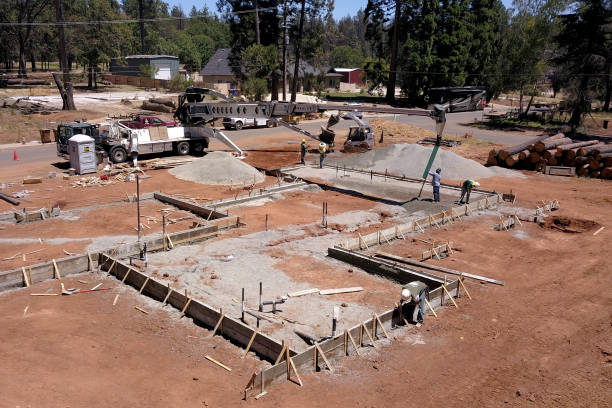
On the enforcement side rather than the code-writing side, the town of Paradise, Calif., launched a formal building code complaint process for homes built during the post-Camp Fire rebuild. Residents can file complaints about code compliance on homes built within the last 10 years. An independent third-party inspector will review the complaints and issue findings. Under a new “Two-Strike Rule,” contractors who accumulate two violations can have permits suspended until issues are corrected. The process grew out of a 2025 audit of the town’s Building Division following community concerns about permitting and inspection quality.
ICC tracks middle housing toward 2027 and 2030
The International Code Council published an update on its middle housing work, and it ties directly into local fights happening across the country.
ICC has finalized a new publication compiling 2024 IBC provisions applicable to multifamily and middle housing occupancies (R-2 and R-3), intended to help designers, code officials and policymakers locate relevant requirements without digging through the full code.
More significantly, at the April 2026 Public Comment Hearings in Hartford, governmental members voted 86 to 34 in favor of a Means of Egress Code Development Committee proposal that would permit single-exit construction up to four stories. That proposal (E24-24) has advanced to “Approved as Modified” status in the preliminary 2026 Group A and B online governmental consensus vote.
Looking further out, ICC has launched a guideline development effort (G13) aimed at the 2030 I-Code cycle, focused on best practices for middle housing. The guideline will run alongside a Building Code Action Committee subgroup tasked with identifying longer-term topics for 2030. ICC is accepting interested parties through its Committee Application Page.
ACI sets up new committees, protects IP from AI
ACI’s Technical Activities Committee approved two new technical committees.
Committee 390 will focus on polished concrete. The committee was previously a subcommittee under ACI/ASCC Committee 310 on Decorative Concrete. Its mission is to create and maintain a comprehensive specification for polished concrete flatwork covering quality, durability and performance. Christopher Wright chairs the new committee.
Committee 534 will take over for the discharged Committee 533 on Precast Panels and will focus specifically on precast concrete tunnel segments. The committee’s first major task will be revising ACI PRC-533.5-20, the guide for precast concrete tunnel segments. Carlo Cattelan chairs the committee. The shift reflects continued growth in tunnel infrastructure work and one-pass precast segmental lining systems for transportation and underground projects.
Both committees meet for the first time at the Fall 2026 ACI Concrete Convention in Atlanta. ACI says volunteers are welcome.
Anyone joining a committee will want to heed a separate move by ACI. The Institute has adopted a new Board Policy on the use of AI that applies to anyone or any organization with access to the group’s intellectual property. It prohibits entry of ACI standards, draft documents and committee work products into AI tools, with a particular emphasis on generative AI. It also prohibits creating derivatives of ACI intellectual property using those tools.
The move suggests there is growing concern among code, specification and standards developers about AI training on copyrighted technical content without compensation or consent. However, it also seems to acknowledge that AI isn’t going away, and that it behooves the concrete industry to take full advantage of it, within reason.
ASTM moves on plastic ceiling barriers, connected vehicle road data
ASTM International’s plastics committee (D20) has approved a new standard, D8662, on plastic temporary ceiling barriers. These barriers go up below automatic fire suppression sprinklers during roof or ceiling construction and repair work. They protect workers and equipment from dust and debris while letting work continue without losing floor space.
The defining property of these barriers is that they melt and open quickly in a fire, so they don’t interfere with sprinkler operation. ASTM member Marcelo Hirschler of GBH International says the standard gives code officials a baseline for approving these products, and that the technology is intended for eventual reference in the International Building Code and NFPA 5000.
Separately, ASTM’s vehicle-pavement systems committee (E17) is developing a proposed standard, WK97778, on collecting road infrastructure data from factory-installed vehicle sensors. The standard would define how OEM-approved embedded systems extract infrastructure condition data from connected vehicles already on the road.
ASTM member Björn Zachrisson of Nira Dynamics frames the goal as giving cars and road agencies “a common language.” The idea is to let road authorities use the existing vehicle fleet for continuous condition monitoring, reducing reliance on manual inspections. ASTM invites OEMs, road authorities and other stakeholders to participate in development.