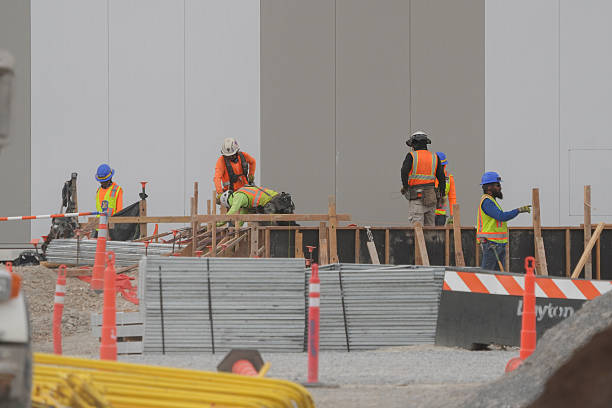
The construction industry’s struggle to find qualified workers isn’t new, but the combination of the data center building boom and the effects of of federal immigration enforcement actions has created a unique hiring landscape in the AI age. It’s created an environment where “workforce shortages remain the top reason for construction project delays” and “many candidates appear to lack the skills needed,” the Associated General Contractors of America wrote in a September press release outlining the results of its 2026 Workforce Survey with NCCER.
How the industry should respond will be top of mind at AGC’s Construction Workforce & HR Conference, Oct. 21-23 in Phoenix. To learn more about what the current landscape means for the industry, and what to expect at this year’s conference, we spoke with three leaders at AGC: Brian Turmail, vice president of association and industry image; Claiborne Guy, director of employment policy and practices; and Meredith Woods, senior managing director of education advancement and credentialing. Responses have been edited for length and clarity.
What’s the single biggest workforce or HR problem you hear about most from members right now, and how did it shape this year’s program in Phoenix?
Turmail: We survey our members every year on workforce issues, and just about every year they tell us their top worry is the same. This year, 88% of firms said they have a difficult time finding enough qualified workers to hire. There’s a lot that goes into that. Basically, our industry has a hard time attracting enough of the people it needs to plan, build and oversee the construction of its various projects.
There are a lot of subsets of what those workforce shortages mean. It’s everything from not having enough people exposed to construction careers, to dealing with the demographic challenge of an aging workforce, to the fact that folks coming out of construction programs may not be as qualified to work [as they need to be]. Then it’s the many complicated HR challenges that come with constantly having to hire, support, prepare, train, develop and nurture a workforce. And there’s the other end of the workforce equation: What can firms do culturally to address the high attrition rates we see at some firms? A lot of firms will tell you they have to hire two people for every spot they have to fill.
Guy: On the HR side, it’s the people. This has been trending for years, but a lot of it is how to find, attract and develop the people that you have. How to identify the leaders that you have, how to develop them and how to do more with what you have. And as Brian pointed out, it’s dealing with all these little intricate things. It’s culture, it’s benefit plan design, it’s compensation. It’s a large equation that goes into it.
Woods: We’re seeing a lot of people move from craft positions, and they’re being thrown into leadership positions within supervision that they haven’t been trained on yet. So they’re having to learn these skills. That’s the uptick we’ve seen on the training and education side: leadership training and some of the soft skills that we haven’t been focused on for a few years.
Kathy Dempsey’s opening keynote focuses on helping employees through change. What motivated such a big focus on change management, and what are the biggest changes contractors’ workforces are going through right now?
Woods: HR and workforce are the ones that deal with a lot of different things, and their jobs are constantly changing, especially with AI and data centers. It’s just a resonating topic right now, so we decided to lean in. What do you think, guys?
Guy: The workforce is changing. The ages, the generations. It’s always going through constant change. New workers, as Meredith pointed out. AI is a huge change. It’s changing how they work, what they do, how they do it and who does it. And then projects change. It’s constant change. Where they are, how they do it, what they’re building.
Turmail: Just think of the makeup of each project team. Construction lives in constant change, in that you’re on a different team with every project. Depending on your craft, you may be on a different project a couple of times a week. So there’s a lot of change. Then you’ve got the changing demographics of the workforce, changing technologies in the front office and changing technologies and techniques on the jobsite. This is a very dynamic industry in all the different ways, including the literal definition of dynamic. Things are changing, and it’s something we hope will resonate with attendees.
AGC recently released its 2026 Workforce Survey. What findings should HR leaders take away from it going into the conference?
Turmail: I think the biggest one is the section of the survey where we get to the heart of what “qualified” means. The challenges firms have in terms of how many people they hire who are going to show up on day one, or the amount of money firms have to put into training and professional development. It’s not just finding people. It’s finding people who understand that if you take a job, you’ve got to show up for it, you’ve got to show up on time, you’ve got to pass a drug test. It’s understanding how you create a culture so that people show up, and then they’re getting reamed out by some crusty old superintendent because they made a novice mistake 10 days in, and they’re like, “Well, I can go work at Starbucks and no one’s going to yell at me.”
I think that gets to the heart of what we’re trying to do with the Workforce & HR Conference, which is bring together hundreds of people who deal with these challenges every day so that we can learn from each other and share success stories. “Oh my gosh, we had people coming in who didn’t know a thing about construction, so we created this program, or we worked with this university.” Or, “We found out our culture was really turning a lot of people off, so we brought everyone in and tried this.” Or, “We realized our benefits stunk and we needed to change them, so we’re making those changes.”
When you look at the workforce survey, it’s not necessarily that there aren’t people out there who apply for these jobs. It’s just that many of them don’t have the soft skills, and most of them don’t have the hard skills, to be successful.
Frontline leadership seems to be getting a lot of attention this year, with many superintendents and foremen promoted for technical skill as opposed to people skills. Why is that happening across the industry, and what are the best firms doing differently?
Woods: It’s a people issue. Being a really good craft worker doesn’t mean you’re going to be a really good leader, especially without training. So the really good firms out there are developing their leaders. We have a plethora of different courses we offer through AGC, and there are a lot of good materials out there that people can take advantage of. But it’s really spending the time. Time is money and time is hard, but you get your investment back when you train your team and you have a culture that promotes that as well.
Career pathing is something that was identified in last year’s after-action report. We had a webinar about it last year, and this year we have a session on bringing AI in to help you with those career paths. Having a pathway so that someone can see themselves in a few years will keep them involved and excited about their career.
What are construction HR teams actually getting from AI and automation, and what should they be careful about?
Woods: They’re starting to use it a lot for career pathing. They’re laying out exactly what skills and competencies they need in these different jobs. Historically it’s been, “OK, I’m a project manager.” But that doesn’t mean you have all of these skills. You may have been acting as a project manager at a different company or on a different project, and that doesn’t mean you have the same skills they’re looking for. So it levels that playing field and helps create some of those career path documents. It’s really helpful for that.
Guy: A lot of it goes into hiring and identifying job descriptions. AI has made that so simple for them. Before, they had to do it all by hand. Now it’s, “I need to come up with a new position that I’ve never done before,” and it’s an easy turn. That’s the day-to-day stuff AI has helped them out with.
Woods: There are definitely risks involved, and we have a facilitated conversation on AI. When you’re in a silo, you just know what you know. But once you start talking to people about how they’re using it, [you learn]. We’re excited to hear a year from now at the conference how people are using it.
Turmail: It also has the opportunity to do some higher-level analysis of your workforce trends, says the Gen Xer. You can use AI to identify trends that may not be readily apparent to you. What challenges are you having in retaining your workforce? What types of people are you successful in recruiting into the firm, and how do you identify people with a similar makeup so you can be more successful recruiting? What are the common skills people are missing that trip them up, that you can either rely on AGC to offer through one of its programs or put in place on your own?
This year’s workforce survey added questions about data center projects, how they’ve affected firms’ workforces and the competition they create. What are you seeing, and how should firms plan for talent competition from those megaprojects?
Turmail: It’s kind of a double-sided coin. In one sense, we’ve all seen the data. Data centers are driving demand for commercial construction in 2026, and without that demand, the amount of activity taking place would be shrinking right now. That’s just what the hard numbers tell us. So it is creating a pathway for many new people to enter high-paying careers in construction. That’s the happy side of the coin.
The flip side of the coin is that because there’s so much time pressure to get these data centers built, it’s inflating the cost of labor. That’s not a bad thing for workers, but it’s creating real challenges for the firms that have other types of work. Everything’s getting more expensive, and you’ve got folks coming in making significantly more per hour as an electrician on a data center project. How does the rest of the market adapt to that, particularly when demand for many other projects is weak?
We know this is the current wave. We know at some point this wave will crest, and then another wave will come. What are the lessons firms can share from this wave? How are they successfully recruiting people to build data centers, particularly as data centers seek out places where power is available? That’s taking them to secondary and tertiary markets. Places that don’t have large populations, and places that don’t have a tradition of commercial construction because they’re somewhat rural. These create interesting and unique opportunities for the industry, but also a lot of challenges when it comes to recruiting.
Immigration enforcement and work authorization remain big concerns, and AGC is currently seeking member input on Salvadoran TPS protections. What should HR teams have in place right now as they prepare for that landscape?
Guy: They need to be really on top of their immigration compliance. They need to keep track of all these TPS and worker authorizations and what the status is right now. They need to reverify, whether they use E-Verify or redo their I-9s. The guidance we’ve been given is keep your paperwork. You really need to make sure you’re ready in case there’s a raid or an audit. We’ve been putting together a number of immigration [resources], whether it’s getting ready for an audit or a raid. Have a lawyer on hand. You need an immigration lawyer ready to go, because you don’t want to be caught flat-footed when somebody shows up on your worksite. But the real advice is you have to do this. You have to comply. You just need to be ready. You need to have your people on the worksite trained to respond.
The agenda has two tracks, HR and workforce. I’ve always seen them as separate but complementary. What’s the value of having those functions in the same room, and where do you want to see them working together the most?
Woods: According to the survey we do after the conference, over 50% of people touch workforce, HR and training in some capacity. A lot of times, especially at the smaller contractor level, these are the same people, or they’re working with those people. So the more we have these conversations, the more they overlap. When you’re dealing with the problem of not having enough people, there are a lot of people involved in the firms to find those solutions. It requires that people are on equal footing and see the problem as a whole. So we give them a diversity of sessions. They can choose their path and what matters to them, but we’re giving them the chance to get different types of information.
Guy: HR folks know there’s been a workforce crisis because they’ve been dealing with it for decades now. They can’t focus on the bigger-picture workforce development theories and programs around the nation. They’re more focused on what do I do now? How do I find the people now? How do I develop the people I have? But that is a very important piece of the workforce development issue. Getting all these people in the room together to collaborate matters. There’s very little space outside of this conference for all these people to get together as a community and learn from each other. To talk about things they might not have the bandwidth to even think about, or that aren’t their role but are very important to someone else’s role.
Turmail: If you’re out there recruiting people, you need to make sure you’ve got a good onboarding program. And if you’re out there trying to retain your workforce, you’ve got to make sure you’ve got a strong benefits program and a culture that’s welcoming and encourages someone to stay, and that they know they have a path to grow and advance and succeed. Even if you’re in a larger firm where there are different functions, the two operate closely together. They’re really codependent.
Guy: Or, granularly, you have to be able to compete in your pay programs and your benefit plan design. It gets down to that granular level, but it’s all part of it.