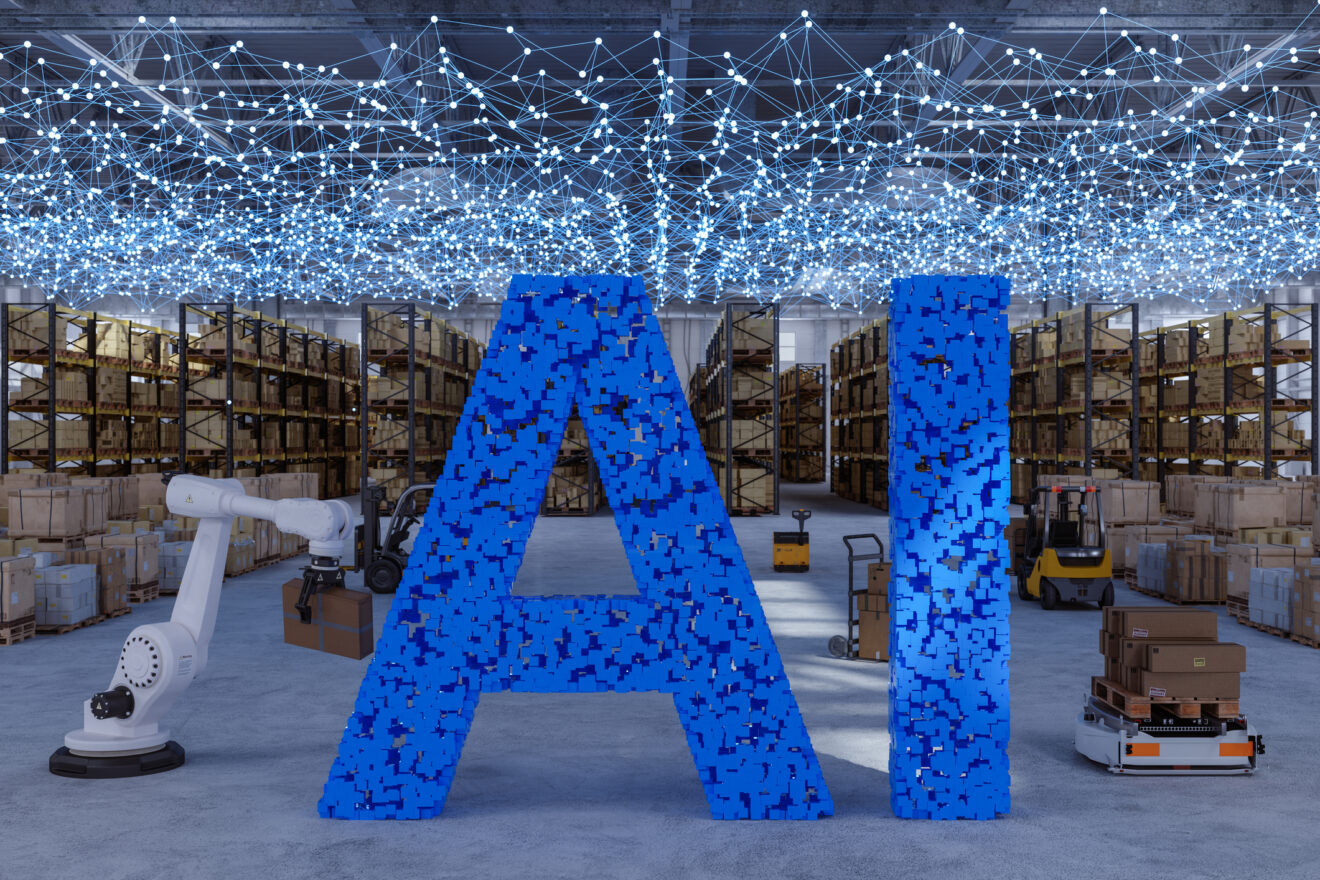
AI has become a fixture in how retailers talk about technology, particularly as companies report improvements in fulfillment, inventory and operational performance. But beneath many of those announcements are capabilities that retailers have been using for years. Optimization algorithms, pricing logic and automated decision-making have been part of inventory and order management systems for decades, even as the terminology used to describe them has evolved.
The distinction is not always clear to the organizations using these systems, either. JBF Consulting’s recent survey of supply chain and logistics professionals found that 55% of respondents consider traditional rules-based automation to be AI. Another 27% said AI is already incorporated into software they use, but they are unsure which underlying technology is powering it.
That does not mean AI is failing to deliver meaningful value across retail. Machine learning and agentic technologies are generating measurable improvements in areas such as demand forecasting, dynamic pricing and personalization. The challenge is determining where those newer capabilities represent a genuine technological advance and where familiar automation is simply being described differently. For merchandising and operations leaders, that distinction can directly affect how technology investments are evaluated.
Understanding what’s driving the decision
For decades, retail inventory and order management platforms have used deterministic logic to make operational decisions. A defined set of inputs enters the system, established rules are applied and the system produces a predictable result. This type of heuristic software has long been central to replenishment and fulfillment, and it remains an important part of how retail operations function today.
The fact that these capabilities remain useful, however, does not make them AI simply because the label has changed. That matters for retailers because inconsistent definitions make it harder to compare competing technologies and understand what is actually being purchased. A company may believe it is acquiring an advanced AI capability when it is instead getting a more sophisticated version of traditional automation, complicating both vendor evaluations and performance benchmarks.
That makes the underlying technology more important than the marketing terminology. When a vendor presents automated fulfillment routing, exception management or another established capability as AI, retailers should look closely at what has changed. Is the system using a fundamentally different approach, and is it producing an outcome that conventional optimization could not previously deliver?
Last-mile technology provides one example of why that distinction matters. The delivery experience is highly visible to consumers, yet many platforms described as AI-enabled continue to rely on legacy technology with AI components added to the existing architecture. A recent analysis by Locus found that the difference often comes down to whether a platform actually learns from each shipment or continues applying essentially the same predetermined rules.
The numbers need context
A logistics provider serving many retailers illustrates another important point: strong performance results do not necessarily reveal how much of the improvement came from AI. The company’s public disclosures provide a useful example of how difficult it can be to distinguish new AI-driven capabilities from operational improvements that existed before the technology received an AI label.
C.H. Robinson says its Lean AI approach has generated more than a 40% increase in productivity and automated millions of shipping tasks since 2022. It also reported that 95% of checks involving missed less-than-truckload pickups are automated, eliminating hundreds of hours of manual work each day. Fortune has reported that the company’s AI agents can now produce freight quotes in approximately 31 seconds, compared with roughly 20 minutes when the process was handled by a human specialist.
The results are significant, but they also demonstrate why retailers need to look beyond the headline metric. A performance improvement does not automatically explain which part of the technology generated the gain or how much of the result came specifically from AI. That issue becomes even more important when organizations lack a clear way to measure AI’s contribution. The survey found that only 11% of organizations establish measurable criteria for AI success, and just 3% assess results against the original business case. Without those measures, improvements from AI can easily become intertwined with gains from process changes, conventional automation or better operational execution.
Freight brokers, for example, have used conventional software to automate quoting and exception checks for roughly two decades. That history makes it worth asking how much of today’s reported improvement is attributable to newer agentic capabilities and how much reflects process redesign or operational changes that could have delivered benefits regardless of whether the technology was called AI. FreightWaves also reported a steady decline in the company’s workforce over the past two years as its automation efforts expanded. For retailers evaluating comparable claims, that raises another important consideration: does the reported metric demonstrate a capability that did not previously exist, or does it primarily reflect the elimination of human involvement from a process that software was already capable of handling?
Robotics has its own reality check
The same need for perspective applies to robotics and physical automation. Much of the investment and attention in retail robotics remains concentrated within distribution operations, particularly warehouses and fulfillment centers. Automated sorting, picking, and microfulfillment have made meaningful advances in these environments and increasingly influence how customer orders are processed. The picture changes once an order leaves the fulfillment center. Automation on the physical last mile, where the package travels to the customer’s door, remains relatively limited and concentrated in specific geographic markets.
Autonomous delivery pilots are operating in select corridors and environments that are particularly conducive to the technology. Market research continues to characterize autonomous last-mile delivery as an early-stage market, with deployments generally focused on shorter, lower-complexity routes rather than broad national networks. As a result, broad claims that suggest last-mile automation has already reached widespread adoption can obscure how limited the technology’s current physical footprint actually is.
What retailers should demand from AI claims
None of this suggests that retailers should pull back from AI. Instead, it suggests that technology vendors should be prepared to demonstrate exactly what their AI capabilities add beyond the automation retailers already have in place. Before classifying a capability as genuinely new, retailers should examine the underlying method, identify the specific business outcome that changed, and quantify the improvement. They should also consider whether better configuration, oversight or deployment of existing deterministic technology could have produced a similar result.
These questions do not require an organization to become an expert in AI architecture. They require the same level of business discipline as any other significant operational technology decision. That discipline is particularly important when the broader market is still developing its approach to AI governance. The survey found that 78% of organizations pursue AI without a formal strategy, while 85% do not use a consistent process for selecting AI opportunities. Without defined objectives, governance and measurement, organizations increase the risk of treating established automation as something fundamentally new.
Retail does not need less ambition when it comes to AI. It needs a clearer understanding of what is actually being delivered under the AI label. The more precisely retailers evaluate the technology, the better positioned they will be to direct resources toward capabilities that create genuinely new value rather than simply giving familiar software a new name.