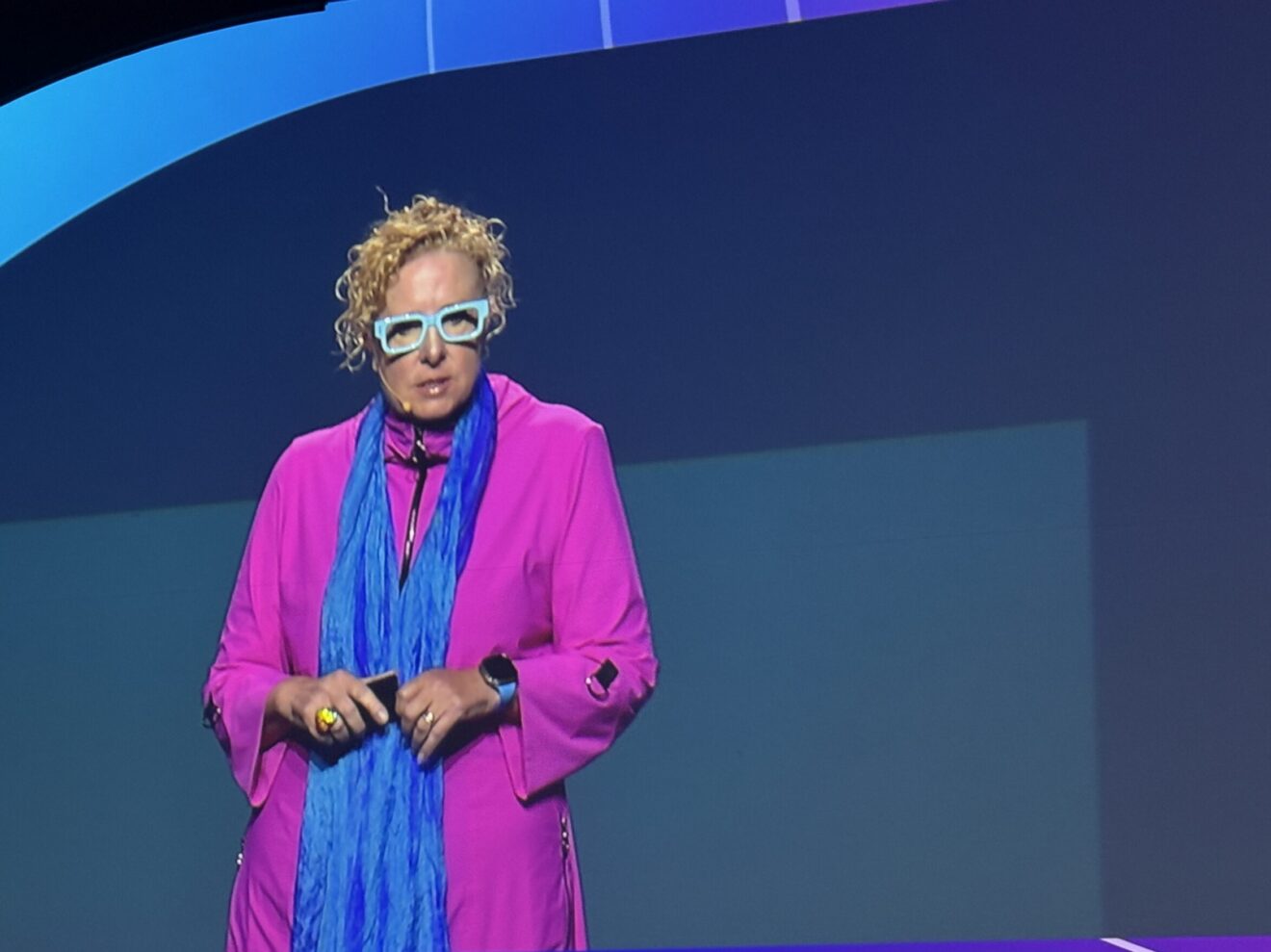
ORLANDO, Fla. — Educators agreed that AI is a game-changer for education, but experts also highlighted the importance of the human touch at the ISTELive 26 annual conference.
At the Opening Mainstage on Sunday, Richard Culatta, the CEO of ISTE, said a focus on screen time misses the larger point of how teachers use technology in the classroom.
“Simply put, screen value is far more important than screen time,” Culatta said. “If we’re using technology in bad ways, one minute is too long, and if we’re using technology to help support curiosity and creativity and exploration, and designing an appropriate time limit might be much longer.”
Remember that AI is a tool
Meanwhile, Jose Dotres, the superintendent of the Miami-Dade County Public Schools, said his school district is focusing on making sure students are AI-ready graduates. Dotres emphasized that AI is a tool that can help graduates succeed.
“When we talk about AI tools, we don’t leave AI in the generality, we talk about how these tools can help students become more collaborative,” Dotres said. “How can they become more resilient? How can they be helped to become more adaptive? How can they research ideas that will empower our community?”
Chris Phillips, the vice president of education for Google, also discussed a collaboration with ISTE that featured Google tools for educators to help support classroom learning. Phillips said the goal of the initiative is to help teachers rather than replace them.
“We believe strongly that the human connection between teacher and student is the most important,” Phillips said. “In the classroom, when it comes to teaching, the teacher is in the lead — not in the loop, in the lead. We want to make sure we’re helping provide these tools, so [education] can be thoughtfully delivered.”
Brandie Wright, a teacher and ISTE Instructional Coach, shared the power of curiosity as a motivating force for teaching. Wright shared the uplifting story of a student who always peppered her with questions, which helped uncover a passion for mathematics.
“The most curious student in your classroom is not a disruption,” Wright said. “They want to connect, they are offering to listen, their curiosity can unlock something bigger on the inside of them and on the inside of you.”
Uncertainty can lead to transformation
The conference, which brought together educators from 80 countries, also featured leadership expert Heather McGowan, who acknowledged that we are living in a time of uncertainty due in part to AI.
“We’re trapped between two worlds, and that is full of uncertainty,” McGowan said. “Uncertainty really is opportunity for transformation if we embrace it, because in the age of uncertainty it’s not the person with the fastest answer, which is what we’ve been trained and primed to do. It’s who can sit with that question long enough, not only to find a better answer, but ask themselves: ‘Is it the right question to begin with?’”
McGowan, the co-author of “The Empathy Advantage: Leading the Empowered Workforce,” said research has shown that teams of humans and AI can outperform when AI is treated as a “thinking partner” that can be challenged.
“Community is the ultimate operating system, no matter what we do with AI,” McGowan said.
Opinions expressed by SmartBrief contributors are their own.
Subscribe to SmartBrief’s FREE email newsletters to see the latest hot topics on educational leadership in ISTE and ISTELeaders. They’re among SmartBrief’s more than 200 industry-focused newsletters.