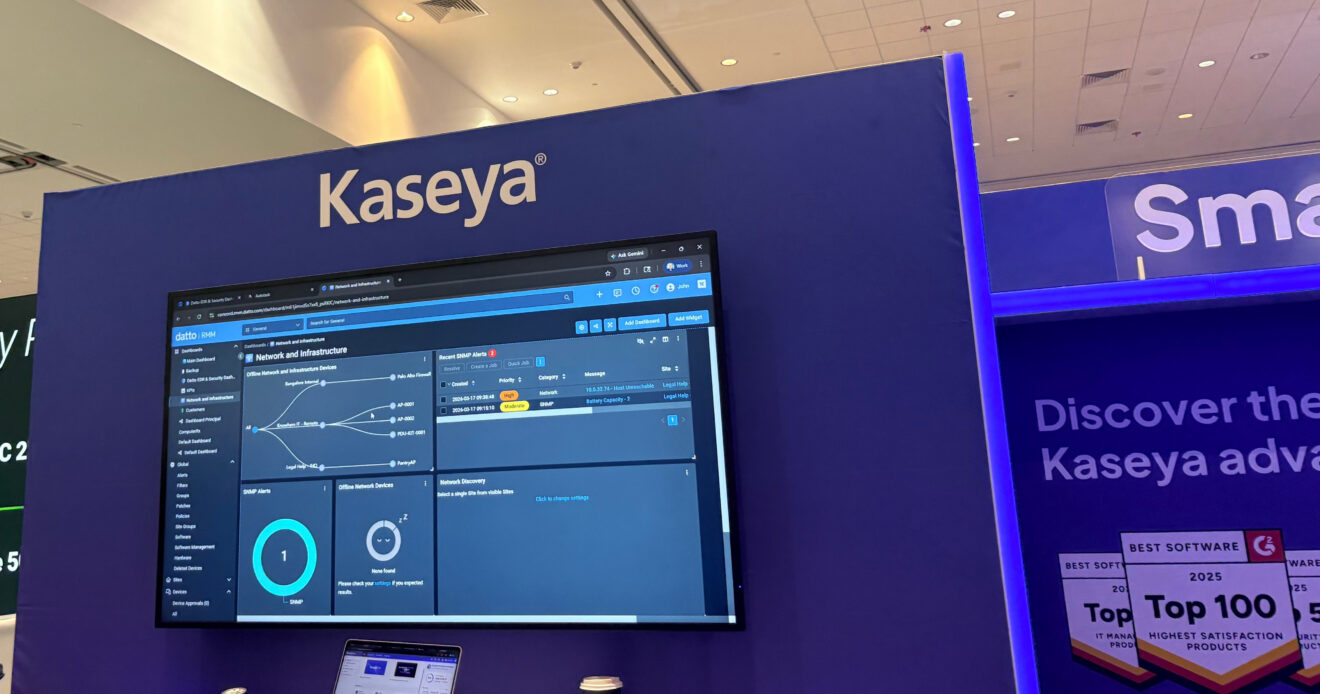
Agentic AI emerged as the defining trend at RSAC 2026, marking a shift from AI as a general tool to systems that can autonomously reason and act across complex workflows. At RSAC Conference 2026, Kaseya’s Austin O’Saben shared his thoughts with SmartBrief on the evolution of AI across workflows, the key challenges facing IT teams and making sure the secure path is an easy one.
What is the biggest trend you saw at RSAC 2026, and how will it shape the future?
O’Saben: The conversation at RSAC 2026 had clearly shifted from AI broadly to agentic AI specifically, and I think that distinction matters. We’ve moved past the phase of AI as a novelty or a copilot and into a serious discussion about AI systems that can reason, act and execute across complex workflows autonomously.
Fundamentally, security and IT professionals are operating under relentless resource pressure and that’s driving the AI push. Threat surfaces are expanding, alert volumes are increasing and headcount isn’t keeping pace. The technologies that will win in this race are the ones that tangibly reduce the cognitive and operational load on already-stretched teams and are trained on valuable data. Agentic AI and AI as a whole, done right, will make a meaningful impact on the day-to-day work of IT teams. That’s the direction the industry is heading, and the vendors who build with that workflow reality in mind will be the ones that matter three to five years from now.
How does Kaseya approach the integration of new technologies into its IT management platform, and what role does scalability play in this process?
O’Saben: There are two layers to how we think about integration. The first is consistency, ensuring that as teams adopt multiple products from Kaseya, they’re not context-switching between entirely different interfaces. A similar look and feel across products reduces training burden and helps smaller IT teams move faster.
The more meaningful layer, though, is workflow automation across products. That’s where scalability becomes real. A good example is how we’ve connected our RMM and EDR: security alerts surface directly in the RMM, and technicians can take EDR actions such as device isolation without leaving the tool they’re already working in. That kind of integration removes friction at exactly the moment it matters most. We’re focused on identifying those high-impact connection points across our portfolio and building workflows that make a meaningful operational difference and make lean IT teams punch above their weight.
What are the key challenges you encounter when managing IT infrastructure for organizations of different sizes, and how does your software address these challenges?
O’Saben: The most consistent challenge we see, particularly on the security side, is the gap between the sophistication of modern threats and the resources available to defend against them. Many IT teams, even in organizations that aren’t small by revenue, are running security with a handful of people who wear multiple hats. There’s no dedicated SOC, no dedicated threat analyst. Security is something they manage alongside everything else.
Kaseya SIEM, our latest launch coming at Kaseya Connect at the end of April, is a direct response to that reality. It’s a managed SIEM, which means we handle the heavy lifting which includes automated response rules, continuous monitoring of endpoints, M365 and firewalls, so teams aren’t drowning in noise. But we also recognize that “managed” doesn’t mean “hands off” for everyone. IT teams that want more control can go deeper: defining custom alert severity, building their own automated response rules and tuning the platform to their environment. That flexibility matters because there’s no single IT team that is the same. The goal is to meet teams where they are and scale with them as their security maturity grows.
With the growing importance of cybersecurity, how does Kaseya’s software ensure that IT systems are secure while maintaining ease of use for administrators?
O’Saben: Our approach at Kaseya is to make the secure path the easy path. That means building products where strong security defaults are in place out of the box, so administrators aren’t starting from a blank slate and hoping they’ve covered everything. A bit similar to the last answer, but Kaseya SIEM is a good example and automated response rules, continuous monitoring and SOC coverage are built in, so the baseline is strong without requiring deep security expertise to stand up. For administrators who want to go further, the controls are there. But the floor is high by default.
How do you see the future of AI and automation influencing IT management solutions, and what steps is Kaseya taking to incorporate these technologies into your platform?
O’Saben: AI has a real opportunity to automate many IT and security workflows with agentic capabilities in particular could fundamentally change how IT teams operate, shifting them from executing tasks to defining policy and letting intelligent systems handle execution. But that potential is only realized if it’s built on the right foundation.
AI is only as good as the data behind it. Generic AI tools trained on broad, undifferentiated data are commodities. They can generate output, but they don’t have the operational context to make decisions that are actually meaningful in an IT environment. The vendors who will matter in this space are the ones with data at scale and depth.
That’s where Kaseya has a structural advantage that AI-native startups simply can’t replicate. We have visibility across 17 million endpoints, 3 exabytes of backup data and the systems and applications businesses rely on every day. That breadth of real-world IT data — the signals, the patterns, the context — is what makes AI actionable rather than theoretical.
The other piece is that intelligence without action isn’t enough. Our platform already brings together more than 40 jobs IT teams need to manage, so in the future, when AI surfaces something, it can move straight from detection to decision to action. Issues get resolved automatically. Threats get stopped earlier. Best practices become part of everyday work rather than a separate initiative.
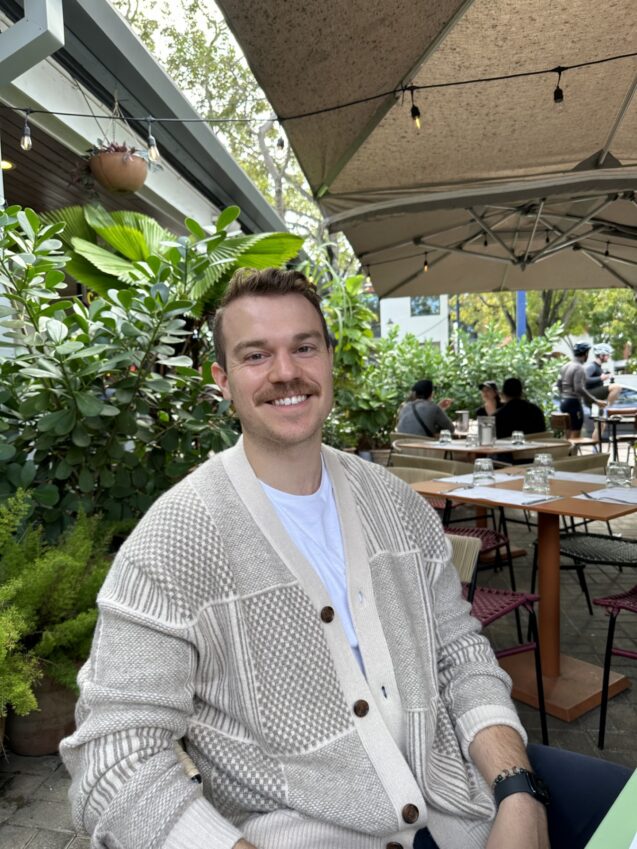
Meet Austin:
Austin O’Saben is a Product Marketing Manager at Kaseya focused on cybersecurity solutions for small to mid-sized enterprises. He helps translate complex security technologies, such as EDR, MDR and cloud security into practical strategies that help IT teams do more with less and keep businesses secure. Austin works closely with product and security teams to educate the community on emerging threats, best practices, and modern threat detection.
If you like these insights on cybersecurity, sign up for the ISACA SmartBrief on Cybersecurity, a daily look at the top news and workforce education topics.