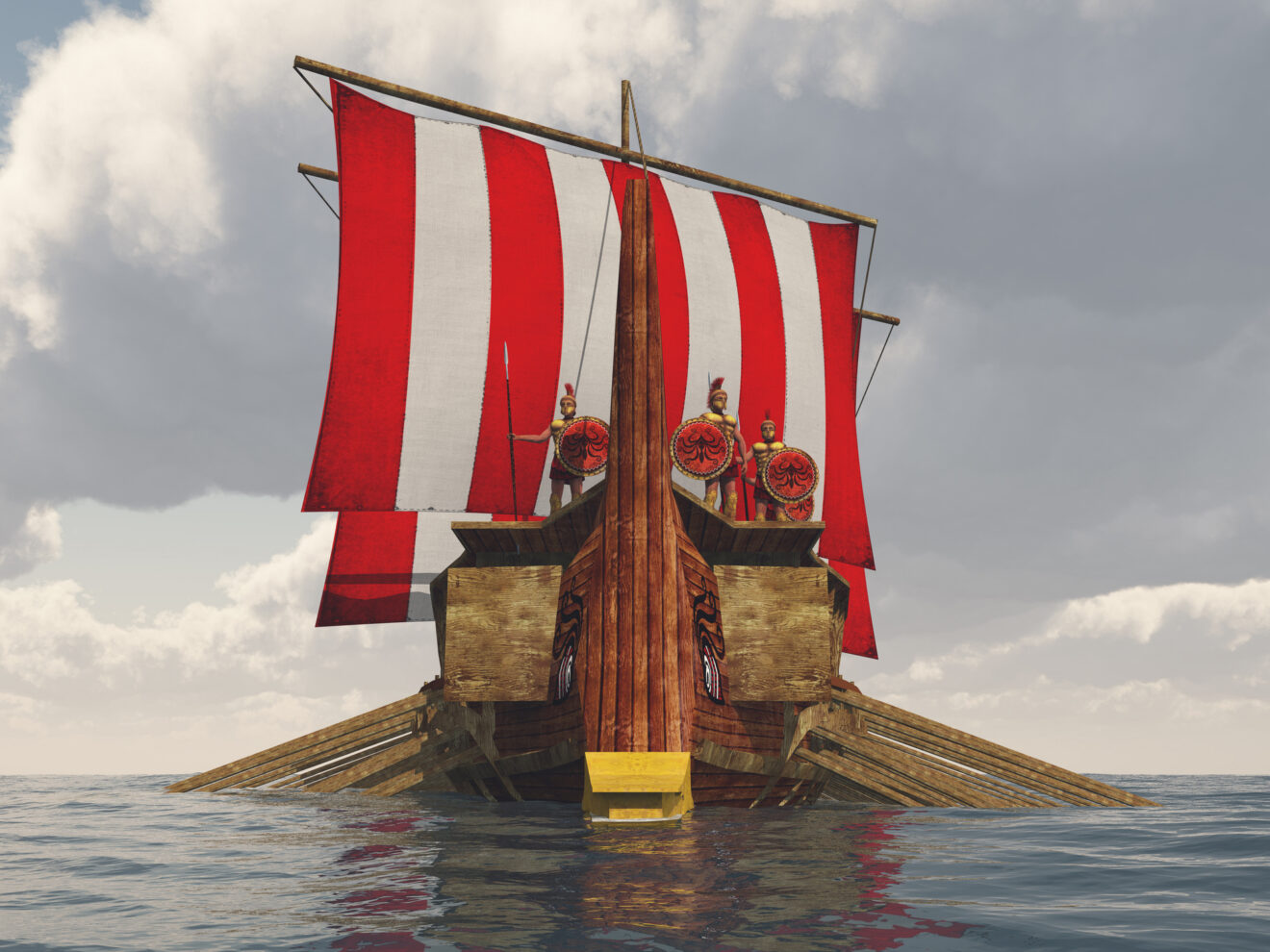
This summer’s blockbuster movie carried a larger message within: a leader’s biggest threat is often themselves. It’s a lesson too often missed or worse, ignored.
Particularly in the newly offered rendition by director Christopher Nolan, you couldn’t be entirely to blame for missing the true lesson of The Odyssey. The film came to market in grand style. It had a star-studded cast. Its $375 million budget was huge. And its box office receipts have been recording breaking (as of this writing, in excess of $1.7B). And then there was Nolan’s interpretation and visualization of the monsters and other challenges that the story’s lead character, Odysseus, must face. In total, there was much to distract from the simple, familiar and far more important.
In the more than 2,700 years since its first telling by the Greek poet Homer, The Odyssey has been retold in many ways. At its most basic, The Odyssey is a tale of a war hero trying to get home after 10 long years of war and ultimate victory. The shocker that makes the story even more plausible is that it takes Odysseus and his crew 10 more years to return, long after the rest of the Greek fleet (in fact, only Odysseus returns). Emboldened by victory and his contribution to it, to the surprise of his fellow Greek leaders and against the advice of his crew, Odysseus decides to take a different route home. It’s that route that results in all the trouble. The route, however, is the proverbial Trojan Horse of the story. The real story lies within the leader himself and the deeply human errors he makes, chief among them: hubris, complacency and a lack of self-discipline.
Before we dig in, think about your own leadership. Chances are that, even if infrequent or brief, you, too, have fallen victim to the same human faults. (If you think you haven’t, odds are you’re committing the first error right now.) What enables these faults to move so easily from tiny cracks to gapping chasms is that, at least at first appearance, they land on a gray line. Pride, even justifiable pride, is directly adjacent to hubris. Complacency is a neighbor to both analysis paralysis and a disinclination to embrace change. Self-discipline is perhaps the grayest of them all, ever dancing close to “good enough” and “I’ll get to it tomorrow.” The line is indeed gray. But it’s a lack of awareness or worse, a brazen choice to ignore this trio as natural human faults that carry the highest odds of doing a leader in. Enter Odysseus.
The Achilles heel that is hubris
Odysseus’ hubris wasn’t just the raw arrogance into which leaders are sometimes known to drift. Odysseus fell deeply into this error because he lacked intellectual humility. Intellectual humility is the willingness to embrace that you don’t know everything, that what you do know can become less relevant with time, and to admit that these things may require you to change. It’s tough for most of us to embrace, especially leaders. Even the mythology stubbornly suggests that, as the leader, you ought to be some version of all-knowing. Odysseus not only believed he was right, but he also silenced those around him. He ignored even his most trusted men until it was too late. In doing so, he traded listening for the leadership laziness of seeing himself as the single source of wisdom and insights. This error alone could have been his undoing. But he wasn’t done.
The discipline that only starts with self
Self-discipline was his second failure, and in a way, a surprising one. You don’t spend a drawn-out decade battling a formidable force hundreds of miles from your own territory and not realize that leadership requires discipline – including a leader’s discipline to share the leadership. While often overlooked, the most important job of a leader is actually to create an environment in which everyone can lead. The error of hubris is meant to remind the leader that they can’t do it alone. Self-discipline signals that they must enable others by stepping back and letting others step up. It’s the leadership discipline that, more than anything, fosters a resilient, adaptable, innovative and ultimately successful team capable of weathering the storms and achieving lasting impact.
The greatest monster is “good enough”
Those first two errors contributed greatly to Odysseus’ gradual decline into a third: complacency. Homer’s epic tale makes a less-than-subtle point of this when he leaves his hero alone on an island, without his men, and living in relative comfort for fully half of Odysseus’ decade-long journey. The most telling signal – to Odysseus and to us – is that every day on that island, he had a sense that something wasn’t right. It was good enough, but it felt less somehow. He ignored that voice. The longer he did, the more the voice inside him telling him things were changing, that he must change, muted. Harmless-seeming complacency is a dangerous cancer for leaders.
When the story closes, Odysseus does, in fact, return to his beloved kingdom of Ithaca. It’s true that to do so, he’s had to overcome many challenges. Even so, he’s undeniably lost his way, lost his entire team and allowed his kingdom to become a mere shell of its former glory.
It’s interesting how easily we can cheer this leader and what he’s overcome – while underplaying what caused it all. The heroics are great. But the lesson for leaders is how they could have been avoided and the energy invested in something grander still.
Summer is over. The coming of Fall is a time when leaders naturally reassess, ever-hoping they’ve been renewed by summer. Consider taking Homer’s real lessons with you as you do. There are deeper reasons this epic has stayed relevant for so long. Embrace them.
Opinions expressed by SmartBrief contributors are their own.
____________________________________
Take advantage of SmartBrief’s FREE email newsletters on leadership and business transformation, among the company’s more than 250 industry-focused newsletters.