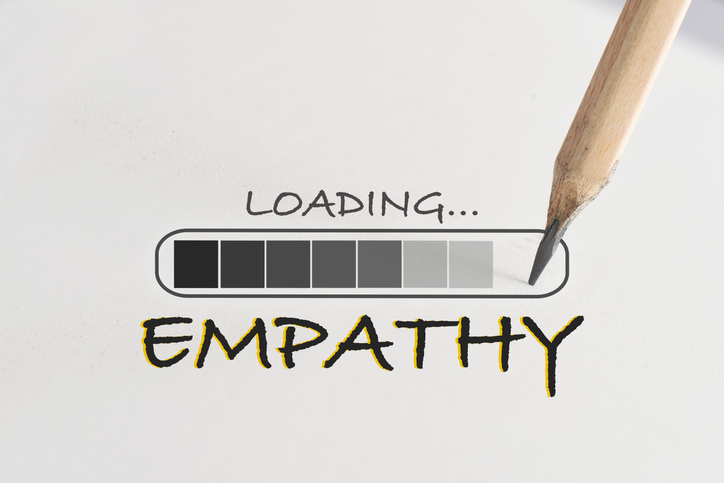
As an FBI agent, a word like empathy seemed too soft for the harsh reality of complex criminal investigations. But the FBI is a people business because machines don’t commit crimes; it’s the people behind them. No matter what violation was on an agent’s desk, we needed the cooperation of victims, witnesses, and ultimately, the criminals themselves.
Empathy is defined as the ability to recognize other people’s feelings; it forms the foundation for quality human relationships. I applied it in two ways to the targets of my counterintelligence investigations. First, it helped me understand their thoughts and perspectives. It enabled me to ask myself, “What would I think or feel if I were them right now?”
Second, it allowed me to express my concerns and ask about their worries. As I listened to their responses to my questions, I gained a better understanding of their stress at work or in their personal lives. I needed their cooperation, so these details were important.
Similarly, such details are also crucial for leaders because understanding people is essential to their success. Empathy is more than just empty words to make others feel better; it involves connecting with others in a meaningful and authentic way.
Leaders often overestimate their empathy skills. According to the “2024 State of Workplace Empathy Report: A Game Plan for Putting Empathy into Action,” 55% of CEOs believe they lead with empathy. However, only 28% of employees agree with that assessment.
To understand people, leaders must learn how to develop empathy. It’s not an innate skill, but it can be strengthened through conscious effort.
It’s a delicate balance. Leaders can sometimes come across as brusque and aggressive, which is why employees often hesitate to share their true feelings. The stiff upper lip and the old boys’ club that have dominated leadership in corner offices for decades have kept emotions in check. Or, they have delegated issues surrounding emotions to female personnel.
Things have changed; leaders need to accept that understanding people is an important key to their success.
Create an empathy protocol
One of the main reasons the word empathy was not used in the halls of the FBI is its association with “touchy-feely.” To be clear, these are different terms, but in the minds of many people, one implies the other. Few people feel comfortable as therapists listening to others’ problems or feelings. They don’t feel they’re being authentic as they try to respond.
Define what empathy means to your team. Maybe you want to call it something else, like “being on the same wavelength” or “building rapport.” Whatever the term, it should be something upon which everyone agrees and understands. Of utmost importance is that these conversations bring value to the team.
Create guidelines for acceptable behavior. Empathy requires sincerity. One doesn’t have to be a naturally compassionate person, but they do need to be serious and trustworthy.
Encourage active listening. For the person who lacks empathy, their first instinct may be to solve the other person’s problem or offer sympathy. Neither is correct. Empathy is feeling with someone rather than feeling for someone. Focus all attention on the speaker, paraphrasing their statements and asking clarifying questions. Avoid interrupting or jumping in with your own experiences.
Establish healthy boundaries. Leaders are expected to be vulnerable yet courageous, risk-takers yet prudent, concise yet flexible. Often, leaders suffer from guilt that they can’t be all things to all people. Everyone on the team needs to protect their time so they can focus on their job, especially the leader. Some people are needy, some are people pleasers, while others avoid controversy at all costs. Recognizing and supporting healthy boundaries is another way to understand people.
Unite, not divide
Empathy does not necessarily require kindness or softness, both of which are rarely baked into corporate cultures — nor do they need to be. Instead, empathy is about genuinely understanding the needs and perspectives of other people.
In our current climate, many refuse to even try to understand cultural, political or religious differences. They do not want to hear the perspective of people who don’t share their beliefs and values.
We are in the midst of an incredibly judgmental era, where we judge others by the clothes they wear, the car they drive, their politics, their religious views, etc. Empathy requires us to gain the perspective of a person who may be quite different from us. It means we become the learner as we listen.
We may be tempted to take off the lens through which we see the world and look through the lens of the other person. That’s a big mistake because psychologically healthy people need to take ownership of their values and beliefs. Instead, empathy encourages us to honor perspectives that are different from our own, not to adopt them. True empathy means making space for both your truth and theirs to coexist.
Leaders have a choice. They can spend an inordinate amount of time managing ineffective behavior and performance in the workplace, or they can invest a reasonable amount of time in understanding the emotions and motivation behind the ineffective behaviors and performance of their employees.
Opinions expressed by SmartBrief contributors are their own.
____________________________________
Take advantage of SmartBrief’s FREE email newsletters on leadership and business transformation, among the company’s more than 250 industry-focused newsletters.