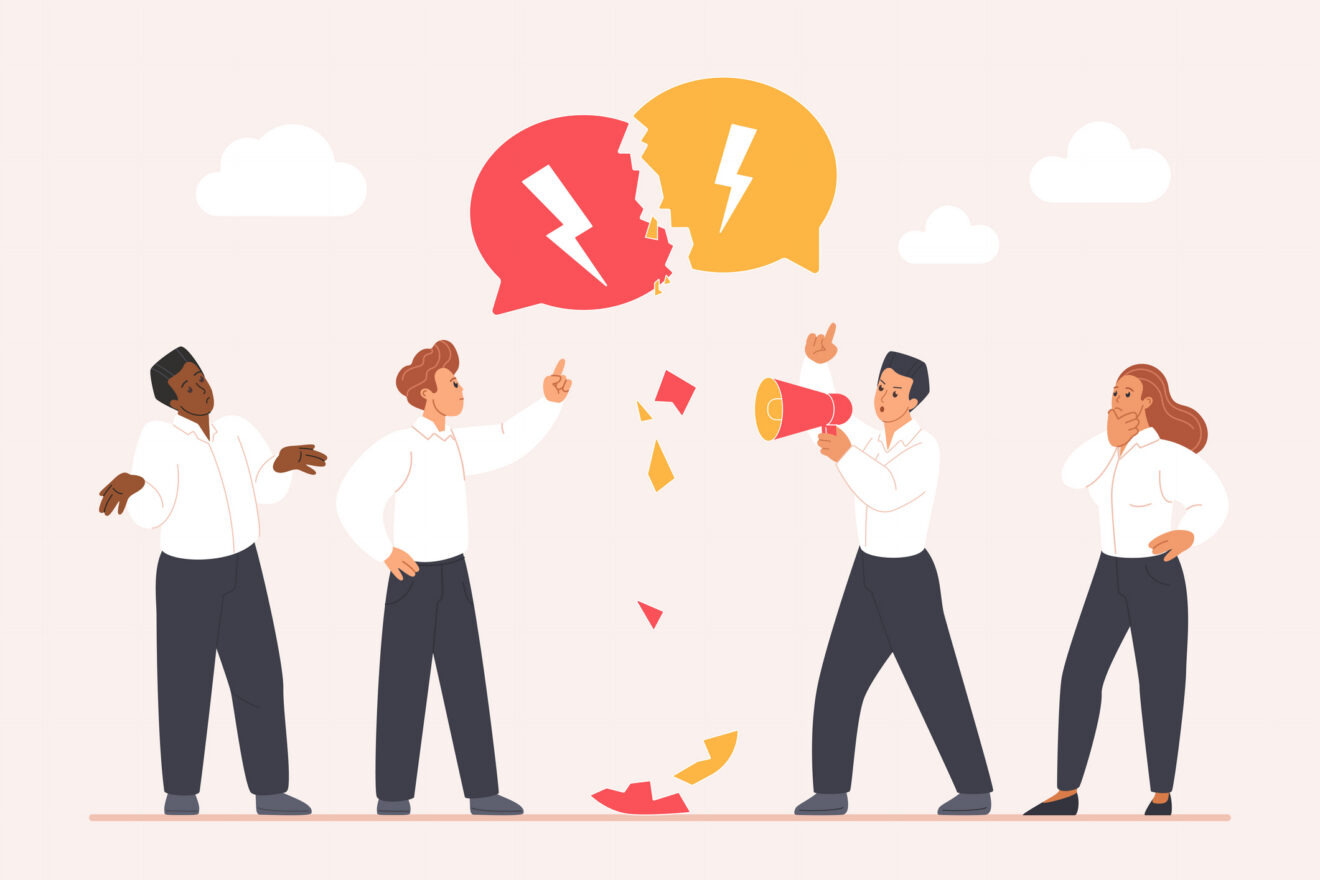
Years ago, I worked with a leadership team caught in a cycle of conflict and confusion. The following is a composite scenario. Names, roles and identifying details have been changed.
“David” was a high-performing founder who prided himself on saying what others were afraid to say.
When he believed a decision was wrong, he pushed hard. He interrupted, raised his voice and questioned whether other leaders had the courage to face reality. His colleagues often agreed with him in meetings but privately admitted that challenging him was exhausting.
His business partner, “Lance,” had the opposite style.
Lance valued relationships and wanted people to feel heard. When David pushed, Lance often agreed to his requests before fully considering the implications or consulting with others.
After getting new input, Lance would often modify a prior decision or pivot completely. David saw these reversals as proof that Lance was evasive and untrustworthy, so he became more forceful. Lance, anticipating another confrontation, became more accommodating.
Before long, the entire executive team had adapted to the David-Lance dance of drama. Each could clearly see the other person’s contribution. Neither could see their own.
The primary pattern that keeps conflict securely in place is the need to be right. Three habits reinforce it.
- Refusing to own your contribution
- Using another person’s behavior to justify your own
- Pointing to the other person as the source of the problem
David wasn’t wrong that Lance’s reversals damaged trust. Lance wasn’t wrong that David’s intensity made honest disagreement difficult. The problem was that each man used the other’s behavior to justify his own. David believed he had to push because Lance was unreliable. Lance believed he had to appease because David was aggressive. Both were waiting for the other person to change first. They were more committed to being right than to getting it right.
Conflict avoidance wears many disguises
Aggression and appeasement look like opposite behaviors, but they serve the same purpose: avoiding the discomfort of a clear and responsible conversation.
The aggressive leader tries to control the conversation through intensity, creating fear. The appeasing leader tries to control the conversation by preventing disappointment and creating confusion.
This pattern occurs between founders and executives, managers and employees, colleagues and business partners. Appeasement and aggression are two sides of the same coin: avoidance.
The organization learns to work around its leaders
When leaders repeat these patterns, the organization adapts. People learn not to challenge the aggressive leader publicly. They complain privately, withhold information or wait for the storm to pass.
They also learn not to trust the appeasing leader’s agreement. Instead, they seek confirmation from others, delay action or create backup plans because today’s yes may become tomorrow’s no.
Over time, the organization pays for this dynamic through slower decisions, conflicting priorities, failed execution, declining trust and unwanted turnover.
Look for the missing structure
When conflict escalates, the path of least resistance is to cast blame. Who started it? Who is more difficult to work with, and who needs to leave?
Those questions may eventually need to be answered, especially when behavior violates organizational standards. But removing one person doesn’t automatically repair a system that has learned to tolerate intimidation, appeasement and indirect communication.
Persistent leadership conflict often signals that essential structures are missing, unclear or unenforced. The organization may have a mission and stated values, but no shared rules for how leaders will make decisions, navigate disagreement and hold one another accountable.
Instead of focusing only on personalities, ask:
- Do our leaders’ behaviors reflect our values?
- What are our rules for disagreement and decision-making?
- Who has decision authority, and how are decisions documented or reconsidered?
- Who intervenes when behavioral standards are violated?
Structure shapes behavior, but only when leaders are willing to honor and enforce it. A mission explains what the organization is trying to accomplish. Values define how people are expected to behave while accomplishing it. Rules of the road clarify what happens when pressure rises, opinions differ or someone crosses a line.
Without enforcement, values become wall art and rules become suggestions. The real test of a leadership structure is whether it still applies when the person violating it is a founder, top performer or powerful executive.
Without that structure, personalities fill the vacuum. The most forceful person gains influence, the most accommodating person creates temporary peace and everyone else learns to work around both.
Change the dance, not just the dancers
The goal is not to eliminate disagreement or determine which leader is the bigger problem. The goal is to create enough clarity and structure that neither aggression nor appeasement becomes an effective way to lead.
When decision rights are clear, behavioral standards are enforced and leaders have an agreed-upon process for challenging or reconsidering decisions, aggression no longer sets the agenda and appeasement no longer buys temporary peace.
You don’t break the cycle by simply choosing a villain or replacing one of the leaders. You break it by changing the structure that allowed the pattern to become the organization’s unofficial operating system in the first place.
Opinions expressed by SmartBrief contributors are their own.
____________________________________
Take advantage of SmartBrief’s FREE email newsletters on leadership and business transformation, among the company’s more than 250 industry-focused newsletters.