Companies are heavily investing in AI, adding new tools, launching pilots and exploring ways to improve productivity. But how much of that activity is actually changing the way businesses operate or compete? As AI becomes more capable and affordable, business leaders face growing pressure to rethink everything from organizational structures to how work gets done.
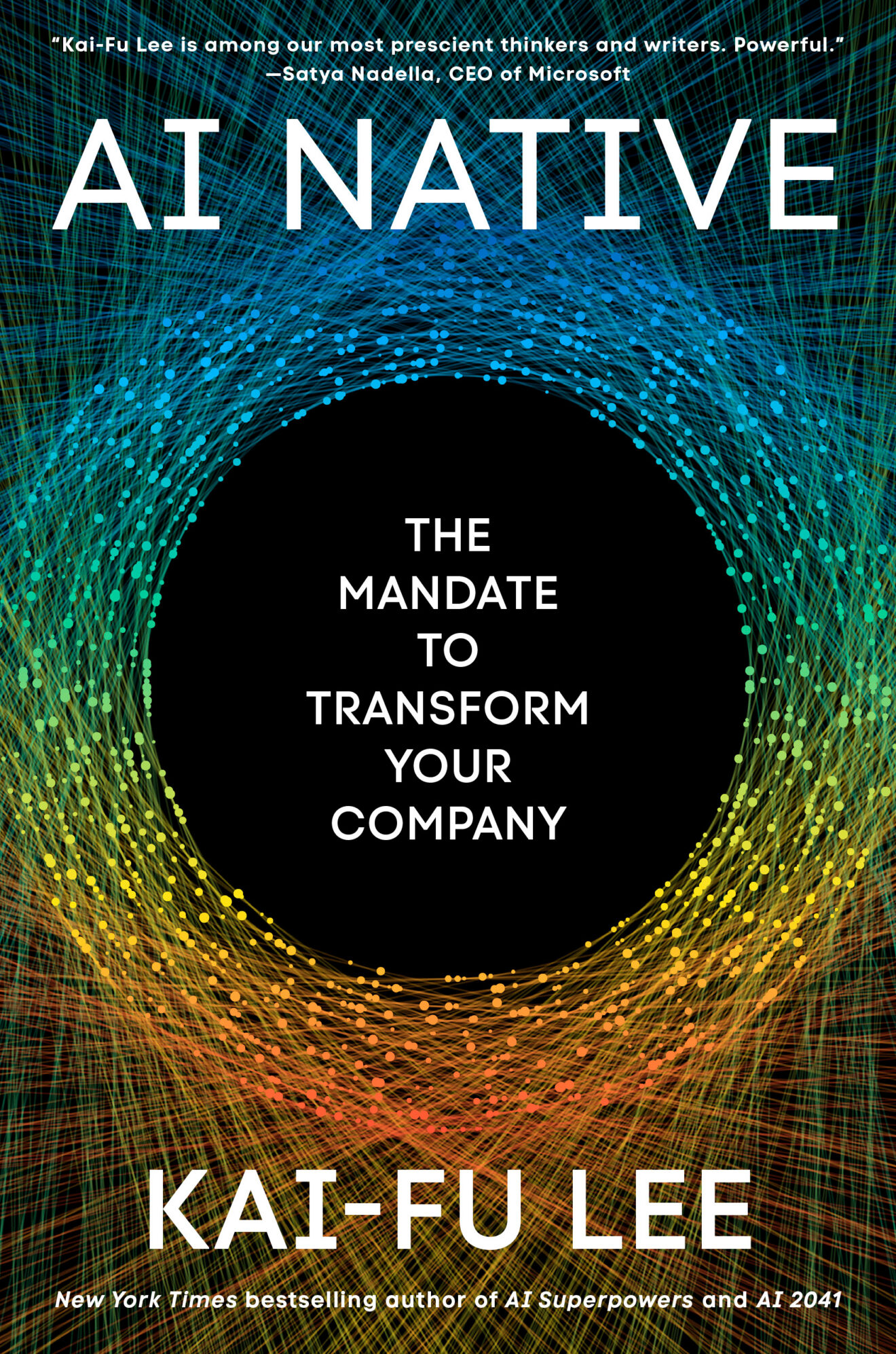
In his new book, AI Native: The Mandate to Transform Your Company, AI expert Kai-Fu Lee argues that adopting AI tools isn’t enough. He offers business leaders a roadmap for transforming their organizations around AI, including rethinking leadership, restructuring teams and unlocking the value of knowledge already within their companies.

Kai-Fu Lee is The New York Times bestselling author of AI Superpowers and has worked in AI for four decades as a researcher, technology executive and entrepreneur. He previously held senior leadership roles at Apple, Microsoft and Google and is now CEO of Sinovation Ventures and co-chair of the Artificial Intelligence Council at the World Economic Forum.
What does it mean for a company to become AI native, and how is that different from simply adopting AI tools?
Kai-Fu Lee: Adopting AI means adding new tools to the way a company already works. Becoming AI native means rethinking how the company operates from the ground up and embedding AI in its core workflows, decisions and business processes. It means moving beyond helping employees work faster to redesigning how work gets done, how decisions are made and how value is created. It’s an organizational transformation, not just a new software installation.
You say that AI is fundamentally changing the economics of business. What are the biggest implications for how companies operate and compete?
Lee: AI is making intelligence dramatically cheaper and widely accessible. As models become increasingly capable and affordable, access to AI itself will become less of a competitive advantage. The real differentiators will be how well companies combine AI with their proprietary data, expert knowledge and business processes to create value. Companies that redesign their operations around AI can achieve entirely new levels of productivity, speed and scale. The competitive gap will increasingly be between those that transform their businesses and those that simply adopt the technology.
What are some of the biggest misconceptions CEOs have about AI, and how are those misconceptions affecting their decisions?
Lee: A major misconception is that AI transformation can be delegated to IT. It’s a business transformation that requires CEO leadership. I use the “earnings call test” to assess AI initiatives: Are they changing the economics of the business and delivering measurable impact to the bottom line? Without rethinking workflows, decision-making and organizational structures, most AI efforts will remain incremental.
How should business leaders rethink their organizational structures and the roles of employees as AI agents take on more work?
Lee: As AI agents take on more execution and analytical work, companies will flatten middle-management layers and reorganize around smaller, more empowered teams. Each team should have a directly responsible individual, or DRI, with clear ownership of outcomes and the authority to coordinate people and AI agents. Managers will shift from supervising execution to empowering DRIs, developing people, building trust and providing direction. Human judgment and leadership will become more important, not less.
You discuss the potential for AI to unlock knowledge that already exists within organizations. What might that look like in practice?
Lee: Most companies’ valuable knowledge and dormant data are scattered across systems, documents and employees’ experience. AI can connect these sources, surface useful information, reveal how the business works and enable radical transparency. This gives AI agents the company-specific context to make recommendations and execute work across departments, turning hidden knowledge into a competitive advantage.
For executives who recognize the need to become AI native but aren’t sure where to begin, what should their priorities be?
Lee: Executives should start by using AI themselves, then focus on the business, not the technology. Identify the processes where AI can deliver the greatest business impact, set clear outcomes and build the foundations to scale, including enterprise knowledge and AI agent orchestration. Most importantly, lead the organizational change in how people work, make decisions and create value.
Kai-Fu Lee has spent the past four decades pioneering AI in business from nearly every vantage point: as a researcher, senior executive at Apple, Microsoft and Google, and now a CEO himself. Few thinkers can match his combination of technical expertise and business acumen.