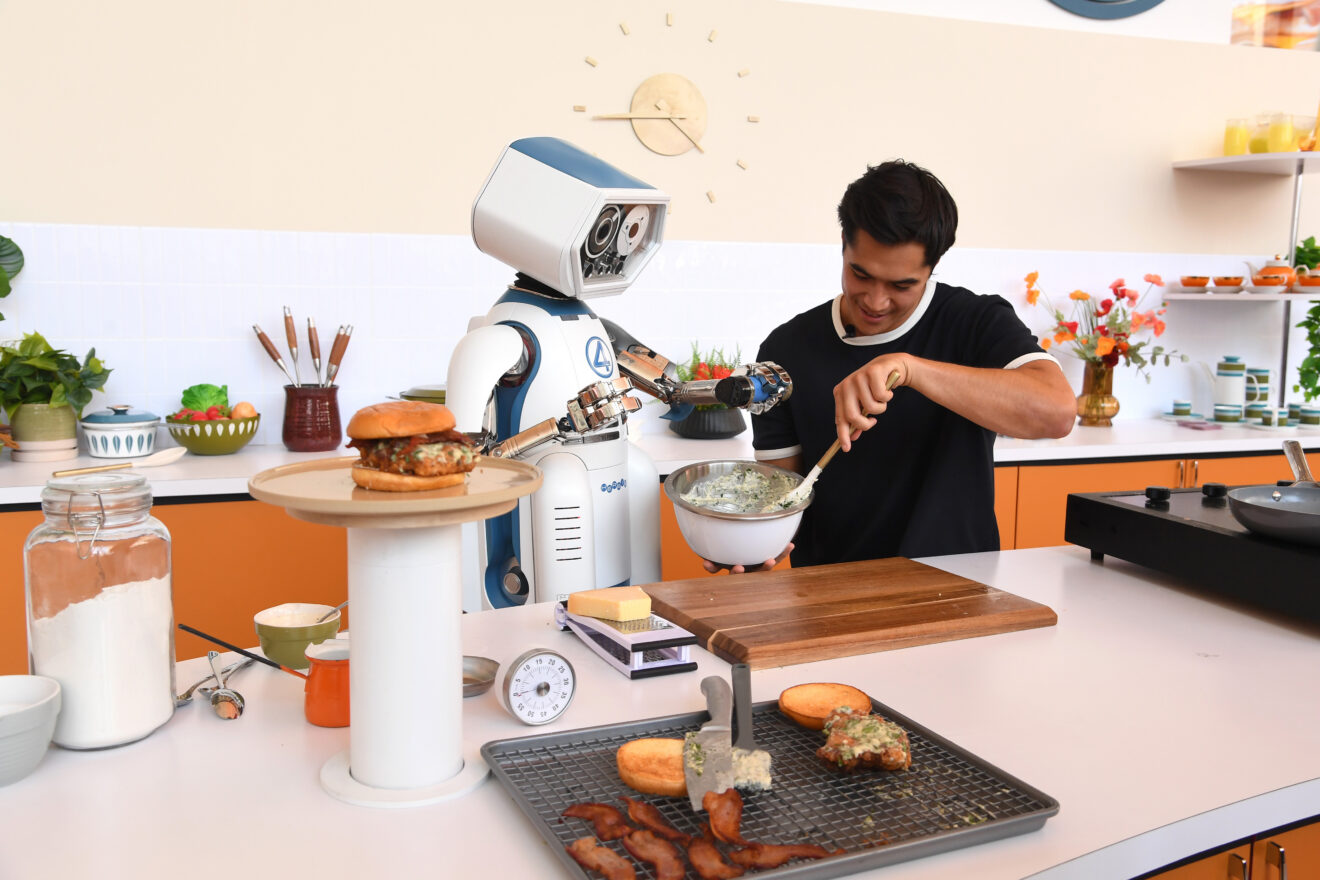
From stand mixers and gas stoves to microwaves and sous vide cookers, tech innovation has always had a place in the kitchen, and the same is proving true with AI. While increased efficiency can be a by-product of introducing cutting-edge kitchen technology, the mission is always to perfect the food and improve the dining experience, a goal that requires humans as the main ingredient.
With every new innovation, tech tools work in tandem with the human culinary talent. Machinery, software and even automation can’t stand alone in a field that depends on delighting people’s palates and creating extraordinary dining experiences. Layering in flavors to build complex dishes and tasting while you go is a distinctly human art and practice that can’t be completely replicated by technology.
That said, the combination of human culinary innovation and cutting-edge technology is playing out in new and diverse ways in restaurants, CPG companies and tech startups across the globe.
Woohoo, a new eatery in downtown Dubai, is promoting its use of AI to create a “dining experience [that] uses data and creativity to shape flavors, textures, and balance. In an artificial intelligence restaurant, chefs and systems work together, not to replace skill, but to refine it.”
On its website, Woohoo explains how AI works with the restaurant’s chefs to gain a greater understanding of how ingredients meld to create balanced flavors, “how textures feel, and how each element complements the next.”
It’s one of the latest examples of the ongoing evolution of kitchen technology.
More than a decade ago, IBM was heavily promoting “Chef Watson,” a kitchen robot that was fed a steady diet of recipes and food data for three years and ultimately collaborated with human chefs to create a cookbook with quirky recipes like a beef burrito accented with chocolate and edamame.
“Watson amplifies human creativity,” IBM engineer Steve Abrams told the Washington Post in 2015. “It’s a collaboration that allows Watson and the chef to discover more than either of them could independently.”
The development of large language models and AI has accelerated in the past few years, fueling transformation across just about every area of business and life, including the kitchen. Still, the collaboration between people and technology remains key when it comes to food.
While companies like Nosh Robotics, which earlier this year at CES touted its robotic “chef” that can prepare more than 500 recipes from ingredients loaded by humans, and other smart kitchen tech tools are growing increasingly sophisticated, pleasing human palates still requires human hands.
Finding that balance
At Spokane, Wash.-based spice maker Spiceology, AI has a name – REMI. REMI, an acronym for “recipe experimentation and menu inspiration,” is an AI chatbot that’s trained on the company’s recipe database and shares suggestions for new and delicious ways to use the brand’s signature spices. There’s also a second, behind-the-scenes meaning to the name, says Chief Marketing Officer Eric Anderson – Remy was the name of the rat that sits hidden in the chef’s hat and guides his hand in the film “Ratatouille.”
Spiceology was created in 2013 by chef Pete Taylor and food blogger Heather Scholten, and, compared to older, more traditional spice companies, it often operates more like a tech startup, says Anderson. And, like a startup, the business model bets on customer involvement, feedback and testing to ensure ongoing improvement.
In addition to some basics like smoked paprika, peppercorns and oregano, Spiceology’s catalog of more than 300 products also features spice blends with quirky names like Maui Wowee Hawaiian Teriyaki Rub, Greek Freak Mediterranean Seasoning and Cowboy Crust Espresso Chile Rub.
REMI’s recipe suggestions include “buy” buttons next to the Spiceology spices needed to make the dish, but selling more product isn’t REMI’s top mission, Anderson says. From the beginning, Spiceology has felt responsible for offering consumers an array of recipes and ideas for using its products to delight people with new dishes. The result – a roster of more than 900 recipes and counting that grew increasingly difficult for human employees to quickly sift through to help customers find the specific information they were seeking.
“No one in our organization could possibly know all the recipes and information,” Anderson says. “That’s where the idea for REMI came about.”
AI offers the ability to delve into those information troves and contextualize it in a way that chefs and home cooks can use to create something delicious.
REMI launched last year after a lengthy, thoughtful process that built on the company’s existing crowdsourcing practices. Spiceology’s Test Kitchen feature seeks customer feedback on proposed new products, making users part of the process. Each time the company’s product developers create a new spice blend, users can “back” it by agreeing to buy it at the posted price. The product only becomes a reality if enough “backers” sign up to buy within a given time.
That practice, along with recipe sharing and other feedback mechanisms, is part of the brand’s DNA, and REMI builds on that.
Spiceology built REMI in-house using Pickaxe AI, a software-as-a-service tool, setting strict parameters. REMI can only explore the company’s proprietary databases; it can’t search the web. It can only share recipes that the company has tested and approved, both to ensure customer satisfaction and avoid the liability issues that can come with suggesting untried recipes. REMI also doesn’t share information on allergens, because the company doesn’t want to appear to be giving medical advice, Anderson says.
As it does with other customer interactions, Spiceology monitors REMI’s activity daily to keep a finger on the pulse of what customers are looking for and continually improve its performance.
Currently, REMI gets about 50 queries a day, Anderson says.
Giving REMI a voice
During the creation of REMI, the team addressed concerns that AI would take away the human element by ensuring the chatbot “operates within the strict structure of human-created knowledge,” Anderson says. “He has to work within certain content restrictions imposed upon him.”
It was also important to train REMI on the brand’s voice, which is playful, quirky, and empowering.
The team also assumed that REMI would have two main use cases: customers starting with a recipe concept or with the ingredients on hand in their kitchens, and people starting with a Spiceology blend and seeking ideas for using it.
More often than not, it’s the second group that’s exploring with REMI, Anderson said.
“People want to start with the idea of the product and go from there; that’s been very interesting to us.”
Feedback from those customers has been overwhelmingly positive, he added. REMI serves a role that humans can’t easily replicate, helping customers make the most of the products they’re buying.
Related stories:
- FMI Midwinter 2026: AI and collaboration take center stage
- Three companies looking to transform the grocery technology landscape
- What’s in store for plant-based foods this year?
If you liked this article, sign up to receive one of these daily newsletters: CIA ProChef SmartBrief, ACF Chef’s Table SmartBrief or Restaurant SmartBrief. Check out the rest of our SmartBrief Food & Beverage newsletters and connect with us on our SmartBrief on Food & Beverage LinkedIn page.