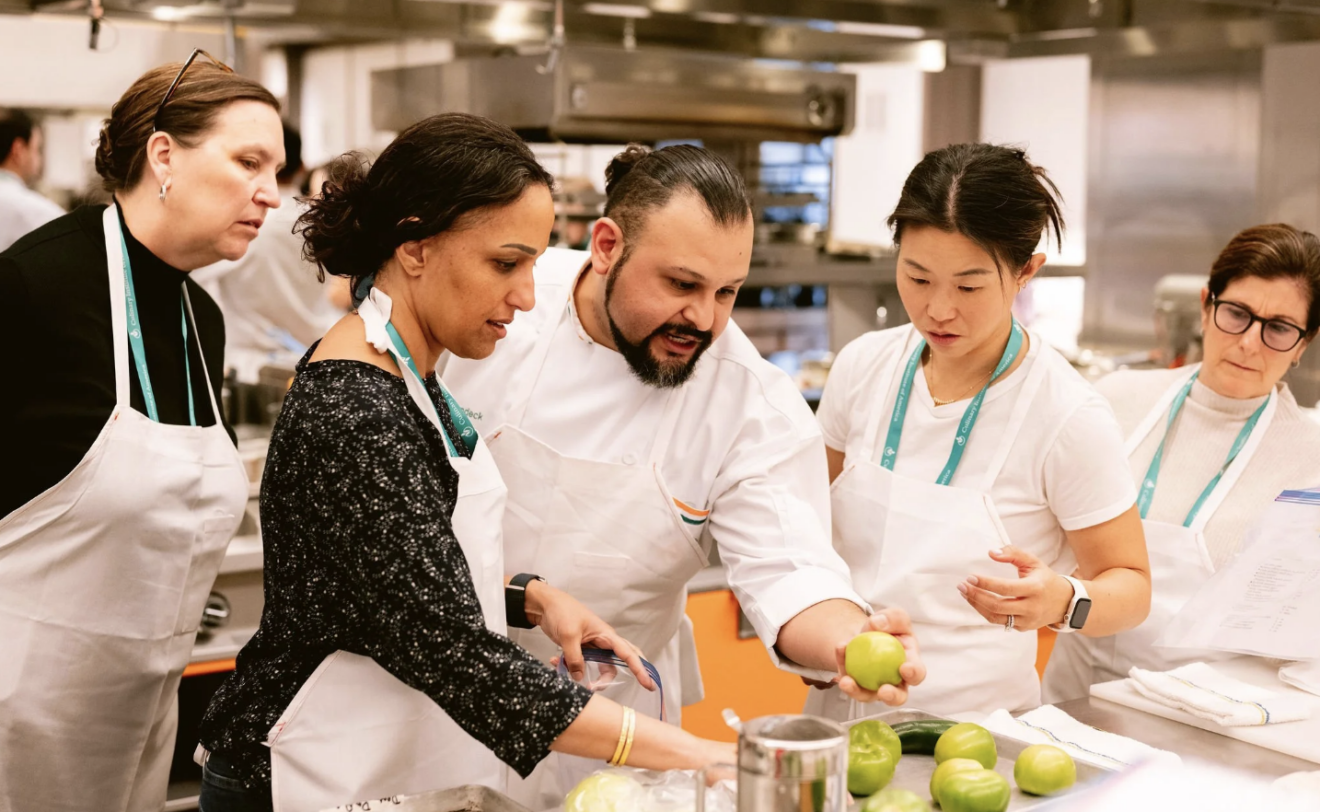
Chefs are increasingly at the center of a broader conversation — one that goes beyond flavor and into health, sustainability and the role food plays in shaping long-term outcomes. As expectations shift, the line between the kitchen and health care continues to blur, with growing pressure to create food that is not only craveable, but also supports well-being.
The Culinary Institute of America’s Food Is Life, Food Is Health event brings those worlds together. In this Q&A, Kristen Rasmussen, MS, RDN, assistant director of health and sustainability programs at the CIA, shares how the event came to be, what she’s most excited about and why the connection between taste and well-being matters more than ever.
The Culinary Institute of America’s Food Is Life, Food Is Health event brings together chefs, nutrition experts and food industry leaders. What was the original vision behind creating this event, and why is the conversation around food and health so urgent right now?

The urgency comes from rising chronic disease, public health challenges and the need to align food systems with both human and planetary health. I think this Wendell Berry quote sums it up nicely: “People are fed by the food industry, which pays no attention to health, and are treated by the health industry, which pays no attention to food.” Our health care system and chefs are working in silos — we’re breaking down those silos so that they work together for evidence-based solutions to our health and sustainability challenges.
For chefs and operators, “food as medicine” can sometimes feel like an abstract concept. How do you translate that idea into practical approaches in restaurant kitchens and foodservice operations?
It translates into evidence-informed menu design and cooking techniques — using ingredients and preparation methods that support health outcomes while remaining appealing. The focus is on actionable strategies chefs can implement directly in kitchens and foodservice settings.
Many chefs want to create healthier menus without sacrificing flavor or creativity. What are some of the strategies or culinary techniques that help balance nutrition, satisfaction and great taste?
Key approaches include leveraging herbs, spices, and global flavor strategies; diverse, plant-rich cooking, and culinary techniques that enhance taste (roasting, grilling, searing, fermenting, etc.), ensuring meals are nutritious, craveable, and satisfying.
What are some of the most important insights chefs and foodservice professionals will take away from this year’s event, whether they’re running restaurants, working in healthcare or developing products?
Attendees gain practical, evidence-based solutions to support clinical practice, improve menu design and foodservice, and advance public health, along with insights on integrating nutrition, sustainability and culinary innovation into all lines of care or service.
For those attending the conference, what types of sessions, demonstrations or conversations are you most excited about this year? Are there any emerging topics that will take center stage?
Too many to list! Every session includes interesting aspects of health, sustainability, and deliciousness with incredibly experienced and energizing speakers. In addition to the plenary sessions with premier nutrition researchers and star chefs, I’m particularly excited about our wide variety of experiential workshops such as The Global Lentilhood: How Lentils (and other Legumes) Promote the Delicious Well-Being of People and Planet and On Camera and In Context: Mastering Culturally Relevant Health + Culinary Communications. Additionally, it will be a joy to host attendees at our field excursions such as the Microbiome Walking Tour of downtown Napa.
Not everyone can make it to the event. What are some of the key trends or ideas around food, health and nutrition that chefs and food professionals should be paying attention to right now?
The major themes that we’re exploring are the science of personal and planetary health, Translation – From Clinical Practice to Professional Kitchens, Global Cultures and Flavors, Cross-Disciplinary Teams for the Future, and (importantly) Practical, Delicious Solutions.
We’re seeing growing interest in functional ingredients, gut health and plant-forward menus. How are these trends influencing the way chefs think about building dishes and designing menus?
These trends are pushing chefs toward ingredient-driven, plant-forward menus and functional foods that support health while still delivering flavor and culinary appeal.
Collaboration between chefs, nutrition scientists and health care professionals is becoming more common. How important is cross-disciplinary collaboration in shaping the future of food and health?
It is everything — this event itself is built on cross-disciplinary collaboration, bringing together culinary, medical, and scientific communities to create integrated, scalable solutions for health and food systems.
What role do chefs play in helping consumers develop healthier eating habits, particularly in restaurants where indulgence has traditionally been the focus?
Chefs play a key role by making healthy food appealing, accessible and desirable, using culinary skill to influence behavior and shift norms toward healthier choices. We know that taste and taste perception are key drivers to food decision-making and we need to harness this knowledge to make real, lasting change.
Looking ahead, how do you see the relationship between food, culinary innovation and health evolving over the next five to ten years?
The relationship is expected to become more integrated, with culinary innovation increasingly guided by nutrition science, sustainability and health outcomes, positioning food as a central lever for improving both individual and public health.
If you’re interested in learning more about Food is Health, Food is Life, check out the detailed program schedule and presenters.
Related stories:
- Q&A: Resilience, customer experience and the new value proposition in the restaurant industry
- How AI is generating new recipes for ongoing kitchen innovation
- What’s in store for plant-based foods this year?
_____________________________________
If you liked this article, sign up to receive CIA ProChef SmartBrief. Check out the rest of our SmartBrief Food & Beverage newsletters and connect with us on our SmartBrief on Food & Beverage LinkedIn page.