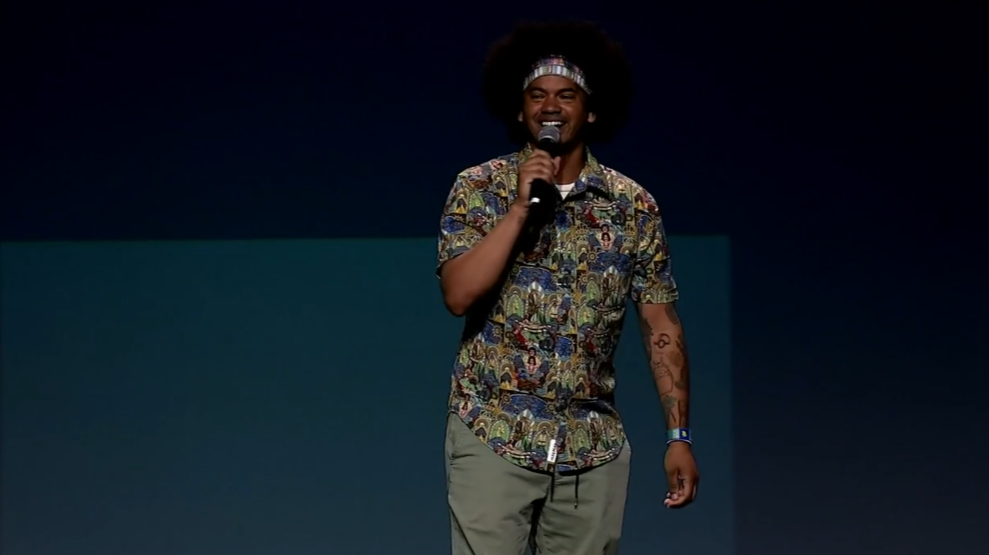
ORLANDO, Fla. – AI tools should be taught in schools to help children navigate the world, experts agreed at the mainstage event for ISTELive 26 on Tuesday. Jason Trinh, the program coordinator for the Toronto District School Board, said educators can help students explore digital spaces in a safe environment.
“Navigating AI can be scary, but so is navigating a new school, a new city. We can get lost, we can end up in places we shouldn’t be,” Trinh said. “We can’t prevent this from happening, but we can prepare ourselves for when it does. As educators, we need to provide opportunities for students to explore all digital spaces, including AI.”
Introducing the Stretch AI platform
To help educators use AI with confidence, ISTE debuted its Stretch AI platform, which will be provided free of charge for pro and advanced members of the organization. The platform eliminates a key concern about AI by drawing information from trusted resources instead of shady corners of the Internet.
“The platform is what we call the walled garden, so that means that only vetted ASCD resources are sourced for the answers, and that means that you can trust that the answers are research-based and practitioner-tested,” said Joseph South, chief innovation officer for ISTE.
South also introduced high school students who designed innovative applications with AI through the AI Innovator Challenge. More than 600 students from 20 countries participated in the challenge. Winning apps ranged from an app to diagnose bias in news articles to an app to screen for colorectal cancer.
Innovations in the classroom
While AI remained a focus of the event, the theme of “Develop Expertise” also included speakers who highlighted non-technical innovations as well. Rachel Edoho-Eket, the principal of the Howard County Public School System in Maryland shared an innovation in student conferences that boosted student engagement.
“When students understand their strengths, learning starts becoming something they own, and that ownership showed up in one of the most innovative practices at our school, student-led conferences,” Edoho-Eket said. “Instead of adults talking about students, students talk about themselves, they explain their learning progress and goals.”
The mainstage event concluded with a reminder from Mychal Threets, the host of the rebooted “Reading Rainbow,” on how libraries can open up a child’s world. Now the resident librarian for PBS and PBS Kids, Threets emphasized the importance of educators in making a difference in the lives of students.
“You may feel so hopeless, you may feel like you can’t help, but you are helping by being in your classrooms, by being in your libraries,” Threets said. “You’re creating hope. You’re creating joy.”
“You’re creating an atmosphere of learning and education for all your kids to thrive to be the best version, so that they can become just like you.”
Opinions expressed by SmartBrief contributors are their own.
Subscribe to SmartBrief’s FREE email newsletters to see the latest hot topics on educational leadership in ISTE and ISTELeaders. They’re among SmartBrief’s more than 200 industry-focused newsletters.