
This article originally appeared in SmartBrief’s eBook “The Shift: AI — How foodservice is adapting to a new era of intelligence.”
Would you rather have too much or too little?
For decades, foodservice operators have viewed overproduction as the safer trade-off. But as food costs remain elevated and margins stay under pressure, that calculation is beginning to change. Operators are increasingly using AI-powered forecasting, machine learning and real-time kitchen analytics to better predict demand, adjust production and identify waste before it occurs – a shift toward getting it closer to just right.
The stakes are substantial. Restaurants are still navigating inflation, labor shortages and ongoing supply chain volatility, while food waste remains a persistent drain on profitability. In 2024, foodservice operators generated 12.5 million tons of surplus food, accounting for 17.9% of all surplus food generated in the US, according to ReFED. More than 85% ultimately went to landfill or incineration, and the surplus food was valued at approximately $156 billion that year.
The hidden cost of overproduction
In restaurant kitchens, overproduction remains one of the largest drivers of food waste, said Angela Veza, director of innovation initiatives at ReFED.
“Roughly 1.5 million tons of surplus food were generated from overproduction in 2024, often due to inaccurate demand forecasting, but also because restaurants understandably want to avoid running out of food during service,” Veza said.
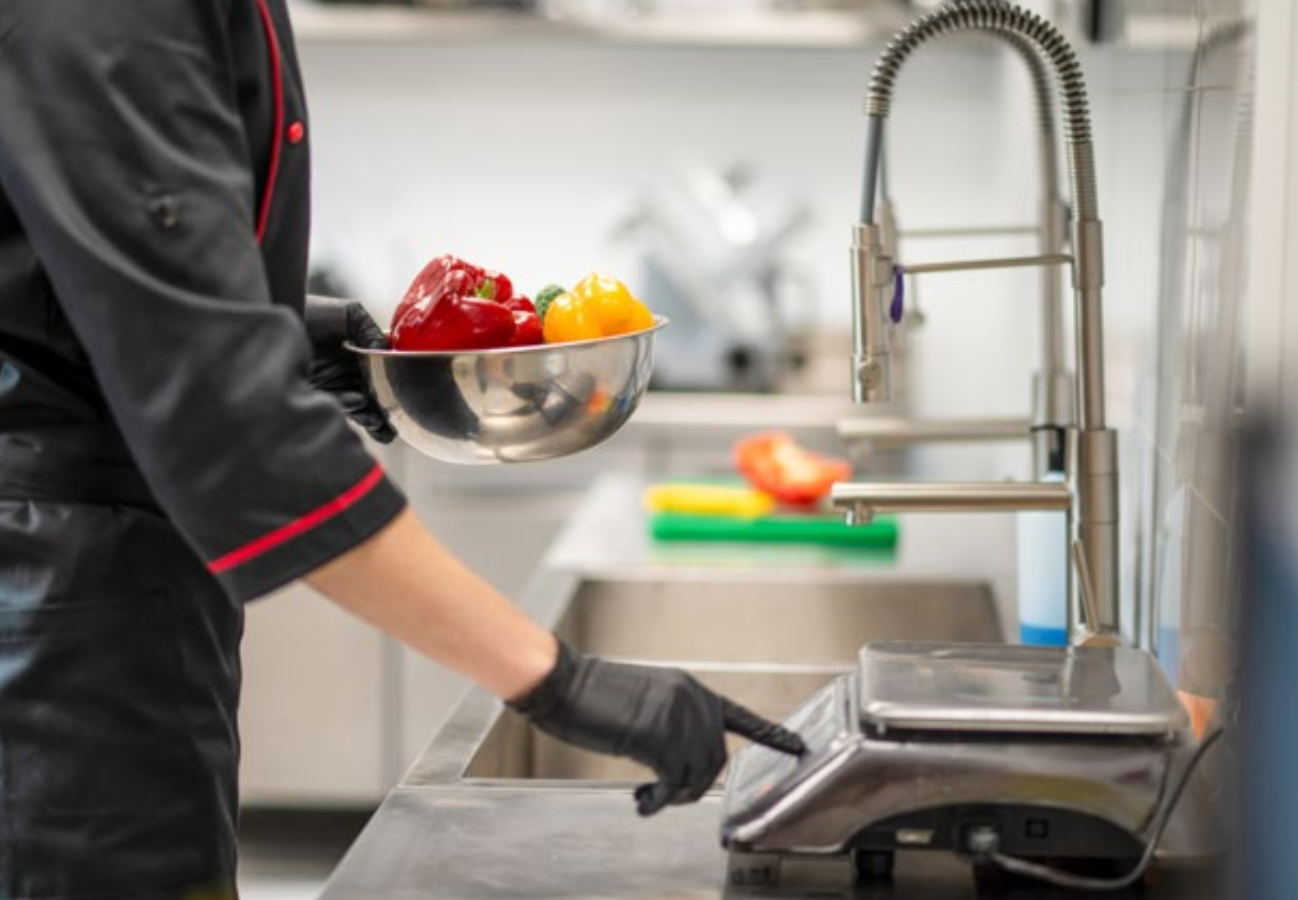
Waste varies by format. Quick-service restaurants frequently overproduce in the wake of speed and consistency during peak periods, while full-service restaurants tend to see more plate waste. In fine dining kitchens, prep trim and byproducts can become a substantial source of loss, Veza explained.
“One common misconception is that food waste is simply unavoidable in restaurants,” Veza said. “For many years, food waste has been seen as a necessary cost of doing business, largely because restaurants would rather risk waste than risk running out of food.”
Several operators are using AI-driven waste tracking systems to quantify those losses and establish benchmarks for improvement.
At Four Seasons Resorts Lanai, the culinary team found, through its use of Winnow AI to identify and weigh food waste, that it was averaging 1,900 pounds of food waste per month.
The team established a waste-per-cover benchmark to better understand performance.
“A realistic goal would be to focus on the amount of food waste per person,” Dennis O’Leary, project manager, engineering, Four Seasons Lanai, said. “We began with an average of 4.32 oz of food waste per cover in 2023; today, our average waste per cover is 2.09 oz. This ‘every little bit adds up’ approach has shown more than a 50% reduction in food waste from just one of our venues.”
Reshaping planning and production
While waste-tracking tools help operators understand where losses are happening, demand forecasting represents a more upstream intervention – preventing overproduction before it happens rather than managing it after the fact.
“AI-powered demand forecasting helps restaurants make more precise decisions about how much food to prepare,” Veza said. “These systems analyze historical sales data, menu information, seasonality, weather patterns and other contextual signals to predict demand and provide actionable guidance on how much food to prep ahead of service. In many ways, AI acts like a crystal ball for kitchen planning.”
Early pilot programs suggest the operational impact can be substantial: One restaurant chain that bakes 100% of its bread in-house implemented an AI-powered forecasting solution and achieved a 53% reduction in bread waste, while also reducing labor hours, Veza said.
In a separate Chicago pilot, a similar solution identified roughly $2,500 in potential monthly revenue upside through tighter demand planning alone.
As adoption grows, the challenge is shifting from what AI can do to whether operators are able and willing to use it effectively.
“AI forecasting tools can be powerful, but for many operators, the biggest hurdle is knowing where to start and recognizing the potential value,” said Chad Moutray, chief economist at the National Restaurant Association. “Most platforms can work with the data operators already collect – such as historical sales, inventory levels and purchasing patterns – but success often begins with buy-in and comfort with the technology.”
For institutional foodservice, even small improvements can have a significant operational impact.
At Yale Hospitality, which prepares and serves more than 16,000 meals daily across 27 dining locations, AI has become part of a broader sustainability strategy.

“In March 2024, Yale Hospitality outfitted its production kitchens with an AI system,” said Jodi Smith Westwater, assistant vice president of Yale Hospitality. “It uses cameras and digital scales to monitor and measure food waste in real time, providing instant insights.”
The system tracks spoilage and overproduction, helping teams better understand where waste is occurring and how production decisions can be adjusted.
“Machine learning helps predict what we’ll need, analyzes kitchen data and highlights where waste is happening,” Westwater said. “Yale has seen a significant reduction in food waste since this tool was introduced.”
The data is also shaping workforce training and kitchen practices.
“Chefs use those insights to plan more effectively, and we tailor training – like knife skills – based on the types of pre- and post-production scraps we’re seeing,” she said.
For Westwater, the broader value extends beyond the technology itself.
“Awareness is key to reducing food waste,” she said. “When we understand where waste is happening – from how food is produced to what’s left over from our menus – we can make smarter decisions to reduce it in a meaningful way.”
Beyond technology to behavior change
Even as forecasting systems become more sophisticated, the organizations seeing the strongest results are pairing better data with training and operational discipline.
“Technology alone isn’t enough,” Veza said. “Operators need to consistently use the tools and act on the recommendations.”
In many cases, that requires operators to rethink habits that have defined kitchen culture for years and build greater trust in data-driven decision-making.
“Any project’s success depends on effective goal setting, committed leadership and consistent staff discipline,” O’Leary of the Four Seasons Lanai said. “During the first year, efforts were concentrated on developing strong habits, implementing property-level standards of practice and learning to convert data insights into actionable objectives.”
At Chipotle, waste prevention is built into production itself rather than addressed after the fact, said Laurie Schalow, the chain’s chief corporate affairs and food safety officer.

“Employees are trained to prepare fresh food in small batches throughout the day, ensuring optimal quality while minimizing overproduction,” Schalow said. “In addition, precise inventory management and meticulous forecasting help us purchase only what is needed for each restaurant.”
Chipotle also uses food donation programs to divert edible food from landfills.
“Through our Harvest Program, we divert edible food from landfills by partnering with local charities to donate food from our restaurants and distribution centers,” Schalow said. “In 2025, we donated more than 418,000 pounds of food through the Harvest Program.”
O’Leary also acknowledged that sometimes diverting waste is the only option – The Four Seasons Sensei Lanai currently diverts 100% of its food waste to a local pig farm.
For operators considering AI tools, experts recommend starting with focused pilot programs rather than sweeping transformation efforts.
“Operators should start small and build from there, incorporating employee and customer feedback along the way,” said Moutray of the National Restaurant Association. “If a pilot proves successful, it can expand gradually, with ongoing adjustments as needed.”
Consistency, O’Leary added, is critical.
“Monitor, adjust, update and analyze the data daily,” he said. “Communicate. Talk about the metrics in staff meetings, present trends to leadership and make your goals known throughout the organization.”
In an industry defined by thin margins and unpredictable demand, AI’s most immediate contribution may not be automation or robotics. It may be something more fundamental: helping operators make better decisions about what to buy, prepare and serve.
For many kitchens, the payoff is both measurable and meaningful: less waste, less want.
Related stories:
- Voice AI finds its voice in the restaurant industry
- The human side of AI: Labor, training and trust in an AI-driven industry
- Stop mistaking a viral deal for a loyalty program
____________________________________
If you liked this article, sign up to receive one of these daily newsletters: CIA ProChef SmartBrief, ACF Chef’s Table SmartBrief or Restaurant SmartBrief. Check out the rest of our SmartBrief Food & Beverage newsletters and connect with us on our SmartBrief on Food & Beverage LinkedIn page.