
This year, the way brands and retailers buy and sell ads will look radically different. Programmatic advertising in its current form faces an existential threat in retail media networks, as inflation continues to squeeze retailers’ margins, and AI creates uncertainty. More retailers will start to embrace AI-powered adtech in 2026 to cut costs and efficiently help brands reach customers, supplanting programmatic players as high-cost middlemen. Let’s examine why existing programmatic is at a tipping point and why more retailers will embrace a new retail media model driven by AI that directly connects retailers and brands.
Retail media models constrain margins
To understand why retail media networks will change in 2026, it’s important to understand their short yet influential history.
The COVID-19 pandemic pushed retailers across categories to invest in technology and logistics, as consumers’ omnichannel expectations transformed ecommerce into table stakes. The cost of doing business rose and inflation put tremendous pressure on margins. Retailers, especially grocers, felt overwhelmed because they are margin-based businesses. Rising prices posed an urgent threat and forced retailers to find new ways to take control of their margins.
In response, many large retailers saw the early boom and invested in retail media networks to drive revenue growth and protect margins. Digital retail media represented an attractive new revenue stream that enabled retailers to start generating revenue right away. Unfortunately, retailers did not have the luxury of time to optimize their own retail media infrastructure.
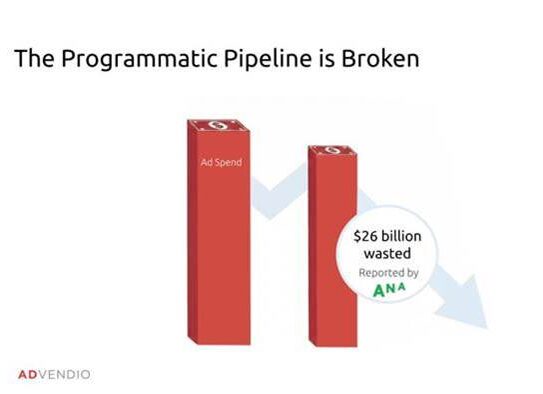
To date, retail media models have relied on programmatic to efficiently monetize retailers’ advertising inventory. Yet each programmatic advertising intermediary also affects retailer margins and adds complexity to the retail media model, and many retailers regard their retail media systems as a mess.
Retailers restructure their RMNs
Now, more retailers feel inspired to step back and think more strategically about how to grow their retail media networks. They are reimagining the design of their internal infrastructures and industry systems to identify opportunities to improve their margins.
To improve efficiency in 2026, more retailers will take steps to decrease reliance on programmatic in its current form within their retail media model. Retailers will start to replace programmatic middlemen and bring AI adtech innovations in-house, unlocked by agentic solutions. Bringing more retail media capabilities in-house over the longer term represents a natural move for retailers, as it would streamline their retail media model, reduce costs and give retailers more control over their margins.
Initially, retailers had plugged into programmatic early, when it was hard to match demand to scale. Now, it’s getting easier for retailers to scale, especially with agentic AI. As barriers to entry come down, AI is helping reduce costs and allowing retailers to operate with fewer resources.
The shift to AI-driven adtech would involve moving revenue budgets to direct channels. Removing programmatic players from their retail media models could account for 10% to 20% in cost savings and up to 30% for brands and retailers combined, a strategic win that would give retailers’ margin-based businesses some welcome relief.
Trade relationships and retail media relationships are converging. The increasing convergence increases budget and campaign potential and ultimately results in more persuasive and better campaigns for consumers.
At the same time, the change exemplifies the need for retailers to own their brand relationships: If you’re working with an intermediary and losing your supplier relationship – you’re done. As a result, in-housing and convergence are the only way to go.
Agentic infrastructure will modernize collaborations
Beyond maintaining relationships with brands, retailers want to sell ads faster, bill faster and accelerate campaign management. APIs, automation and, ultimately, agentic AI will enable these improvements, bringing retailers hope and relief by speeding up their retail media processes. Over the medium term, retailers will build the infrastructure required for agentic selling to enable agentic buying, boosting revenue faster while increasing operational efficiency, cost savings, and demand from brand advertisers. This shift should then deliver an in-house owned and managed process that has the scalability of an outsourced programmatic exchange.
Agentic AI will change the relationship between retailers and brands, including how they buy and sell advertising. Retailer agents will work with the data and ad inventory, and brand agents will plan campaigns.
Retailers and brands will manage the data, but the actual transactions will be handled by agents. There is no room in this agentic model for transactional adtech vendors like programmatic players; however, the shift to this vision will take time, legislation and standards. As this model evolves, it gives the power back to the retailer and the budget back to the supplier: It’s a win-win scenario.
One major step forward that underscores agentic’s growing influence in 2026 is the recent advancement of the Ad Context Protocol (AdCP), which is the blueprint for how AI agents transact in digital media, and was launched by Yahoo, PubMatic and others. It acts as a bridge between the current programmatic infrastructure and the emergence of agentic AI to help ad buyers and sellers speak the same language.
AdCP proposes AI agents acting on behalf of brands and retailers to plan, buy and sell media without human intermediaries, explicitly bypassing traditional programmatic auctions. According to David Olesnevich, head of data and advertising products at AdCP launch member The Weather Company, “AdCP provides infrastructure to enable direct communication that can actually remove some unnecessary intermediary layers.”
What’s interesting about AdCP is that it suggests programmatic will change.
Our view is that programmatic will die. That’s because, in an agentic-enabled direct transaction that already matches the speed of programmatic, what need is there for programmatic anymore?
AI’s momentum will help retailers skip programmatic advertising
Over the past year and a half, retailers have been moving toward AI-driven adtech companies and agents. Adweek reports 84% of advertisers are seeing AI-driven shifts, as budgets shift in response to AI-based discovery and targeting.
This year, more agencies will move to agentic to plan advertising campaigns. Retailers and brands will also warm up to agents because AdCP helps bridge that gap.
Large retail ecosystems are already building AI-driven retail media networks to gain more control over the data, user experience and margins. Walmart’s AI shopping assistant Sparky is testing Sponsored Prompts and brand integrations in a shift toward AI-driven conversational ad experiences, which can bypass classic banners and feeds. Amazon’s AI-powered shopping assistant Rufus also enables product discovery via conversational commerce.
Looking ahead, expect to see more AI-first touchpoints (such as agents, conversational search, and generative shopping experiences) reallocate budgets away from legacy programmatic display advertising.
Embracing AI and agentic solutions can also free up retailers and brands to focus on more creative and strategy. Retail media networks won’t need as many salespeople, so companies can shift their attention and budgets to enrich advertising planning and execution.
Overall, 2026 will be an exciting time for retail media and AI fusions. More retailers will start to shift away from programmatic in its current form to embrace AI-powered adtech. Retail media networks will evolve from complexity to simplicity through a streamlined structure that bypasses programmatic advertising intermediaries. By restructuring their retail media models for direct collaboration with brands, retailers will improve their operational efficiency, cost savings and strategic control, and protect their margins.
Opinions expressed by SmartBrief contributors are their own.
If you liked this article, sign up for the SmartBrief Marketing Pulse, a daily look at the latest in shifts and performance data for marketers.