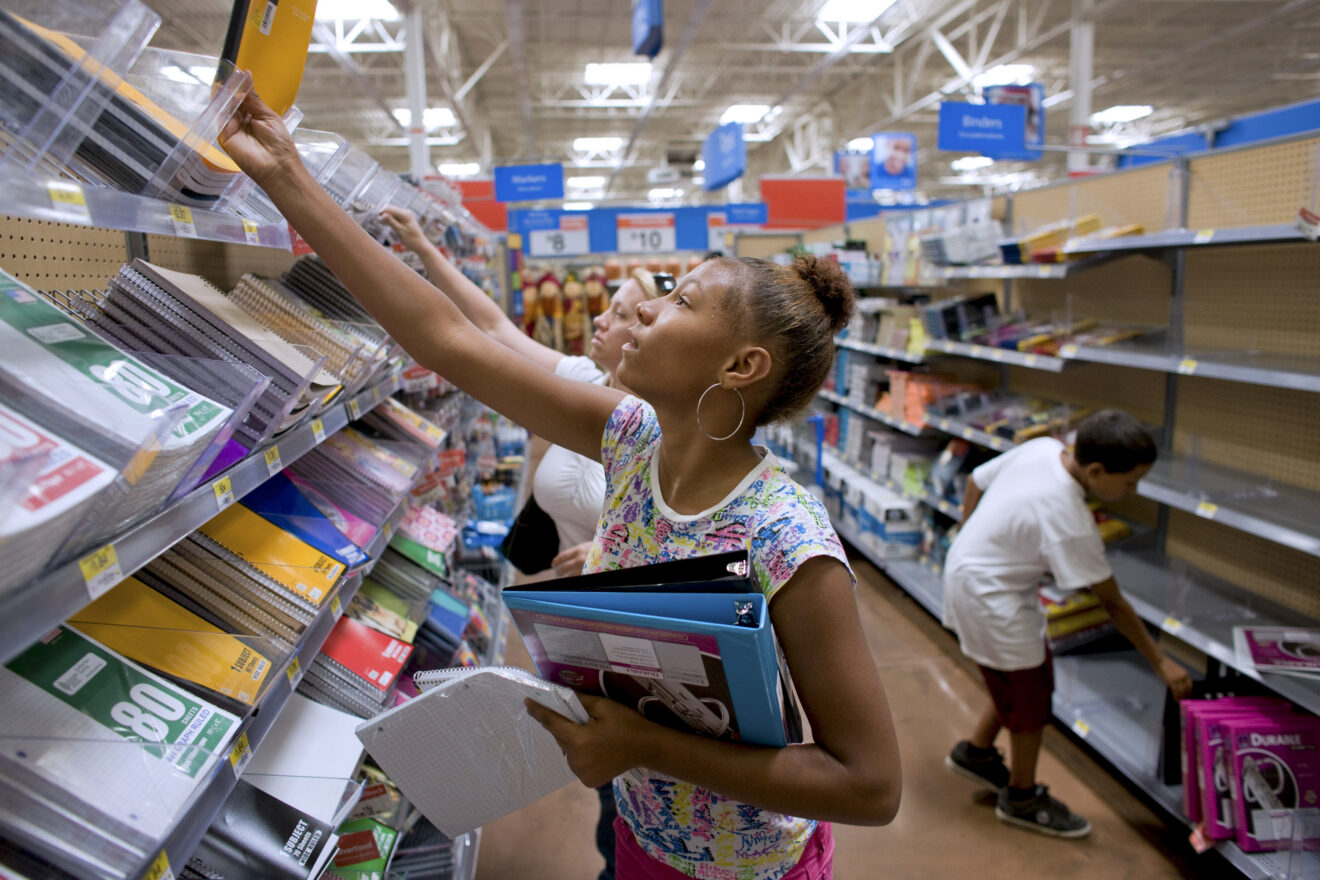
Families are peppering the slower days of summer with back-to-school shopping, taking their time and shopping around to find the best prices on their must-have items. Consumers are poised to set new spending records for both back-to-school and back-to-college shopping this year, continuing a pattern of spending on loved ones and important events despite concerns about the economy.
In a webinar this week, National Retail Federation Chief Economist Mark Mathews and Vice President of Consumer & Industry Insights Allison Zeller shared insights into how the season is shaping up.
The back-to-school season is a major shopping event, bringing in more sales than Mother’s Day, Father’s Day, Easter and Super Bowl combined, Zeller said. For retailers, it’s also the last major indicator of how consumers are thinking and spending before the winter holiday season.
Shopping started early this year, helped by June sales events from retailers including Amazon Prime Day, Walmart Deals and Target Circle Days.
Thirty-two percent of consumers surveyed by NRF reported starting their shopping in early June, and 62% had begun by early July. That said, 80% are less than halfway done, suggesting budgetary constraints that have them spreading out their shopping and searching for the best deals.
“They’re trying to figure out how their shopping list fits within their budget,” Zeller said.
Affordability plays a key role
Zeller and Mathews shared three key themes emerging from the data NRF has collected thus far: affordability, where consumers are shopping and how budgets and shopping lists are evolving as tech needs shift.
Affordability is top-of-mind with shoppers this season. They’re finding ways to stretch their budgets, including doing more comparison shopping, opting for discount retailers and seeking out coupons and sales.
Mathews shared a broader view of the “three-legged stool” that makes up consumer spending: savings, wage growth and access to credit.
The savings rate is down to 3%, a near-record low and well below the peaks reached during the pandemic years. It’s also far below the long-term average rate of 8.4%.
“You can view that as a positive, that the consumer is comfortable enough that they can opt to keep spending rather than save for a rainy day,” Mathews said. “But I think there’s also a concern that consumers have to dip into savings or save less in order to spend.”
That trend could be a problem in the future if the economy hits a rocky patch, he added.
Inflation has been eating into wage growth, Mathews said, another potential challenge for consumers’ ability to keep spending as they have been. The hope is that inflation will soften over the rest of the year.
The levels of credit card debt and delinquency are near record highs, said Mathews, who called it a bit concerning, but added that he’s not too worried because the “transition to serious delinquency has begun to ease.”
“On an aggregate level, there’s definitely some challenges, and we can see the consumer is feeling those challenges and doing their best to stretch each and every dollar of spending.”
Consumers are saying they aren’t willing to compromise on spending for their family’s school needs.
How BTS shoppers are budgeting
Thirty-seven percent of respondents said they’ll cut back on spending in other areas to afford back-to-school shopping, 20% said they would use buy now, pay later options and 17% said they would work extra hours to increase income if necessary.
As they plan to spend what’s needed to complete their back-to-school shopping lists, shoppers are increasingly exploring all their options.
“As consumers have increasingly had access to a diverse set of retailers to shop and are willing to shop around for the best deal or item they need, they’re traveling to more places,” Zeller said. “They’re no longer doing the one-stop shop to stock up.”
Both back-to-school and back-to-college shoppers are relying less on online shopping and more on small, local merchants, according to NRF’s survey data.
Those trends make sense at a time when consumers have more ways than ever before to shop around, Zeller said. Additionally, having so many ways to shop means consumers are no longer distinguishing between digital and physical retail. For example, when someone shops at a bricks-and-mortar retailer’s website or app, they don’t necessarily consider that online shopping.
After the pandemic, there was a surge in back-to-school tech spending, especially among K-12 shoppers. That changed the makeup of their spending and budgets, Zeller said.
The total amount of spending on tech hasn’t risen significantly since about 2021, but there has been a shift in how families are spending on back-to-school tech. In years past, spending was largely focused on laptops or tablets, but this year, more parents are saying their schools aren’t requiring students to buy technology.
This year, families are spending on home desktop computers, while laptop and tablet purchases are down 4% from last year.
For back-to-college students, tech budgets are higher because prices have increased. Chips are more expensive, and college kids want to have more powerful AI-enabled laptops, Mathews said.
Looking ahead, Mathews said he expects to see some softening of inflation and moderate economic growth. Consumers are likely to remain resilient but careful, and laser-focused on getting the best price.
Catch a replay of the full webinar, and look out for NRF’s next update in August.
If you like these insights on retail, sign up for the NRF SmartBrief, a daily look at the top news and trends in retail.