Are you one of the 63% of consumers who regularly check the type of sweetener used in their food and beverages?1
Consumers’ food and beverage preferences have evolved significantly over the last several years, with a notable shift toward holistic wellness that encompasses not just sugar reduction, but also concerns over ultra-processed foods, sodium, fat, carbs, artificial sweeteners and artificial colors. Now, CPG brands are feeling the pressure to innovate beyond legacy sweeteners and are leaning into a growing interest in next-generation solutions.
A pressure point — and an opportunity
“The pressure is accelerating because consumers are rightfully demanding ‘more’ and ‘better’ from what they eat and drink, and the food industry — ingredient suppliers, product makers and retailers collectively — has not been able to provide that fast enough,” said MycoTechnology Director of Marketing Harvey Chimoff. “It’s an oversimplification that requires a deeper conversation and discussion, yet it’s a key headline. This is both a pressure point and an opportunity area for CPG marketing teams.”
That’s because some companies wait for the market to settle before adopting new technologies, and those that manage market leaders — especially iconic brands — approach opportunities and risks differently, if not more cautiously, than challenger brands and start-ups, Chimoff explains.
“We see significant opportunities, particularly with early adopters and fast movers, to make an impact in the market,” he said. “This can include increasing market share of existing products via reformulation or renovation, launching new products with new benefits and generating excitement to increase overall category sales. In addition to creating a path for sustained sales performance, there may also be incremental revenue opportunities because news can generate a short-term sales boost.”
It’s a matter of taste
However, regardless of a product’s claims or speed to market, one purchase factor remains dominant: taste.
Nearly nine in ten Americans (88%) say taste has a high impact on their food and beverage purchases, making it the top purchase driver, ahead of price (78%), convenience (61%) and healthfulness (56%)2. Despite many sugar alternatives on the market, 75% of consumers say they still wish for better-tasting, non-caloric sweeteners.3
For formulators, that consumer expectation creates a high bar: a sweetener must deliver the right level of sweetness without compromising the overall flavor experience. When it falls short, R&D teams may have to invest additional time in reformulation, flavor modification or masking — resources that could otherwise support new product innovation.
The evolution of the sweetener toolkit
Meeting taste expectations requires more than simply finding a sweetener that tastes sweet. Historically, formulators have had to balance multiple variables at once, including sweetness intensity, flavor impact and compatibility with the broader formulation, says MycoTechnology Product Manager Karli Van Simaeys.
“The sweetening toolkit has evolved over the past 70 years, since the first diet products hit the market,” Van Simaeys explains. “Formulators know that no sweetener is perfect by itself. When using sweeteners, formulators face several obstacles to create the ideal product. First, they must hit the desired sweetness intensity and temporal profile. Next, they need to make sure their sweetener system does not add noticeable off-notes, which can be challenging when a high sweetness intensity is desired.”
The future of sweetness
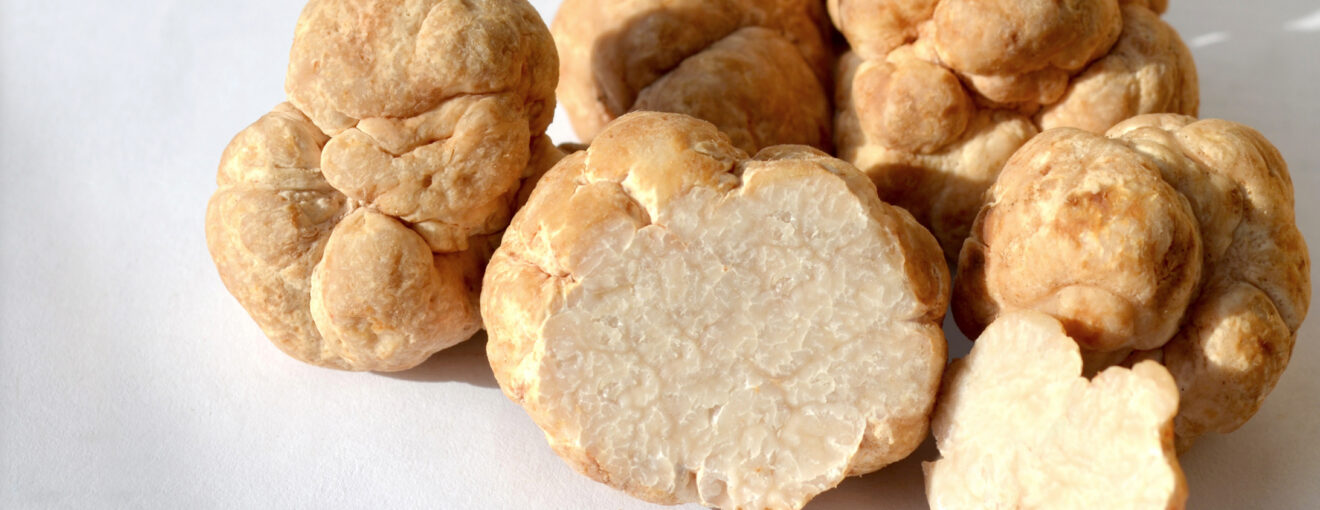
This is where MycoTechnology’s new Zukora™ Honey Truffle Sweet Protein meets a market need, Van Simaeys says. 
“With its high potency, a very intense sweetness can be achieved without adding any undesirable flavors,” Van Simaeys says. “Zukora starts clean, so you don’t have to spend valuable time trying to mask your sweetener system. This enables formulators to innovate faster.”
Zukora Honey Truffle Sweet Protein is a naturally derived ingredient that captures the sweetness of the Hungarian honey truffle. MycoTechnology scientists successfully isolated the protein responsible for this sweetness and produced Honey Truffle Sweet Protein through fermentation. This innovation enables scalable, sustainable, cost-effective and less resource-intensive production compared with other sweetener solutions.
For formulators evaluating new sweetening systems, however, taste is only one consideration. The ingredient also needs to fit into the realities of product development — from how it performs alongside other sweeteners to how its benefits can be communicated to consumers.
Zukora, for example, can be used in blends with sugar, bulk sweeteners and stevia, allowing formulators to adjust sweetness quality for different applications. The company says the ingredient is also competitive with sugar on a cost-in-use basis today, with the potential for additional cost-in-use reductions when blended with Stevia Reb M or Reb A.
The ingredient’s consumer positioning is another consideration. Zukora is derived from the honey truffle, giving brands an origin story that can help distinguish a product in a crowded sweetener category. In consumer research commissioned by MycoTechnology, the name “honey truffle sweet protein” was associated with qualities such as “healthy” and “natural,” Van Simaeys says.
From a nutritional perspective, honey truffle sweet protein is fully digestible, gut microbiome-friendly and produces no glycemic response, according to MycoTechnology. It also contains no calories at typical use levels.
For companies considering a new sweetener, the combination of sensory performance, formulation flexibility, consumer positioning and cost-in-use illustrates a broader shift in how sweeteners are evaluated. The question goes beyond whether an ingredient can replace sugar — now it extends to whether the ingredient can help a brand achieve the desired sensory experience while supporting its nutritional, formulation and positioning goals.
An opportunity to be different
A new ingredient can create an opportunity for differentiation, but only when it addresses a meaningful need for both the product and the consumer. In the case of sweeteners, that opportunity may start with improving taste, but it can extend to formulation flexibility, nutritional attributes and the story a brand can tell about its ingredients.
“Brand marketers are always looking for ‘news’ to sustain and grow their sales,” Chimoff says. “If the taste profile of their product is not where it needs to be, if they need a reason to reinforce why they are using a different ingredient and/or if they realize the potential to own a story for at least some time, then there is a real opportunity to be different, if not innovative, in a way that fits their company and/or brand, to drive growth.”
For brands, the challenge is determining where that opportunity fits within an existing strategy. A new sweetening technology may help refresh a product that needs a better sensory profile, give a challenger brand a point of distinction or provide an emerging company with an opportunity to establish a new position in the category.
First, companies need to know and own their brand positioning and leverage that positioning, Chimoff says.
“Second, sometimes brand positioning needs refreshing or reinforcement, so seize opportunities to do that. Third, if you are a challenger, seek ways to disrupt and break through. Fourth, if you are a start-up, be a pioneer. In all cases, find ways to carve out new and distinctive paths forward,” he explains. “Don’t be afraid to ask big questions and embrace bold answers. Are we trailblazers? Innovators? What would it mean if we became a trendsetter? How can we become the category leader?”
1 MycoTechnology consumer research study conducted by Brightfield Group. 2025. N = 1,011
22025 IFIC Food & Health Survey
3 MycoTechnology consumer research study conducted by Brightfield Group. 2024. N = 1,058
—————————————————————————————————————————–
Related stories:
- The summer of flavor: Scenes from the 2026 Summer Fancy Foods Show
- FMI Midwinter 2026: AI and collaboration take center stage
- Three companies looking to transform the grocery technology landscape
____________________________________
If you liked this article, sign up to receive FMI dailyLead and check out the rest of our SmartBrief Food & Beverage newsletters. Also, connect with us on our SmartBrief on Food & Beverage LinkedIn page.
Since 2013, MycoTechnology Inc. has harnessed the power of nature to create breakthrough ingredients for better-tasting and more sustainable foods and beverages. Combining the power of fungi with fermentation, MycoTechnology creates transformative taste-modulation and sugar-reduction ingredients, including ClearIQ™ Natural Flavor, ClearHT™ Natural Flavor and Zukora™ Honey Truffle Sweet Protein, a revolutionary sweetening ingredient derived from the honey truffle that delivers a uniquely clean taste profile with minimal off-notes. MycoTechnology sells globally to flavor houses, CPG companies, beverage-makers and co-manufacturers. The company operates in a state-of-the-art, 86,000-square-foot manufacturing and R&D facility outside Denver, Colorado. For more information, visit mycoiq.com.