
Generation Alpha has a taste for adventure. And according to recent research, Gen Alpha kids are driving demand for authentic, diverse global flavors – whether dining at home, at a restaurant or in the school cafeteria. As a result, K-12 foodservice menus are evolving to include more authentic, diverse global flavors to satisfy the adventurous palates of this age group.
“Today’s students are exposed to diverse food cultures through social media, restaurants and their own communities, so they’re coming into cafeterias with more adventurous palates and higher expectations around flavor and authenticity,” said seasoned chef and K-12 culinary foodservice consultant Rebecca Polson.
That’s translating into the creation of more global sauces, spice blends, bowls, wraps, noodle dishes and handhelds that introduce bold flavors in familiar formats across K-12 kitchens.
“Overall, Gen Alpha is pushing school meals to become more creative, modern and reflective of the diverse students we serve,” Polson said.
Balancing demand, taste with regulations, policies

This shift, while welcome, requires foodservice directors to create culturally relevant meals while adhering to stricter USDA regulations on sodium and sugar.
“For foodservice directors, that means moving beyond ‘inspired-by’ concepts and focusing on culturally relevant, flavor-forward meals that still work operationally in schools,” Polson said.
According to Datassential’s 2026 Pulse Market Overview, K-12 Chapter, 81% of K-12 foodservice operators view government regulations as a top priority. As such, one of the biggest pain points for school nutrition professionals is being asked to do more with less, Polson said. Chiefly, K-12 foodservice professionals are expected to meet stricter sodium and sugar regulations while managing labor shortages, rising food costs and limited funding and equipment.
“At the same time, students still expect meals to taste good, and participation matters for program sustainability,” Polson said. “There’s also still a lack of understanding and respect for how complex school nutrition really is. Directors are balancing compliance, operations, food safety, staffing and student acceptance all at once.”
As a result, many districts are focusing less on simply removing ingredients and more on strategically building flavor through herbs, acids, spices, sauces and umami-rich ingredients to help meals remain appealing while meeting nutrition requirements, Polson explained.
Smart menu engineering
For school nutrition teams, operational efficiency has become just as important as menu innovation. Products that can serve multiple dietary needs and menu applications may help reduce inventory complexity, simplify training and minimize food waste.
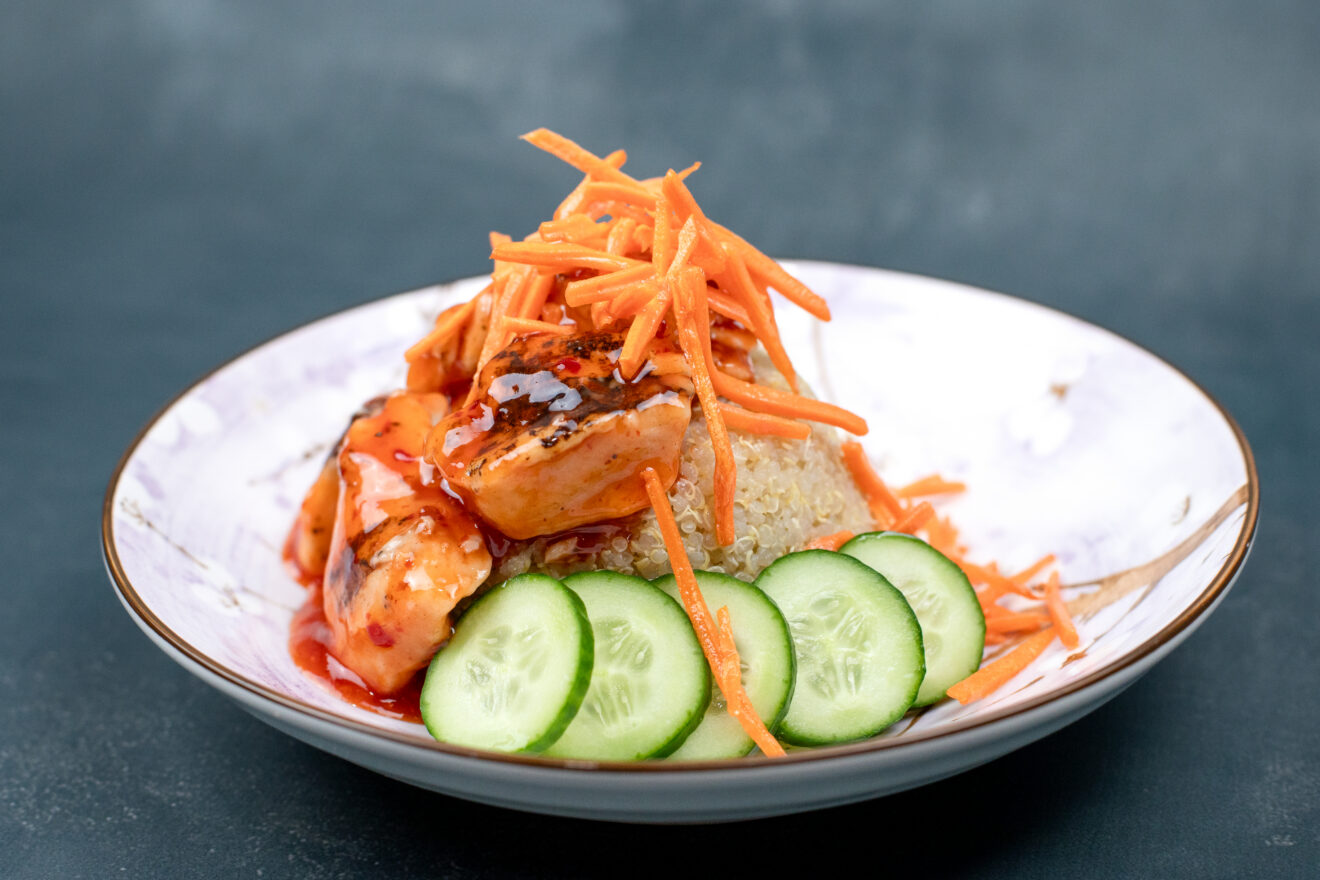
Polson pointed to products such as Kikkoman’s Less Sodium and Gluten-Free product lines as examples of ingredients that can help K-12 foodservice operators maintain flavor while supporting nutritional goals and menu flexibility.
“Flavor drives participation, and products that provide umami and consistency with less sodium give school nutrition teams more flexibility without sacrificing taste,” she explained. “From a K-12 culinary perspective, they also work across many menu applications, such as bowls, wraps, stir fries, sauces and grab-and-go items, making it easier for districts to create flavorful, student-friendly meals that are operationally realistic.”
Kikkoman’s Gluten-Free product line helps school nutrition operators simplify back-of-house operations by allowing one sauce to work across multiple dietary needs, including gluten-free and many plant-forward or vegan menu applications. The lines also do not contain any banned dyes, reducing the need for multiple specialty products, minimizing confusion for staff and lowering the risk of cross-contact in busy kitchens, Polson said.
From a cost-efficiency standpoint, using versatile products across several menu items improves inventory management, reduces waste and makes it easier for districts to streamline purchasing and production while still offering inclusive, flavorful meals students will eat.

“One of the biggest advantages of Kikkoman sauces in K-12 is how versatile they are across dayparts and menu formats. Cross-utilization helps control inventory, reduce waste and simplify production for school kitchens,” Polson explained. “A single sauce can be used as a marinade, drizzle, dip or finishing sauce throughout the menu. For example, Teriyaki Glaze can be used in breakfast burritos, rice bowls, wraps or noodle salads. Sweet Chili or Gluten-Free Orange Sauce can be mixed with mayo for an aioli or sandwich spread, blended into slaws, brushed onto roasted vegetables, or used as a dip for grab-and-go items. Gluten-Free Hoisin works great in grain bowls, lettuce wraps or even mixed into burger sauce for globally inspired handhelds. Using sauces in multiple ways helps districts create more exciting menus without adding operational complexity.”
A hub of support
As school menus become more globally influenced and operationally complex, many districts are also looking for practical planning tools and recipe support.
Kikkoman’s K-12 Resource Hub, for example, provides recipe ideas, menu applications and trend-focused concepts designed specifically for school nutrition programs. According to Polson, resources like these can help directors identify opportunities for ingredient cross-utilization, explore speed-scratch cooking ideas and test globally inspired flavors that align with nutrition standards.
“For busy school nutrition teams, having recipes, product applications and K-12-focused resources all in one place can help save time while supporting more creative, student-friendly menus,” she said.
Related stories:
- Q&A: Why chefs are essential to the future of food and health
- Meet the newest diner: Generation Alpha’s early influence on the future of foodservice
- Q&A: Resilience, perserverence and the new value proposition in the restaurant industry
_____________________________________
If you liked this article, sign up to receive one of our SmartBrief Food & Beverage newsletters and connect with us on our SmartBrief on Food & Beverage LinkedIn page.