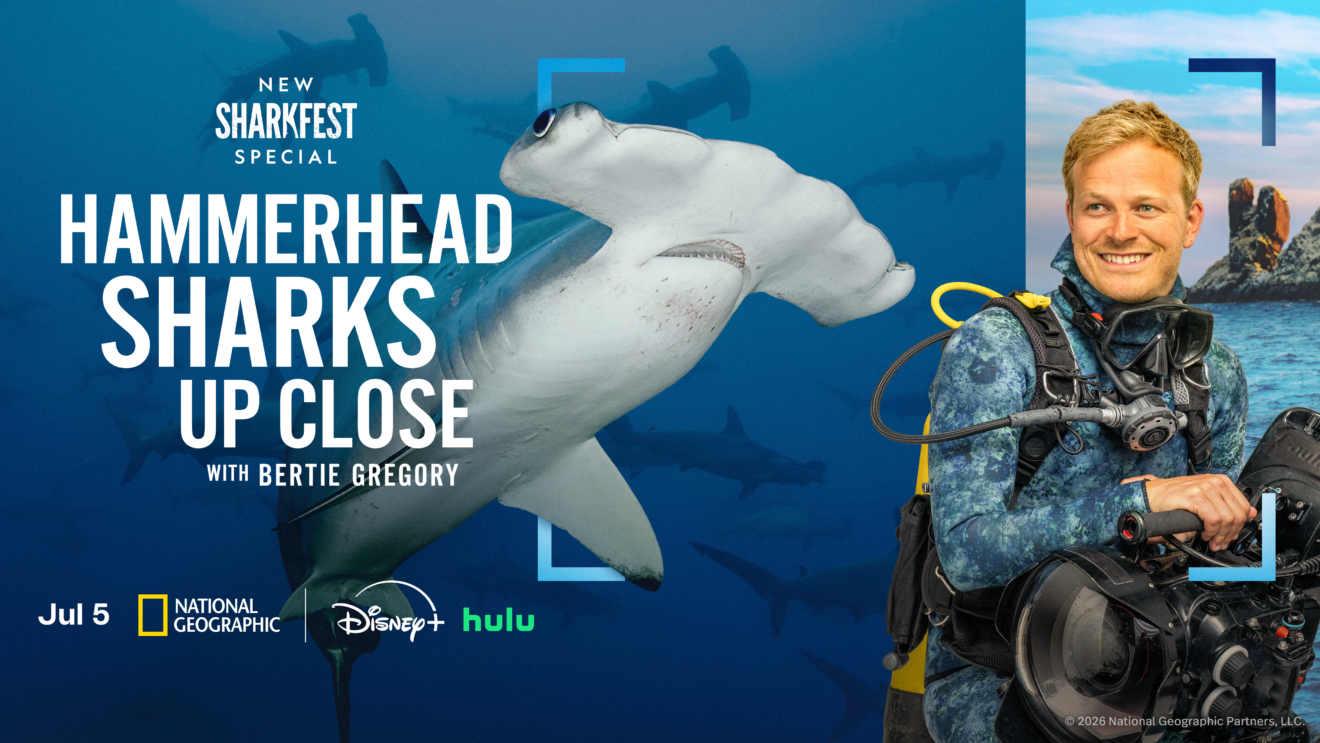
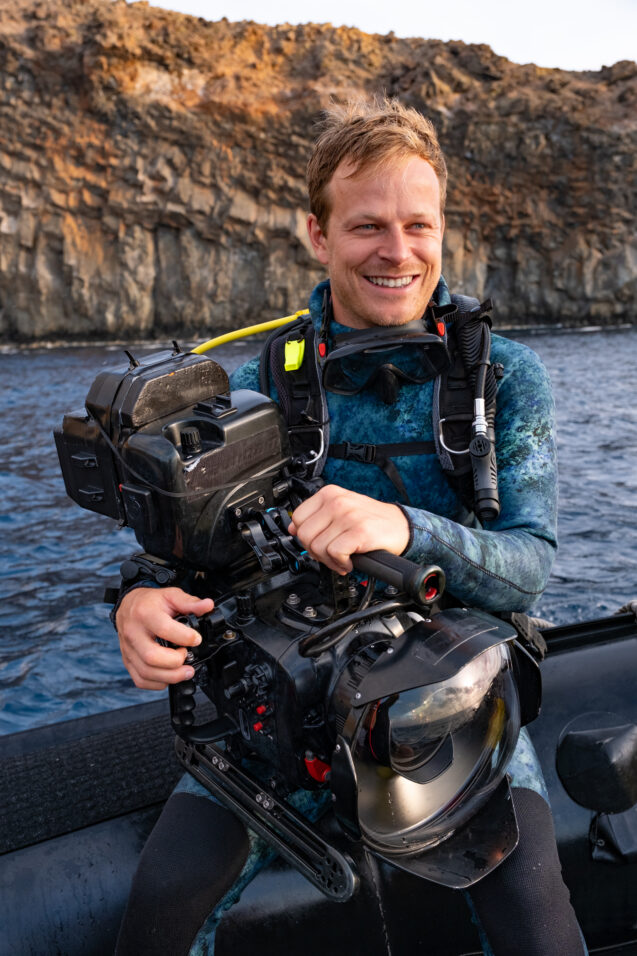
Whether he’s swimming alongside sharks or capturing never-before-seen moments via drones in some of the world’s wildest places, Bertie Gregory has built a reputation for making nature storytelling feel deeply immersive. Through his work with National Geographic, the Emmy- and BAFTA-winning cinematographer has helped reshape wildlife storytelling by bringing audiences behind the scenes and into the heart of the adventure.
His latest special, “Hammerhead Sharks Up Close with Bertie Gregory,” continues that approach. Premiering as part of National Geographic’s SHARKFEST, the film follows Gregory alongside scientists and conservationists as they study one of the ocean’s most recognizable predators while uncovering encouraging signs for conservation.
In our conversation, Gregory shares insight into how streaming has changed the way wildlife stories are told, the technology transforming modern filmmaking, what leadership looks like when working alongside scientists and local communities around the world and why protecting our oceans offers a hopeful blueprint for the future.
The way audiences consume nature storytelling has changed with streaming. How has that shifted the way you approach building an immersive story?
Bertie Gregory: Traditional nature documentaries are very animal-focused. Then, over the last 15 to 20 years, documentaries like Planet Earth on the BBC with Sir David Attenborough started showing the last 10 minutes behind the scenes, revealing how they made the film.
I noticed that so many people who watch on streaming platforms weren’t necessarily interested in nature, but had all the questions about that part. That got me thinking: if that’s the part people connect with, maybe that should be the whole show.
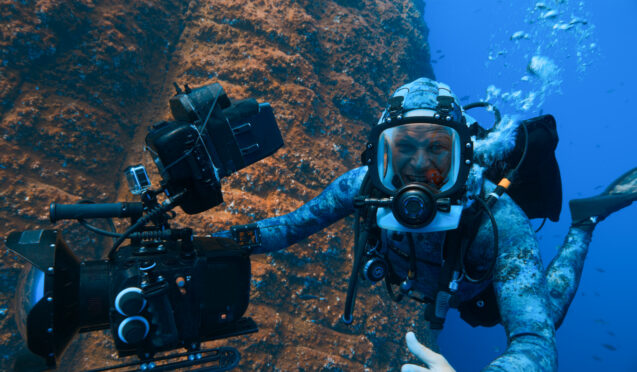
That’s really the storytelling approach behind “Hammerhead Sharks Up Close” and the whole “Up Close” series. We take viewers behind the scenes and want them to feel like they’re part of the team, so we can shine a light not only on the really cool animals, but also on the really cool people we get to work with.
Technology played a major role in this project. How are tools like drones changing what’s possible in wildlife filmmaking?
Gregory: Total game changer. Particularly in the ocean.
Before drones, the only way to film from the air was with a helicopter or plane, which are incredibly loud, expensive and, logistically, sometimes just impossible, especially for things far offshore.
Now, drones give us an aerial perspective, and I’ve been very fortunate to be at the forefront of that change in wildlife filmmaking. I’ve been lucky enough to film a lot of things from the air for the very first time. It’s absolutely mind-blowing, especially in the ocean.
In the case of “Hammerhead Sharks Up Close,” you see Dr. Katie Harris and her team using drones to count sharks, and it’s incredible. You see what’s happening in the sea that you’d otherwise never notice. Then you pop a drone into the air and suddenly realize there are a thousand sharks right off the beach.
What makes the story of the hammerhead sharks different from other wildlife stories that you’ve captured?
Gregory: The hammerhead shark has to be one of the most distinctive shapes in nature. I think the thing that drew me to this story was, first, that I just love spending time with hammerhead sharks.
The waters around Mexico’s Baja Peninsula are some of the richest anywhere on Earth. They used to be a real stronghold, a real mecca, for scalloped hammerhead sharks. But since the 1990s, their numbers have fallen off a cliff, with a 97% decline, largely because of fishing driven by the shark fin trade.
But this story isn’t all doom and gloom. What really drew me to it is the little glimmers of hope. Scientists and conservationists are figuring out what we need to do to save them, and that’s super exciting. We wanted to shine a light on that because there’s enough doom and gloom in the world right now.
This wildlife filmmaking project showed collaboration between scientists, local experts, filmmakers and communities. What have you learned about leadership from working with these teams around the world?
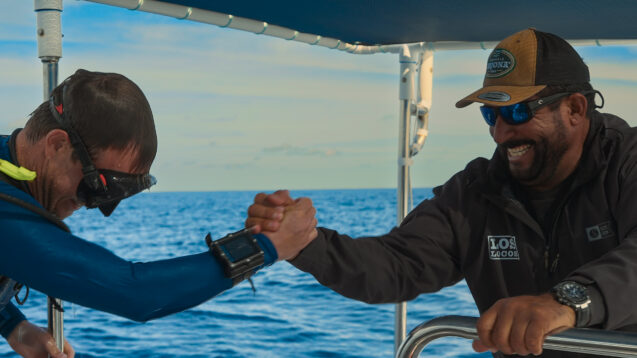
Gregory: I’m very lucky that I get to hang out with cool animals, but it also means I get to hang out with cool people, and that’s incredibly inspiring.
The key is finding people who are amazing at what they do and shining a big old spotlight on them. People get inspired by seeing others doing great things, especially those who look like them or come from places they can relate to.
It’s one thing for me to show up somewhere because I can bring a global platform, but to really engage people, especially on a local level, the people from that place must be front and center in the films. They’re the heroes, and that’s how you get people stoked and interested in something.
What lessons from Mexico’s approach to marine protection do you hope audiences and other regions take away?
Gregory: They’re showing that marine protection works.
The final scene, where we filmed the huge school of hammerheads and had that incredible close encounter, was in the Revillagigedo Islands. That national park was created in the 1990s, and this amazing chain of volcanic islands was protected. At first, there was just a six nautical mile protected area around the islands, but that wasn’t enough.
In 2017, they expanded it to 50,000 square miles, making it the largest marine protected area in North America. As a result, marine life is starting to come back.
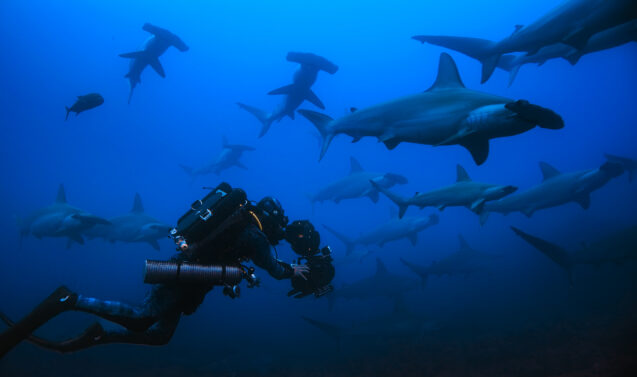
There’s a very emotional scene right at the end where Eric, my guide, who has been diving there for decades, comes up and says, “I haven’t seen hammerhead shark schools like that in 20 or 30 years.” It’s a sign that marine protection is working and that there is hope.
I think that’s something to really hold on to. Nature, if you give it the chance, will come back. That’s great news for wildlife and for people.
After audiences watch “Hammerhead Sharks Up Close,” what do you hope they carry with them—about sharks, the ocean or our role in protecting it?
Gregory: Well, first, I hope people come away thinking sharks are awesome, particularly hammerheads. They’re just super cool. They’re so bizarre to look at, but in the best possible way.
Second, sharks, including hammerheads, are predators, which means they’re really important for keeping everything in their ecosystem in balance. When the ocean is healthy, people are healthy too.
And finally, marine protection works. Wherever you live, even if it’s far from where scalloped hammerhead sharks live in the tropics, advocate for more marine protected areas. Find out who the local authority or organization is that’s pushing for marine protection, support them and help get one established near you.
National Geographic’s annual SHARKFEST returns July 5 with “Hammerhead Sharks Up Close with Bertie Gregory.” The special premieres at 9/8c on National Geographic and will also stream on Disney+ and Hulu, taking viewers behind the scenes of an extraordinary conservation story and an unforgettable encounter with one of the ocean’s most iconic predators.